

















How to Catch and Rehome a Bee Swarm Safely
Author: Hornsby Beekeeping Date Posted:23 June 2026
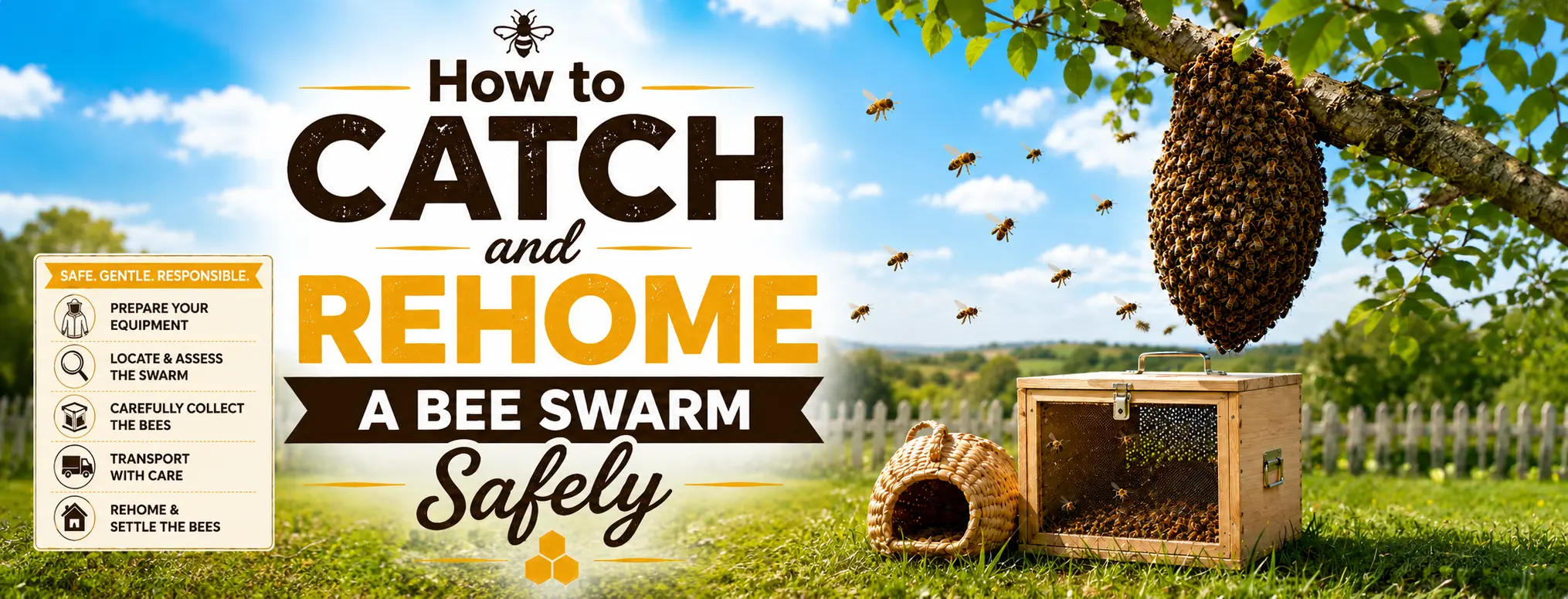
Catching a bee swarm can be one of the most rewarding experiences in beekeeping, but it must be done safely, calmly and responsibly. A honey bee swarm is a group of bees that has left its original hive with a queen to find a new home. Swarms often appear as a cluster on a tree branch, fence, wall, post or outdoor structure.
In Australia, swarms commonly occur in spring and early summer when colonies are expanding quickly. While swarming bees are often less defensive than bees protecting an established hive, they should never be treated casually. Safe swarm collection requires protective clothing, suitable equipment, good judgement and awareness of local biosecurity rules.
What Is a Bee Swarm?
A bee swarm forms when a strong colony becomes crowded or enters its natural reproductive cycle. The old queen leaves the hive with a large group of worker bees. They cluster temporarily while scout bees search for a permanent nesting site.
At this stage, the swarm may stay in one place for a few hours or a few days. If not collected, it may move into a wall cavity, roof space, hollow tree or other difficult location.
Is It Safe to Catch a Bee Swarm?
A swarm can be safe to collect if it is accessible, calm and in a suitable location. However, not every swarm should be collected by a beginner.
Do Not Attempt Swarm Collection If:
-
The swarm is high in a tree
-
It is near power lines
-
It is inside a wall, roof or chimney
-
People nearby are allergic to bee stings
-
You do not have protective clothing
-
You are unsure whether they are honey bees
-
Local biosecurity restrictions apply
-
The swarm is aggressive or difficult to access
If the swarm is in a risky location, contact an experienced beekeeper or a professional bee removal service.
Essential Equipment for Swarm Collection
Before approaching a swarm, prepare your equipment. Do not start the job and then search for tools halfway through.
Swarm Collection Checklist
-
Bee suit or jacket with veil
-
Beekeeping gloves
-
Smoker and fuel
-
Hive tool
-
Nucleus box or ventilated swarm box
-
Frames with foundation or drawn comb
-
Sheet or towel
-
Bee brush
-
Securing strap
-
Spray bottle with clean water
-
Ladder only if safe and stable
-
Record book for swarm details
A nucleus box is often ideal because it is light, portable and easy to move.
Step-by-Step Guide to Catching a Bee Swarm
Step 1: Assess the Swarm Location
Before touching the bees, stand back and observe. Check the height, access, nearby people, pets, traffic and hazards. Confirm that the swarm is not in a dangerous position.
If the bees are clustered on a low branch, fence or small shrub, collection may be straightforward. If the swarm is high, hidden or close to a public area, get experienced help.
Step 2: Put on Protective Clothing
Wear smooth, light-coloured protective clothing with no holes. Zip up fully and check your veil, gloves and ankles. Bees can crawl into small gaps, especially when disturbed.
Move calmly. Avoid strong smells such as fuel, perfume or sweat-heavy clothing, as these can irritate bees.
Step 3: Prepare the Nucleus Box
Place frames inside the nucleus box. If available, one frame of drawn comb can help encourage the swarm to stay. Position the box directly under or beside the swarm where possible.
If collecting from a branch, spread a sheet under the box. This makes it easier for bees to walk into the entrance and helps you see where the queen may be.
Step 4: Move the Bees Into the Box
If the swarm is hanging from a branch, give the branch a firm shake so the cluster drops into the box. If the swarm is on a flat surface, gently brush or scoop bees into the box.
Use minimal smoke. Too much smoke may scatter the swarm. A light mist of clean water can help keep bees settled, but do not soak them.
Step 5: Watch for Queen Behaviour
If the queen is inside the box, the remaining bees usually begin fanning at the entrance and moving toward the box. This is a good sign. Allow time for flying bees to join the cluster.
If bees keep returning to the original spot, the queen may still be there. Gently check and repeat the collection process if needed.
Step 6: Secure the Box
Once most bees are inside, close the lid while keeping ventilation open. Do not seal bees in a hot, unventilated box. Overheating can kill a swarm quickly.
If you collected the swarm during the day, you may need to leave the box nearby until evening so flying bees return before transport.
Step 7: Rehome the Swarm
Move the swarm to its prepared hive location. Transfer the frames carefully into a proper hive or keep them temporarily in the nucleus box until settled.
Feed only if needed and suitable for the situation. Avoid overfeeding during nectar flow, and never extract sugar-fed stores as honey.
Biosecurity Considerations When Catching Swarms
Swarm collection is not only about getting free bees. In modern Australian beekeeping, every swarm should be treated as a potential biosecurity risk.
Important Biosecurity Steps
-
Record where and when the swarm was collected
-
Keep the swarm separate from existing hives at first
-
Inspect for pests and disease
-
Monitor for Varroa mite where required
-
Avoid sharing equipment between apiaries without cleaning
-
Follow your state or territory beekeeping rules
-
Report suspicious pests or notifiable diseases
A swarm of unknown origin may carry pests, disease or mites. Good records and careful monitoring protect your apiary and nearby beekeepers.
Where Should You Place a Rehomed Swarm?
Choose a dry, stable location with morning sun, afternoon shade in hot regions, good drainage and a clear flight path. Avoid placing hives where bees fly directly into neighbours, footpaths or outdoor living areas.
Make sure the hive is level, secure and protected from ants, livestock and strong wind.
Common Mistakes When Catching a Swarm
Using Poor Protective Gear
Even calm swarms can become defensive. Always wear proper protective clothing.
Collecting from Dangerous Heights
No swarm is worth a fall, electrical hazard or serious injury.
Leaving the Queen Behind
If the queen is not collected, the swarm may not stay in the box.
Moving the Swarm Too Quickly
Give flying bees time to enter the box, especially late in the day.
Ignoring Biosecurity
Do not place an unknown swarm directly beside established hives without inspection and monitoring.
Final Thoughts
Catching and rehoming a bee swarm can help prevent bees from settling in unwanted places while giving the colony a managed home. The key is to work safely, use the right equipment, understand the risks and follow Australian biosecurity responsibilities. If you are new to swarm collection, learn with an experienced beekeeper before attempting it alone.
If you need swarm collection equipment, nucleus boxes, protective clothing, or expert beekeeping advice, Hornsby Beekeeping Supplies is here to help. Contact our experienced team on +612 9477 5569 or email info@hornsby-beekeeping.com for trusted products and practical beekeeping support across Australia.
FAQs
What time of year do bee swarms happen in Australia?
Bee swarms are most common in spring and early summer when colonies are expanding and conditions support new colony growth.
Can beginners catch a bee swarm?
Beginners can collect a simple, low, accessible swarm with guidance and proper gear. Dangerous, high or enclosed swarms should be handled by experienced beekeepers.
What box is best for catching a swarm?
A nucleus box or ventilated swarm box is ideal because it is portable, secure and easy to move.
How do I know if the queen is in the box?
If bees start fanning at the entrance and walking into the box, it often means the queen is inside.
Should I feed a newly caught swarm?
Feeding may help if nectar is scarce, but it depends on the season and local conditions. Avoid feeding when honey supers for harvest are on the hive.