
















Difference Between Honey Bees and Native Bees
Author: Hornsby Beekeeping Date Posted:18 June 2026
Australia is home to thousands of bee species, each playing an important role in pollination and biodiversity. While honey bees are the most recognised species among beekeepers, native bees are equally important contributors to healthy gardens, farms, and natural ecosystems.
Understanding the difference between honey bees and native bees can help beekeepers, gardeners, and nature enthusiasts make informed decisions about supporting pollinators and protecting local biodiversity.
What Is a Honey Bee?
Honey bees are social insects living in large colonies and responsible to produce honey. The most commonly managed species is the European honey bee (Apis mellifera), which was introduced to Australia in the early 1800s.
A honey bee colony consists of:
-
One queen bee
-
Thousands of worker bees
-
Hundreds of drones during the breeding season
Honey bees are widely used in commercial pollination and honey production because they can be managed in hives and transported to different locations.
What Are Native Bees?
Native bees are bee species that naturally evolved in Australia. Scientists estimate there are more than 2,000 species of Australian native bees, ranging from tiny stingless bees to larger solitary species such as the blue-banded bee.
Unlike honey bees, most native bees:
-
Live alone rather than in colonies
-
Do not produce surplus honey
-
Nest in soil, hollow stems, timber, or tree cavities
-
Have highly specialised pollination behaviours
Many native bee species are essential pollinators of Australian plants and crops.
Honey Bees vs Native Bees: Key Differences
1. Colony Structure
Honey bees are highly social and can live in colonies containing 20,000 to 60,000 bees.
Most native bees are solitary. Each female builds and maintains her own nest without assistance from worker bees.
2. Honey Production
One of the biggest differences is honey production.
During seasons of abundance, honey bees store excess honey in the hive, ensuring food security for the colony and a harvest opportunity for beekeepers.
Most native bees produce little or no harvestable honey. Stingless native bees do make honey, but in much smaller quantities than honey bees.
3. Appearance
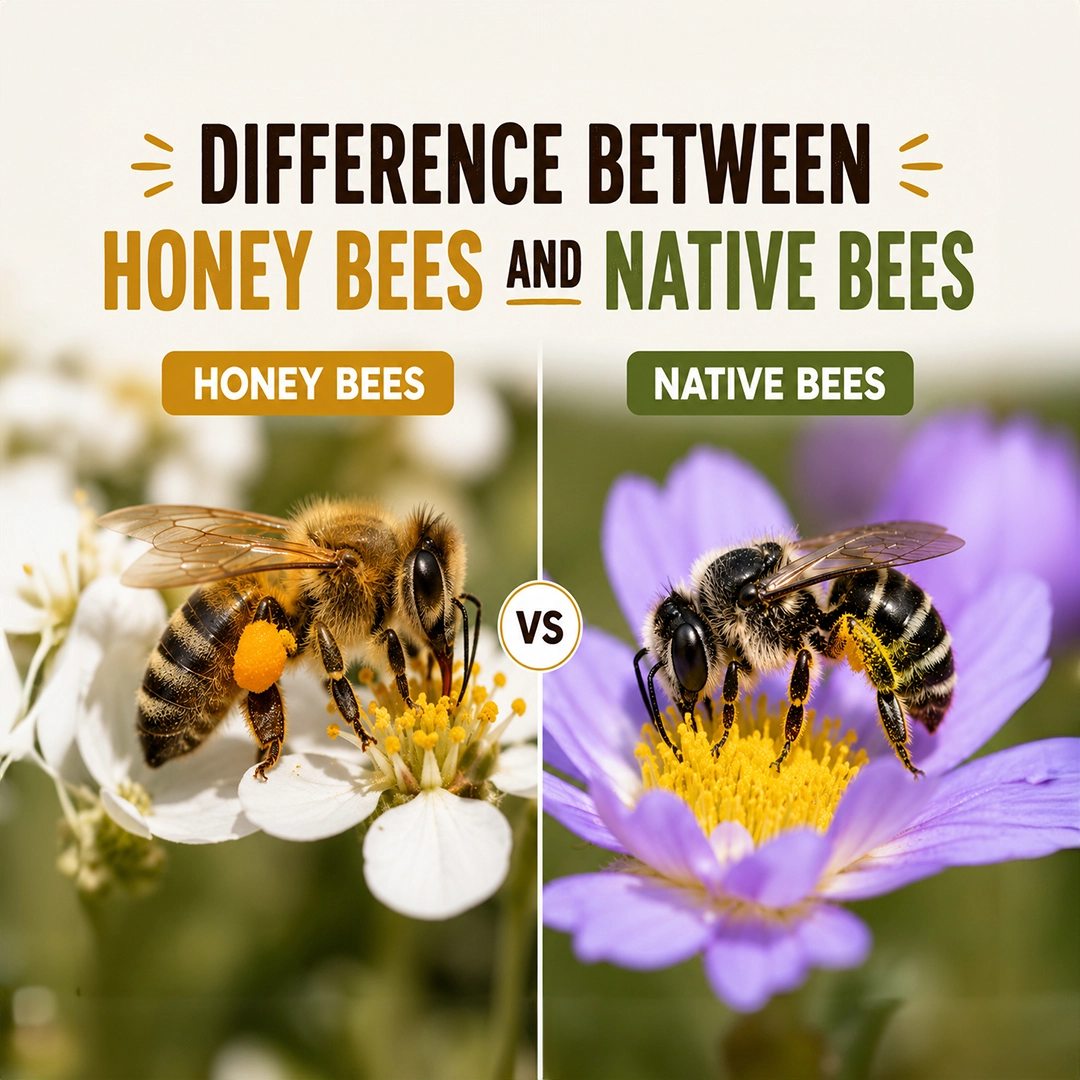
Honey bees typically have:
-
Golden-brown colouring
-
Fuzzy bodies
-
Distinct black abdominal stripes
Native bees exist in a wide range of colours and sizes. Some species are metallic green, blue, black, or even brightly banded.
The famous blue-banded bee is one of Australia's most recognisable native pollinators.
4. Pollination Methods
Both honey bees and native bees are excellent pollinators, but they work differently.
Many native bee species perform buzz pollination, a technique where they vibrate flowers to release pollen. This makes them particularly effective at pollinating crops such as tomatoes, blueberries, and eggplants.
Honey bees cannot perform buzz pollination but are highly efficient at visiting large numbers of flowers across wide areas.
Which Bee Is Better for Pollination?
The answer depends on the plant.
Honey bees are highly effective for:
-
Fruit trees
-
Almonds
-
Canola
-
Clover
-
Many commercial crops
Native bees are often better for:
-
Australian native plants
-
Tomatoes
-
Blueberries
-
Eggplants
-
Certain wildflowers
Research shows that having both honey bees and native bees present can improve overall pollination rates and crop yields.
Why Native Bees Matter
Australia’s native bees have developed in close relationships with local plants over countless generations, making them an important part of the country's ecosystems.Some native plants rely almost entirely on native bee species for successful pollination.
Supporting native bee populations can help:
-
Improve biodiversity
-
Increase pollination of native plants
-
Strengthen local ecosystems
-
Support sustainable food production
Simple actions such as planting flowering natives and reducing pesticide use can make a significant difference.
Can Honey Bees and Native Bees Coexist?
In most environments, honey bees and native bees share the same landscape without significant issues.
A healthy environment with diverse flowering plants provides enough nectar and pollen resources for multiple pollinator species. A well-planned pollinator garden provides valuable food sources for honey bees while also helping native bee populations thrive. The goal is not to choose one over the other but to support a balanced ecosystem where all pollinators can thrive.
How to Support Both Honey Bees and Native Bees
If you want to encourage pollinators in your garden or property:
-
Plant a variety of flowering plants
-
Include native Australian species
-
Provide clean water sources
-
Avoid unnecessary pesticide use
-
Leave some natural nesting areas for native bees
-
Maintain healthy honey bee colonies
These small steps can create valuable habitat for a wide range of pollinating insects.
Conclusion
When comparing honey bees and native bees, it's clear that both play vital roles in Australia's environment. Honey bees are exceptional honey producers and commercial pollinators, while native bees contribute unique pollination services that many plants depend on.
By understanding the strengths of each species, beekeepers and gardeners can help create healthier ecosystems and more productive landscapes.
Whether you're new to beekeeping or expanding your apiary, Hornsby Beekeeping Supplies offers the knowledge, equipment, and support you need to succeed. Call +61296255424 or email info@hornsby-beekeeping.com for professional guidance and quality beekeeping products.
FAQs
What is the main difference between honey bees and native bees?
Honey bees live in large colonies and produce surplus honey, while most native bees are solitary and focus primarily on pollination rather than honey production.
Do native bees make honey?
Some stingless native bee species produce honey, but the quantity is much smaller than that produced by honey bees.
Are native bees better pollinators than honey bees?
For certain plants, yes. Many native bees can perform buzz pollination, making them more effective pollinators for specific crops and native plants.
Can I keep both honey bees and native bees on my property?
Yes. A diverse and pollinator-friendly environment can support both honey bees and native bees successfully.