

















Honey Spinner: Equipment and Tips for Clean Honey Harvesting
Author: Hornsby Beekeeping Date Posted:2 July 2026
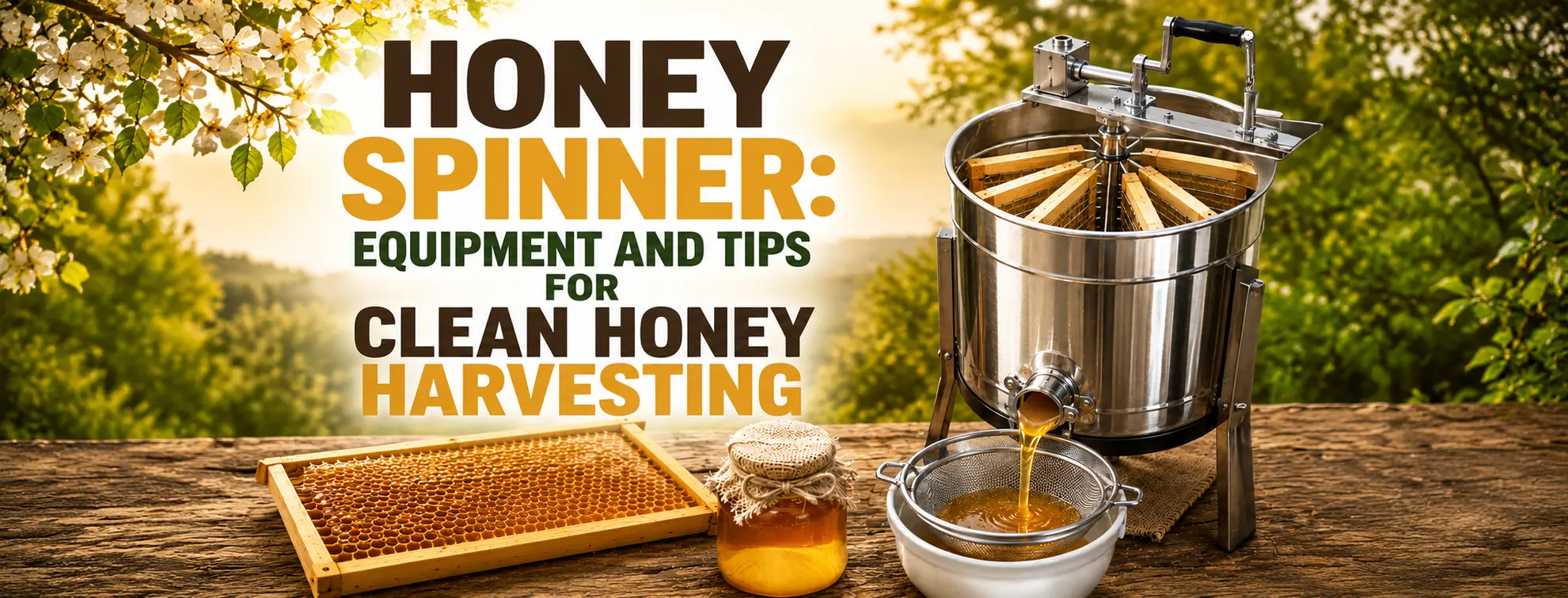
A honey spinner is one of the most useful tools for beekeepers who want to extract honey cleanly while keeping the comb intact. Instead of crushing the comb, a honey spinner uses centrifugal force to remove honey from uncapped frames. This allows beekeepers to return drawn comb to the hive, helping bees save time and energy during the next honey flow.
For Australian beekeepers, clean honey harvesting is about more than getting honey into a bucket. It also involves choosing the right equipment, harvesting at the right time, keeping tools hygienic and protecting honey quality from hive to jar. A good honey spinner can make the process smoother, faster and less messy when used properly.
Whether you are a beginner with one or two hives or a growing hobby beekeeper with several colonies, understanding how to use and maintain a honey spinner will help you get better results during extraction.
What Is a Honey Spinner?
A honey spinner is also known as a honey extractor. It is a beekeeping machine used to spin honey out of frames after the wax cappings have been removed. The frames are placed inside the spinner basket, and when the basket turns, honey is forced out of the comb and collected at the bottom of the drum.
Most honey spinners are made from stainless steel because it is durable, easy to clean and suitable for food handling. Some small beginner models may hold two frames, while larger models may hold four, six, eight or more frames depending on the beekeeper’s needs.
A honey spinner helps beekeepers harvest honey while preserving the comb. This is one of its biggest benefits. Drawn comb is valuable because bees spend a lot of energy making wax, so returning extracted frames to the hive can support faster honey storage in the next flow.
Why Use a Honey Spinner for Honey Extraction?
A honey spinner is useful because it extracts honey without destroying the comb. This makes it different from crush-and-strain methods, where the comb is broken down to separate honey from wax. Crush-and-strain can work for small batches, but it means bees must rebuild the comb before using those frames again.
Using a honey spinner can help with:
-
Cleaner honey extraction
-
Faster processing of multiple frames
-
Reuse of drawn comb
-
Less wax waste
-
Better honey flow during extraction
-
Easier handling for hobby and small-scale beekeepers
-
A more organised harvest process
For beekeepers who harvest more than a few frames, a spinner is usually more practical than hand-straining every comb. It also helps keep the honey harvest cleaner when used with proper uncapping, filtering and storage equipment.
Main Types of Honey Spinners
Honey spinners come in different sizes and styles. The right type depends on how many hives you manage, how often you harvest and how much honey you expect to extract.
Manual Honey Spinner
A manual honey spinner is operated by turning a hand crank. It is usually affordable, simple to use and suitable for beginners or small beekeepers. Manual models are slower than electric models, but they give the beekeeper good control over spinning speed.
Manual honey spinners are ideal for:
-
Backyard beekeepers
-
Beginners
-
Small harvests
-
One to five hives
-
Beekeepers who harvest occasionally
-
Lower-budget setups
The main limitation is effort. If you have many frames to extract, hand-cranking can become tiring.
Electric Honey Spinner
An electric honey spinner uses a motor to spin the basket. This makes extraction easier and more consistent, especially when handling larger harvests. Many electric models allow speed control, which helps prevent comb blowouts when frames are heavy or fragile.
Electric honey spinners are useful for:
-
Larger hobby apiaries
-
Frequent honey harvesting
-
Multiple hives
-
Beekeepers processing many frames
-
Faster extraction sessions
-
More consistent spinning
The main downside is cost. Electric models are more expensive, and they need a safe power source.
Tangential Honey Spinner
In a tangential extractor, frames sit with one side facing outward. Honey is extracted from one side first, then the frame is turned around to extract the other side. Many small manual honey spinners use this design.
Tangential spinners are simple and effective for small-scale use. They can be gentle on frames when used carefully, but the beekeeper needs to flip the frames during the process.
Radial Honey Spinner
In a radial extractor, frames are arranged like spokes in a wheel. Honey can be extracted from both sides of the frame without manually turning each frame. This design is common in larger models and can save time during bigger harvests.
Radial spinners are often preferred by beekeepers who process more frames, but they are usually larger and more expensive than small tangential models.
Equipment Needed for Clean Honey Harvesting
A honey spinner is only one part of the extraction setup. To harvest cleanly, you also need uncapping tools, food-safe containers, filters and a clean workspace. Good preparation makes the process smoother and helps protect honey quality.
Useful equipment includes:
-
Honey spinner or extractor
-
Uncapping knife or uncapping fork
-
Uncapping tray or tub
-
Food-grade bucket
-
Honey strainer or filter
-
Settling tank or storage bucket
-
Clean jars or bottles
-
Bucket gate or honey tap
-
Clean towels or cloths
-
Food-safe gloves
-
Protective clothing for removing frames
-
Bee brush or blower if needed
-
Clean storage area for extracted frames
Before harvest day, make sure everything is clean, dry and ready. Honey extraction becomes messy when equipment is missing or unprepared.
When Is Honey Ready to Extract?
The best time to use a honey spinner is when the honey is mature and properly capped. Bees cap honey when moisture has been reduced enough for safe storage. If you extract honey too early, it may contain too much moisture and could ferment.
A good rule is to harvest frames that are mostly capped. Many beekeepers look for frames that are at least around 80% capped before extraction. However, local conditions, nectar type and hive behaviour can affect this, so beekeepers should inspect carefully.
Signs honey may be ready include:
-
Most honey cells are capped with wax
-
The frame feels heavy
-
Nectar does not shake out easily
-
The honey has a thick consistency
-
The colony has surplus stores
-
Weather has supported nectar ripening
-
Bees are actively filling honey supers
Do not harvest honey that the bees still need for survival. Always leave enough stores for the colony, especially before winter, drought or nectar gaps.
Where the Honey Spinner Fits in the Extraction Process
The honey spinner is used after frames are removed from the hive and uncapped. It is not the first step in harvesting. Before using the spinner, the beekeeper must select suitable frames, remove bees from the frames and take them to a clean extraction area.
A simple extraction process looks like this:
- Inspect the hive and select capped honey frames.
- Remove bees from the frames carefully.
- Take frames to a clean extraction area.
- Uncap both sides of each frame.
- Place frames into the honey spinner.
- Spin slowly at first, then increase speed.
- Flip frames if using a tangential spinner.
- Drain honey through the outlet.
- Strain honey into a food-grade bucket.
- Let honey settle before bottling.
- Clean the spinner and tools after use.
This sequence helps keep the process organised and reduces the chance of contamination, spills or damaged comb.
How to Use a Honey Spinner Properly
Using a honey spinner is simple, but technique matters. If you spin too fast at the start, a heavy honey-filled comb can break. This is especially common with fresh comb or foundation that has not been strengthened by use.
Start slowly and let some honey leave the outer side of the comb. Then increase speed gradually. If using a tangential spinner, stop and turn the frames so the other side can be extracted. After both sides have been partly emptied, you can spin a little faster to remove more honey.
Tips for better spinning:
-
Balance frames evenly inside the basket
-
Start slowly to protect the comb
-
Increase speed gradually
-
Avoid forcing fragile new comb
-
Turn frames carefully if required
-
Keep the spinner lid closed while operating
-
Drain honey regularly so it does not build up too high
-
Stop if the extractor shakes or feels unbalanced
A smooth, balanced spin protects your equipment and gives cleaner results.
Manual vs Electric Honey Spinner: Which Is Better?
Both manual and electric honey spinners can work well. The best choice depends on the size of your apiary and how much honey you harvest.
A manual honey spinner is usually enough for beginners and small beekeepers. It costs less, needs no electricity and is easy to store. If you only harvest a few frames at a time, a manual model may be the most practical option.
An electric honey spinner becomes more useful when you have more hives or larger harvests. It saves time and effort and can make extraction more consistent. However, it costs more and may require more storage space.
Choose a manual spinner if:
-
You have a small number of hives
-
You harvest occasionally
-
You want a budget-friendly option
-
You prefer simple equipment
-
You do not need fast extraction
Choose an electric spinner if:
-
You manage several hives
-
You harvest larger batches
-
You want to reduce physical effort
-
You need faster processing
-
You extract honey regularly
For many hobby beekeepers, a small manual spinner is a good starting point. As the apiary grows, upgrading to an electric model may make sense.
Choosing the Right Size Honey Spinner
Honey spinner size should match your hive numbers and harvest volume. Buying too small may make extraction slow and frustrating. Buying too large may waste money and storage space.
A two-frame spinner is usually suitable for beginners with one or two hives. A four-frame spinner gives more flexibility and is a good option for growing hobby beekeepers. Larger extractors are better for beekeepers managing multiple hives or harvesting regularly.
As a general guide:
-
2-frame spinner: best for beginners and very small harvests
-
4-frame spinner: good for hobby beekeepers with a few hives
-
6-frame or larger spinner: better for larger hobby or semi-commercial use
-
Electric extractor: useful when harvest volume increases
Also consider frame size. Make sure the honey spinner is compatible with your frames, such as full-depth, ideal, WSP or other frame types used in your hive system.
Hygiene Tips for Clean Honey Harvesting
Honey is a food product, so hygiene matters from the hive to the jar. The extraction area should be clean, protected from dust and pests, and separate from chemicals, fuel, animals or dirty equipment.
Before extracting, wash hands, clean surfaces and make sure buckets, strainers, jars and tools are food-safe. Avoid using rusty, dirty or non-food-grade containers. Honey may be naturally stable, but poor handling can still introduce contamination.
Clean harvesting tips include:
-
Use food-grade buckets and containers
-
Keep extraction equipment clean and dry
-
Cover honey when not working with it
-
Keep pets and insects away from the extraction area
-
Avoid extracting in dusty or dirty spaces
-
Do not use containers that held chemicals
-
Keep water out of honey
-
Use clean strainers and bottling equipment
-
Store honey in sealed containers
-
Clean spills quickly
A clean setup protects honey quality and gives customers or family more confidence in the final product.
How to Clean a Honey Spinner After Use
Cleaning the honey spinner after extraction is easier if you do it before honey and wax residue dry. First, drain as much honey as possible from the drum. Then remove wax pieces, cappings and debris from inside the extractor.
Use warm water to rinse the inside of the drum and basket. Some beekeepers use mild food-safe detergent if needed, followed by a thorough rinse. Avoid harsh chemicals that could leave residues. After washing, allow the spinner to dry completely before storage.
Basic cleaning steps:
-
Drain remaining honey
-
Remove wax and debris
-
Rinse with warm water
-
Wash with mild food-safe cleaner if needed
-
Rinse thoroughly
-
Dry completely
-
Check moving parts
-
Store covered in a clean, dry place
Do not leave honey residue inside the spinner. It can attract ants, bees, rodents and other pests.
Honey Spinner Maintenance Tips
Good maintenance keeps your honey spinner working smoothly for many seasons. After cleaning, inspect the drum, basket, bearings, gears, handle, motor and honey gate. Small problems are easier to fix before the next harvest.
For manual spinners, check that the handle turns smoothly and that gears are not worn or sticky. For electric spinners, inspect cords, switches and motor areas safely. Do not wash electrical parts with water.
Maintenance checklist:
-
Check the honey gate for leaks
-
Inspect basket and frame holders
-
Make sure the drum is dry before storage
-
Check bearings and moving parts
-
Keep gears clean
-
Tighten loose screws or fittings
-
Inspect power cords on electric models
-
Store in a dry, covered location
-
Keep dust and pests out
-
Test before the next harvest
A well-maintained spinner saves time and prevents problems during extraction day.
Safety Tips When Using a Honey Spinner
A honey spinner has moving parts, so safety matters. Always keep the lid closed while spinning and keep hands, clothing and tools away from the basket. Do not let children operate the spinner without close supervision.
If using an electric model, place it on a stable surface and keep power cords away from wet areas. Do not overload the basket, and stop the machine if it shakes heavily or becomes unbalanced.
Important safety tips include:
-
Keep the lid closed while spinning
-
Balance frames evenly
-
Do not reach inside while the basket is moving
-
Keep loose clothing away from moving parts
-
Use stable flooring
-
Keep children and pets away
-
Follow manufacturer instructions
-
Use electrical equipment safely
-
Stop immediately if the spinner shakes badly
-
Clean spills to avoid slipping
Safe handling protects both the beekeeper and the equipment.
Common Mistakes to Avoid
Many honey extraction problems happen because beekeepers rush the process. A little preparation makes a big difference.
Common mistakes include:
-
Extracting uncapped or unripe honey
-
Using dirty or wet equipment
-
Spinning too fast at the start
-
Not balancing frames properly
-
Overloading the spinner
-
Forgetting to strain honey
-
Leaving honey uncovered
-
Using non-food-grade buckets
-
Not cleaning the spinner after use
-
Storing equipment while still damp
-
Harvesting too much honey from the colony
Avoiding these mistakes helps protect honey quality and reduces waste.
Tips for a Cleaner Honey Harvest
Clean honey harvesting starts before the spinner is turned on. Choose the right frames, work in a clean area and keep equipment organised. If the harvest is planned properly, extraction becomes easier and less stressful.
Helpful tips include:
-
Harvest only mature capped honey
-
Remove bees gently from frames
-
Keep frames covered during transport
-
Extract in a clean enclosed area
-
Warm the room slightly if honey is thick
-
Uncap neatly to reduce wax debris
-
Spin slowly at first
-
Filter honey after extraction
-
Let honey settle before bottling
-
Label and store honey properly
A clean harvest gives better-looking honey and makes the whole process more professional.
Final Thoughts
A honey spinner is an excellent investment for beekeepers who want clean, efficient honey extraction while preserving drawn comb. It helps remove honey from frames without crushing the comb, making it easier to return frames to the hive for future use.
The best results come from using the right size spinner, harvesting mature capped honey, uncapping frames properly, spinning gently, filtering the honey and cleaning equipment after use. For small Australian beekeepers, a manual honey spinner may be enough. For larger apiaries, an electric honey spinner can save time and effort.
Clean honey harvesting is not only about equipment. It is also about hygiene, safety, timing and care. When you prepare properly, your honey spinner can help turn a busy harvest day into a smooth and rewarding process.
If you need swarm collection equipment, nucleus boxes, protective clothing, or expert beekeeping advice, Hornsby Beekeeping Supplies is here to help. Contact our experienced team on 02 9477 5569 or email info@hornsby-beekeeping.com for trusted products and practical beekeeping support across Australia.
FAQs
What is a honey spinner used for during honey extraction?
A honey spinner is used to extract honey from uncapped frames without crushing the comb. It spins the frames so honey is forced out of the cells and collects at the bottom of the drum.
When is the right time to use honey spinner in the extraction process?
The right time to use a honey spinner is after capped honey frames have been removed from the hive, cleared of bees and uncapped. The spinner is used before filtering, settling and bottling the honey.
How do I clean and maintain a honey spinner after extracting honey?
Drain all remaining honey, remove wax debris, rinse the drum with warm water, wash with a mild food-safe cleaner if needed, rinse thoroughly and dry completely. Check moving parts, honey gate, basket, handle or motor before storing it in a clean, dry place.
Which size or type of honey spinner is best for small beekeepers?
For small beekeepers, a two-frame or four-frame manual honey spinner is usually enough. It is affordable, simple to use and suitable for small harvests. Beekeepers with several hives may prefer a larger or electric model.
What safety or hygiene tips should I follow when using a honey spinner?
Use clean food-grade equipment, keep the spinner lid closed while operating, balance frames evenly, keep hands away from moving parts, avoid wet electrical areas, cover honey during processing and clean the spinner immediately after use.