

















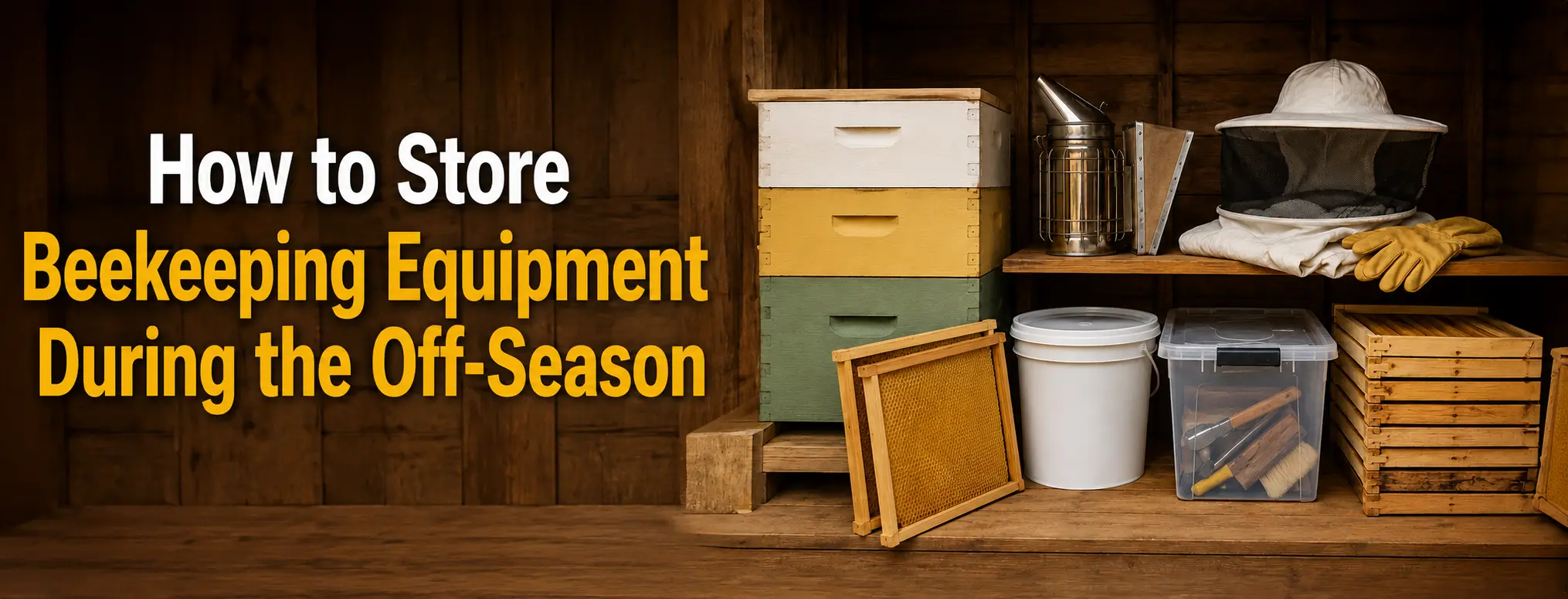
How to Store Beekeeping Equipment During the Off-Season
Author: Hornsby Beekeeping Date Posted:24 June 2026
Good beekeeping does not stop when the honey season ends.
The way you clean, repair and store your beekeeping equipment during the off-season can affect your next season’s hive health, honey production and pest control.
Poorly stored equipment can attract wax moth, small hive beetle, ants, mice, mould and other problems.
Frames can become damaged.
Boxes can warp.
Protective clothing can become dirty or unsafe.
Tools can rust.
Comb that took bees weeks to build can be destroyed if it is left unprotected.
For Australian beekeepers, off-season storage is especially important because warm conditions in many regions can allow pests to remain active for longer.
This guide explains how to store beekeeping equipment properly, including hive boxes, frames, drawn comb, tools, protective clothing, feeders and honey extraction gear.
Why Off-Season Beekeeping Equipment Storage Matters
Beekeeping equipment is an investment.
A well-maintained box, frame or suit can last for many seasons. But if equipment is left dirty, damp or exposed, it can quickly become unusable.
Off-season storage helps you protect your equipment, reduce pest risk and prepare for the next active season. It also gives you time to inspect what needs repair, replacement or cleaning before spring arrives.
When everything is organised, you can respond faster to swarm season, nectar flow, queen issues and hive expansion.
Main Risks to Stored Beekeeping Equipment
Stored equipment faces different risks from equipment being used by a strong colony.
In an active hive, bees help defend, comb and clean the space. In storage, there are no bees protecting it.
This means pests and moisture can cause damage quickly.
Common Storage Problems
-
Wax moth damage.
-
Small hive beetle hiding in equipment.
-
Ants attracted to honey residue.
-
Mice chewing frames or boxes.
-
Mould on damp frames.
-
Rust on hive tools and metal gear.
-
Fermentation from wet honey frames.
-
Cracked or warped timber boxes.
-
Dirty protective clothing.
-
Lost or mixed equipment parts.
Good storage reduces these problems before they start.
Step 1: Inspect All Equipment Before Storage
- Before storing anything, inspect it carefully.
- Do not simply stack boxes in a shed and forget about them.
- A proper inspection helps you separate clean, usable equipment from damaged or risky items.
What to Check
- Look for wax moth webbing or larvae.
- Check for small hive beetle activity.
- Look for mould or dampness.
- Check frames for broken lugs or warped timber.
- Inspect foundation and comb condition.
- Check boxes for cracks, rot or gaps.
- Look for old propolis and burr comb.
- Check lids and bases for damage.
- Inspect queen excluders for bent wires or blocked gaps.
- Look for signs of disease before reusing any hive material.
- If equipment came from a weak or unhealthy hive, inspect it with extra care.
- Never move suspect frames into storage with clean equipment until you understand the problem.
Step 2: Clean Hive Tools and Small Gear
Hive tools, smokers, frame grips and other hand tools often carry wax, propolis and honey residue.
If they are stored dirty, they can attract pests and become harder to use later.
How to Clean Hive Tools
-
Scrape off wax and propolis.
-
Wash tools where appropriate.
-
Dry metal tools properly.
-
Lightly oil metal parts if needed to reduce rust.
-
Store tools in a dry container or toolbox.
-
Keep sharp tools safely covered.
-
A clean hive tool is easier to use and better for general apiary hygiene.
Step 3: Clean and Store the Smoker Properly
A smoker is one of the most important beekeeping tools. If it is left full of old fuel, ash and sticky residue, it can become blocked or rusty.
Smoker Storage Tips
-
Empty ash after the smoker is completely cold.
-
Remove old fuel and debris.
-
Check the bellows for cracks or holes.
-
Scrape heavy tar build-up if needed.
-
Make sure airflow is clear.
-
Store the smoker in a dry place.
-
Keep spare fuel separate and dry.
-
Never store a smoker while it is hot or still smouldering.
-
Always make sure it is fully out before putting it away.
Step 4: Sort Frames Before Storage
Frames need special attention because they are one of the most valuable parts of the hive.
Drawn comb saves bees time and energy, but it is also attractive to wax moth and other pests.
Do not store all frames together without sorting them first.
Frame Categories
-
Empty new frames.
-
Frames with foundation.
-
Drawn comb frames.
-
Honey frames.
-
Brood frames.
-
Old dark comb.
-
Damaged frames.
-
Suspect disease-risk frames.
-
Each type should be handled differently.
Step 5: Store Drawn Comb Carefully
Drawn comb is very useful for future hive expansion. Bees can store nectar and raise broods faster when a drawn comb is available. However, a drawn comb is also one of the highest-risk items in storage.
Wax moths especially target comb that has contained brood, pollen or old hive material.
How to Protect Drawn Comb
-
Store comb in a cool, dry and well-ventilated place.
-
Keep boxes protected from pests.
-
Avoid dark, warm and poorly ventilated storage areas.
-
Freeze frames first if appropriate and practical.
-
Seal treated or cleaned comb to prevent reinfestation.
-
Check stored comb regularly.
-
Do not store damaged or diseased comb with clean frames.
-
If comb is old, black, brittle or heavily damaged, replacement may be better than storage.
Step 6: Understand Wax Moth Risk
Wax moth is one of the biggest threats to stored beekeeping equipment. Wax moth larvae can tunnel through comb, damage frames and leave webbing and debris behind. They are especially attracted to old brood comb and pollen-rich frames.
Warm conditions can make the problem worse.
Signs of Wax Moth Damage
-
Silky webbing through comb.
-
Tunnels in wax.
-
Larvae in frames or boxes.
-
Cocoon marks on timber.
-
Crumbly damaged comb.
-
Grey or dirty-looking webbed frames.
-
A strong hive can often control small numbers of wax moth.
-
Stored equipment cannot defend itself, so prevention is important.
Wax Moth Prevention Tips
-
Do not store dirty brood comb carelessly.
-
Keep stored frames cool and dry.
-
Increase airflow where safe.
-
Freeze frames before storage if suitable.
-
Inspect stored comb regularly.
-
Keep boxes sealed after treatment to prevent reinfestation.
-
Avoid storing frames in warm, dark corners.
-
Remove badly damaged comb rather than trying to save everything.
Step 7: Store Honey Supers Correctly
Honey supers need to be stored clean and dry.
If frames contain wet honey residue, they can attract ants, robbing bees, beetles or fermentation.
After Honey Extraction
-
Allow bees to clean wet supers if you use this method safely and responsibly.
-
Do not leave exposed honey frames in the open.
-
Do not create robbing pressure around the apiary.
-
Check frames before stacking.
-
Make sure supers are dry before long-term storage.
-
Keep extracted supers protected from pests.
Stacking Honey Supers
-
Stack boxes neatly.
-
Keep them off the ground.
-
Use a solid base and secure lid.
-
Protect from mice and insects.
-
Keep the stack in a dry and well-ventilated area.
-
Label boxes if needed.
-
If you store different frame types, keep them organised so they are easy to use next season.
Step 8: Protect Equipment From Small Hive Beetle
Small hive beetle can be a serious problem in some Australian regions, especially in warm and humid areas.
Stored equipment with pollen, honey or brood residue can attract beetles.
Weak colonies and poorly stored comb are at higher risk.
Small Hive Beetle Storage Tips
-
Do not store slimed or contaminated frames with clean equipment.
-
Keep equipment dry.
-
Avoid leaving honey residue exposed.
-
Freeze risky frames where practical.
-
Clean boxes before storage.
-
Store equipment away from damp ground.
-
Check stored gear during warm weather.
-
If equipment smells fermented or slimed, handle it carefully and do not put it back into a healthy hive without proper cleaning and assessment.
Step 9: Keep Boxes, Lids and Bases Dry
Moisture can damage wooden hive equipment. Damp boxes may grow mould, warp or rot.
Therefore, stored equipment should be protected from rain and ground moisture.
Storage Tips for Wooden Hive Parts
-
Store boxes off the floor.
-
Use shelves, pallets or hive stands.
-
Keep lids and bases stacked flat.
-
Avoid direct contact with damp concrete or soil.
-
Allow airflow around stacks.
-
Repair cracks before storage.
-
Repaint or reseal timber where needed.
-
Check for termites or other wood pests.
-
A dry storage area helps extend the life of hive equipment.
Step 10: Clean and Store Queen Excluders
Queen excluders can become blocked with wax and propolis.
If they are stored dirty, they may be harder to use next season.
Queen Excluder Storage Tips
-
Scrape off wax and propolis.
-
Check for bent or broken sections.
-
Wash and dry if appropriate.
-
Store flat to prevent bending.
-
Keep metal excluders dry to reduce rust.
-
Do not place heavy uneven weight on them.
-
A damaged queen excluder may restrict bee movement or allow the queen into honey supers.
-
Inspect it before reuse.
Step 11: Store Feeders Clean and Dry
Feeders can become sticky, mouldy or attractive to ants if they are not cleaned properly.
Sugar syrup residue can ferment and create unpleasant smells.
Feeder Storage Tips
-
Empty all leftover syrup.
-
Wash feeders thoroughly.
-
Allow them to dry completely.
-
Check for cracks or leaks.
-
Store lids and parts together.
-
Keep feeders in a sealed container if ants are a problem.
-
Do not store dirty feeders with clean frames.
-
Clean feeders are safer and easier to use when a colony needs support.
Step 12: Wash and Store Protective Clothing
Protective clothing should be cleaned before being packed away.
Bee suits, jackets, veils and gloves can collect sweat, smoke smell, wax, propolis and sting alarm pheromones.
Dirty clothing may also wear faster.
Bee Suit Storage Tips
-
Remove loose debris.
-
Wash according to the care label.
-
Detach veils if required before washing.
-
Dry completely before storage.
-
Check zips, elastic, cuffs and seams.
-
Repair holes before the next inspection season.
-
Store in a clean, dry place.
-
Avoid storing suits while damp.
-
A clean bee suit is more comfortable and safer to wear.
Step 13: Look After Beekeeping Gloves
Gloves often become sticky with honey and propolis.
They may also become stiff, cracked or contaminated.
Glove Storage Tips
-
Clean gloves according to their material.
-
Allow gloves to dry fully.
-
Check for holes or weak seams.
-
Replace gloves that no longer protect properly.
-
Store gloves away from rodents and moisture.
-
Keep them with your suit or inspection kit.
-
Good gloves help protect your hands and improve confidence during hive work.
Step 14: Clean Honey Extraction Equipment
Honey extraction gear must be cleaned carefully after use.
Extractors, filters, uncapping knives, buckets and strainers can hold honey residue.
If left dirty, they may attract ants, pests or mold.
Extraction Equipment Checklist
-
Clean the honey extractor.
-
Wash buckets and strainers.
-
Dry all equipment fully.
-
Check taps and seals.
-
Store food-grade containers with lids on.
-
Keep dust and insects out.
-
Store uncapping tools safely.
-
Inspect everything before the next harvest.
-
Clean extraction equipment helps protect honey quality and saves time next season.
Step 15: Label and Organise Your Equipment
Organisation is part of good beekeeping. When spring arrives, you do not want to search through messy stacks of boxes and frames.
Labelling helps you know what is clean, repaired, ready to use or needs attention.
Useful Labels
-
Clean drawn comb.
-
New foundation.
-
Honey supers.
-
Brood boxes.
-
It needs repair.
-
Do not use it.
-
Needs freezing.
-
Needs cleaning.
-
Suspect equipment.
-
Labels can be simple, but they save time and reduce mistakes.
Step 16: Repair Equipment During the Off-Season
The off-season is the best time to repair gear.
If you wait until spring, you may be too busy managing colonies, swarms and honey supers.
Common Repairs
-
Replace broken frames.
-
Tighten loose hive boxes.
-
Repair cracked lids.
-
Repaint weathered boxes.
-
Replace damaged foundation.
-
Fix broken feeders.
-
Repair suit zips and veil mesh.
-
Clean queen excluders.
-
Replace rusty or unsafe tools.
-
Well-maintained equipment makes the next beekeeping season easier and safer.
Step 17: Avoid Storing Suspect Disease Equipment With Clean Gear
This is very important.
If a hive has shown signs of disease, do not mix its equipment with clean equipment.
Some bee diseases can spread through contaminated frames, honey, wax or tools.
What to Do With Suspect Equipment
-
Keep it separate.
-
Label it clearly.
-
Do not reuse it until the issue is identified.
-
Ask an experienced beekeeper or relevant authority for advice.
-
Follow your state or territory biosecurity rules.
-
Do not sell or give away questionable equipment.
-
Good storage is also good biosecurity.
Step 18: Choose the Right Storage Area
The best storage area is dry, cool, clean, ventilated and secure.
It should protect equipment from rain, pests, rodents and direct sunlight.
Good Storage Locations
-
Clean garden shed.
-
Garage with good airflow.
-
Dedicated beekeeping storage room.
-
Cool room for larger operations.
-
Shelving system off the ground.
-
Sealed storage containers for small gear.
Poor Storage Locations
-
Damp corners.
-
Open outdoor areas.
-
Hot roof spaces.
-
Dark sealed spaces with no airflow.
-
Ground-level stacks exposed to ants or mice.
-
Areas with chemical fumes or pesticides.
-
Places where children or pets can access sharp tools.
Choose storage that protects both the equipment and the people around it.
Off-Season Storage Checklist
-
Inspect all equipment before storage.
-
Separate clean, damaged and suspect items.
-
Clean hive tools and smokers.
-
Sort frames by type and condition.
-
Protect drawn comb from wax moth.
-
Store boxes off the ground.
-
Keep equipment dry and ventilated.
-
Clean feeders and extraction gear.
-
Wash and repair protective clothing.
-
Label boxes and frames clearly.
-
Check stored equipment regularly.
-
Follow Australian biosecurity responsibilities.
-
Prepare replacement gear before spring.
Common Mistakes When Storing Beekeeping Equipment
Storing Wet Frames
Wet frames can ferment, attract pests and smell unpleasant.
Always dry equipment properly before storage.
Leaving Comb in Warm, Dark Places
Warm, dark and poorly ventilated storage can encourage wax moth damage.
Mixing Diseased Equipment With Clean Gear
This can spread serious problems into healthy hives later.
Forgetting to Check Stored Equipment
Storage is not set-and-forget.
Inspect frames and boxes during the off-season.
Leaving Gear on the Ground
Ground storage increases moisture, ants, rodents and damage risk.
Not Preparing Before Spring
Spring can become very busy.
Clean and repair equipment before the active season starts.
Final Thoughts
Storing beekeeping equipment properly during the off-season protects your investment and supports healthier hives next season.
-
Clean your tools.
-
Sort your frames.
-
Protect drawn comb.
-
Keep boxes dry.
-
Wash protective clothing.
-
Store feeders and extraction gear clean and ready.
-
Most importantly, keep pest prevention and biosecurity in mind.
Well-stored equipment helps you start the next season with confidence instead of dealing with damaged frames, wax moth, rust, mold or missing gear.
If you need swarm collection equipment, nucleus boxes, protective clothing, or expert beekeeping advice, Hornsby Beekeeping Supplies is here to help.
Contact our experienced team on 02 9477 5569 or email info@hornsby-beekeeping.com for trusted products and practical beekeeping support across Australia.
FAQs
How should I store bee frames during the off-season?
Store bee frames in a cool, dry and protected area.
Drawn comb should be checked regularly and protected from wax moth, moisture and rodents.
Can wax moth damage stored frames?
Yes.
Wax moth can seriously damage stored comb, especially old brood comb or frames containing pollen residue.
Should I freeze bee frames before storage?
Freezing can help reduce pest risk where practical, especially for comb that may contain wax moth eggs or larvae.
After freezing, frames still need to be protected from reinfestation.
How do I store honey supers after extraction?
Clean and dry honey supers before storage.
Stack them off the ground, protect them from pests and keep them in a dry, ventilated area.
Can I store beekeeping equipment outside?
Outdoor storage is not ideal unless the equipment is fully protected from rain, pests, sun and moisture.
A dry shed, garage or covered storage area is better.
How do I stop ants getting into stored beekeeping gear?
Clean honey and syrup residue from equipment.
Store gear off the ground and use sealed containers for small items where needed.
Should I wash my bee suit before storing it?
Yes.
Wash and fully dry your bee suit before storage.
Check for holes, broken zips or veil damage before the next season.
What should I do with old dark brood comb?
Old, damaged or heavily dark brood comb may be better replaced rather than stored.
Do not reuse comb if you suspect disease or serious contamination.
How often should I check stored beekeeping equipment?
Check stored equipment regularly during the off-season, especially in warm Australian regions where pests can stay active.
Why is off-season equipment storage important?
Good storage prevents pest damage, mould, rust, equipment loss and biosecurity issues.
It also helps you prepare faster when the next beekeeping season begins.