

















Manual vs Electric Extractors: Which Honey Extractor Is Right for You?
Author: Hornsby Beekeeping Date Posted:18 June 2026
Choosing the right honey extractor is one of the most important decisions a beekeeper can make. Whether you're working with a single backyard hive or managing multiple colonies, the right honey extractor can significantly improve efficiency, reduce labour, and increase honey production.
The most common question beekeepers ask is: Should I choose a manual or electric honey extractor?
The answer depends on your hive numbers, harvesting frequency, budget, and long-term beekeeping goals. This guide compares manual vs electric extractors to help you determine which option best suits your operation.
What Is a Honey Extractor?
A honey extractor is a piece of beekeeping equipment designed to remove honey from capped frames without damaging the comb.
The extractor spins honey frames at high speed, using centrifugal force to pull honey from the cells. The honey collects at the bottom of the tank and is released through a honey gate for filtering and storage.
This process allows beekeepers to:
-
Extract honey efficiently
-
Preserve drawn comb for reuse
-
Reduce wax rebuilding requirements
-
Improve honey harvesting productivity
Manual vs Electric Extractors: What's the Difference?
The main difference lies in how the basket is rotated.
Manual Honey Extractors
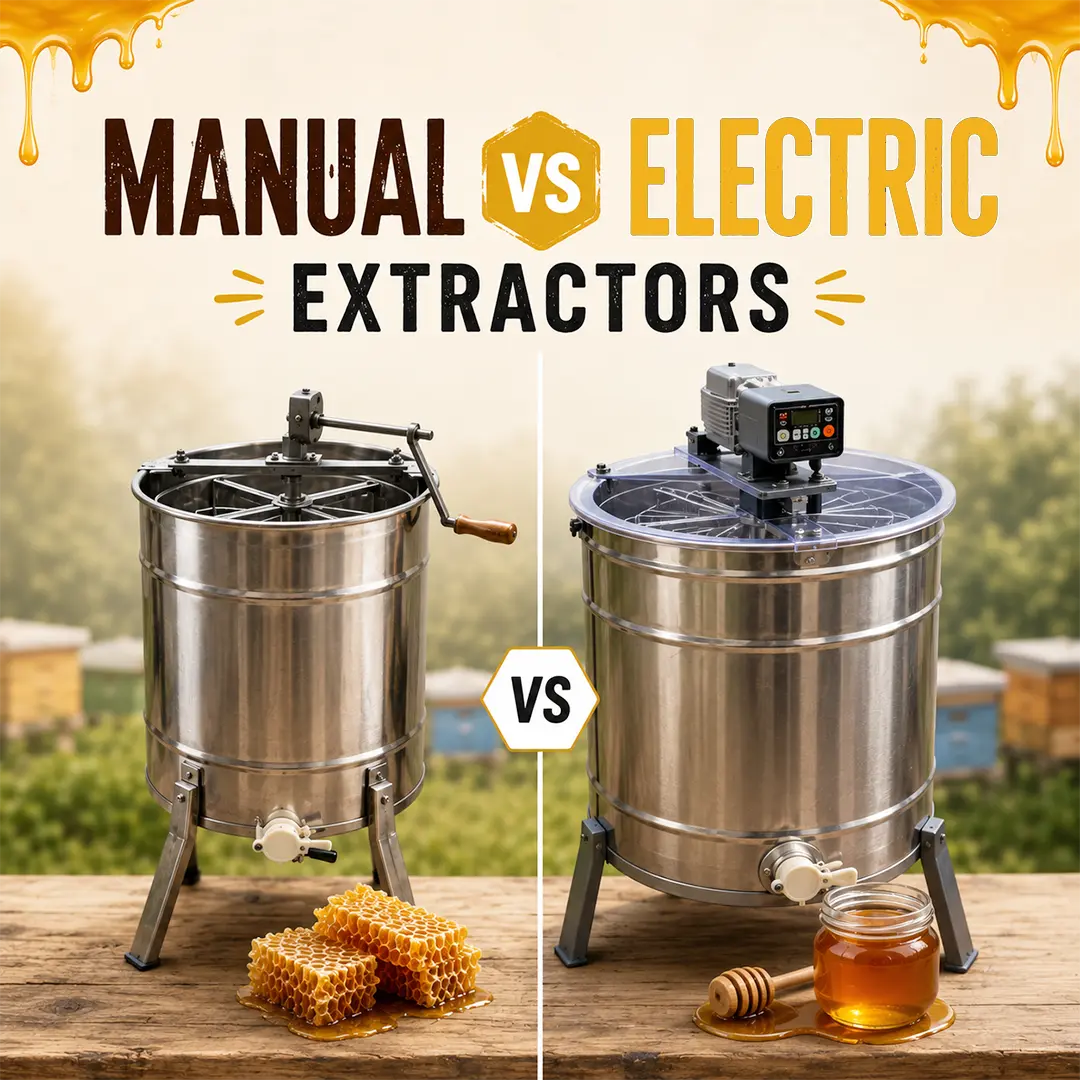
A manual honey extractor works by using a hand crank to rotate the frames inside the drum.
The beekeeper manually controls how fast and in which direction the frames are spun during extraction.
Electric Honey Extractors
An electric honey extractor is powered by a motor that automatically spins the frames.
It delivers a steady and controlled rotation with very little physical effort required from the beekeeper.
It delivers a steady and controlled rotation with very little physical effort required from the beekeeper.
Although both types are used to remove honey from frames, they differ in efficiency, effort level, and suitability depending on the scale of beekeeping operations.
Advantages of Manual Honey Extractors
Manual extractors remain popular among beginner and hobbyist beekeepers for several reasons.
Lower Initial Cost
Manual units are generally more affordable than electric extractors, making them an attractive option for new beekeepers.
Simple Operation
With fewer mechanical components, manual extractors are easy to operate and maintain.
No Power Required
A manual honey extractor can be used anywhere, including remote apiaries without access to electricity.
Ideal for Small Apiaries
For beekeepers managing a few hives, manual extraction is often sufficient and cost-effective.
Disadvantages of Manual Honey Extractors
Although manual extractors offer several benefits, they also have limitations.
More Physical Effort
Harvesting multiple boxes of honey requires considerable cranking and can become tiring.
Slower Extraction Process
Manual spinning takes longer, especially during larger harvests.
Inconsistent Speed
Because the extractor relies on human effort, maintaining a constant speed can be difficult.
For beekeepers with growing apiaries, these limitations often become more noticeable over time.
Advantages of Electric Honey Extractors
Electric honey extractors are designed for efficiency and higher-volume honey production.
Faster Honey Extractions
Motorised systems can process significantly more frames in less time.
Reduced Physical Labour
The motor does the work, allowing beekeepers to focus on uncapping, filtering, and bottling.
Consistent Results
Controlled speeds help ensure smooth and uniform extraction.
Better for Larger Apiaries
As hive numbers increase, electric extractors become increasingly valuable for saving time and labour.
Disadvantages of Electric Honey Extractors
Despite their advantages, electric models may not be the best fit for every beekeeper.
Higher Purchase Cost
Electric extractors require a larger initial investment than manual units.
Power Requirements
Electric honey extractors rely on a steady power supply to operate efficiently during the extraction process.
Additional Maintenance
Over time, the motor and other electrical components may require routine servicing or occasional replacement to ensure consistent performance.
However, many beekeepers find that the time savings quickly justify the higher cost.
Which Extractor Is Best for Beginners?
For most new beekeepers with one to five hives, a manual honey extractor is often the most practical starting point.
Benefits for beginners include:
-
Lower investment
-
Easy maintenance
-
Simple learning curve
-
Suitable harvesting capacity
A quality 3-frame or 4-frame extractor is usually sufficient for small-scale honey production.
When Should You Upgrade to an Electric Extractor?
Many beekeepers upgrade when hive numbers increase and harvesting becomes more demanding.
An electric extractor may be worth considering if you:
-
Manage more than 10 hives
-
Conduct multiple harvests each season
-
Sell honey commercially
-
Want to reduce extraction time
-
Need higher processing capacity
For growing operations, an electric model can significantly improve productivity.
Radial vs Tangential Extractors
When comparing honey extractors, you'll also encounter radial and tangential designs.
Radial Honey Extractor
Frames face outward like spokes on a wheel.
Benefits include:
-
Faster extraction
-
Greater frame capacity
-
Less frame handling
Tangential Honey Extractor
Frames are positioned side-on and usually require flipping during extraction.
Benefits include:
-
Lower cost
-
Suitable for smaller operations
-
Effective for hobby beekeeping
Many larger electric extractors use radial designs because they improve extraction efficiency.
Factors to Consider Before Buying
Before selecting a honey extractor, consider:
Number of Hives
The more colonies you manage, the more important extraction speed becomes.
Budget
Manual extractors have lower upfront costs, while electric models provide long-term efficiency gains.
Available Space
Larger extractors require additional storage and workspace.
Future Growth
Buying slightly larger equipment than you currently need can help accommodate future expansion.
Conclusion
The choice between a manual and electric honey extractor ultimately depends on your beekeeping goals.
A manual honey extractor is an excellent option for hobbyists and beginners looking for an affordable and reliable solution. However, as hive numbers increase and honey production grows, an electric honey extractor can save valuable time and reduce physical effort during harvest season.
Investing in the right honey extraction equipment today can improve efficiency, protect your comb, and make harvesting far more enjoyable.
If you're unsure which honey extractor best suits your apiary, the team at Hornsby Beekeeping Supplies can help. Contact us on +61 2 9477 5569 or email info@hornsby-beekeeping.com for expert advice on honey extractors, beekeeping equipment, and honey harvesting solutions.
FAQs
Is a manual honey extractor good enough for beginners?
Yes. Manual honey extractors are affordable, easy to use, and ideal for beekeepers managing a small number of hives.
Are electric honey extractors worth the investment?
For beekeepers with larger apiaries or frequent honey harvests, electric extractors can save significant time and labour.
How many hives justify an electric extractor?
Many beekeepers consider upgrading once they reach 10 or more hives, although the decision depends on harvesting volume and personal preference.
What is the difference between a radial and tangential honey extractor?
A radial honey extractor spins frames outward and generally processes more frames at once, while a tangential extractor positions frames side-on and often requires them to be flipped during extraction.