

















Queen Excluder: What It Is and How It Works in a Beehive
Author: Hornsby Beekeeping Date Posted:16 March 2026
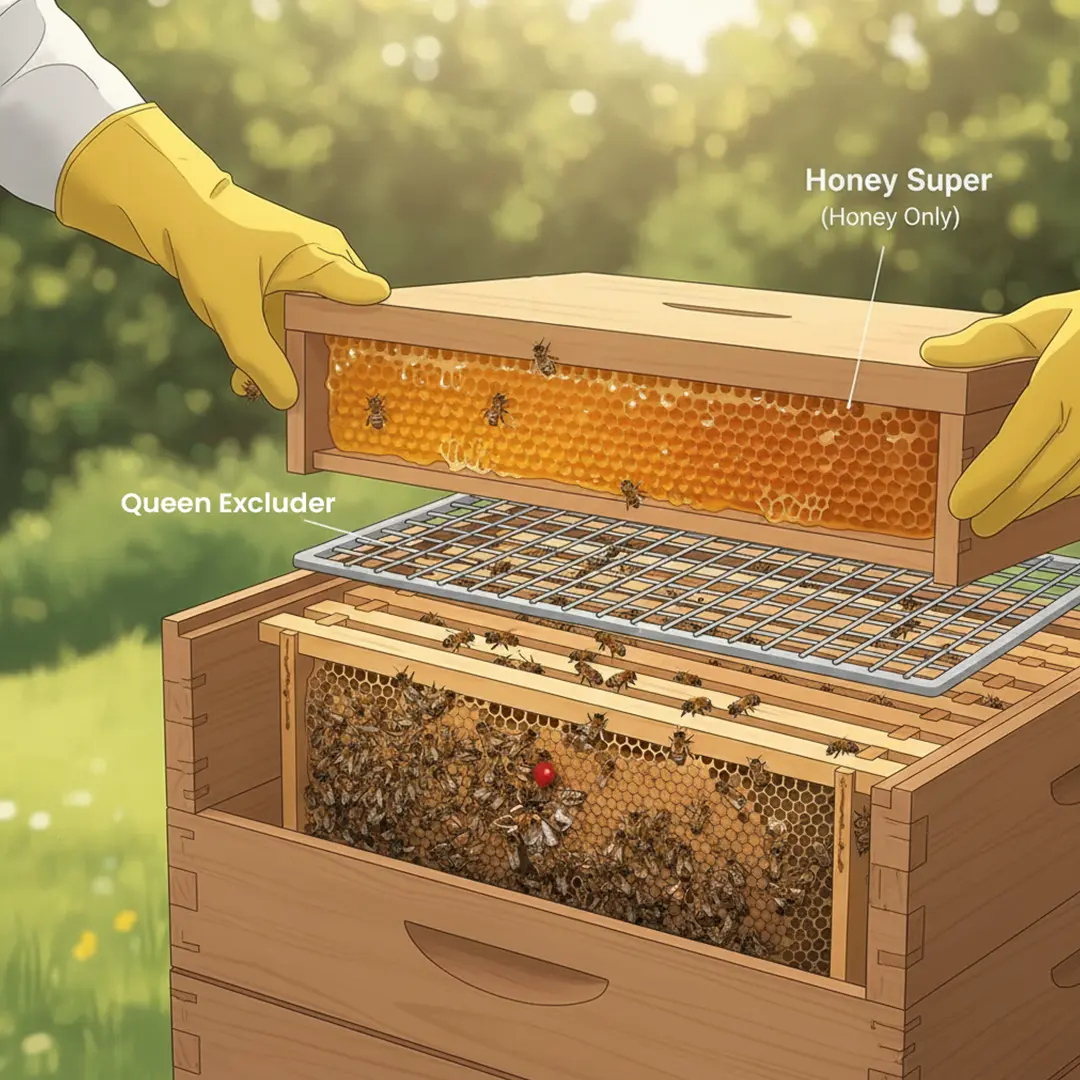
A queen excluder is a simple device used in beekeeping to control where the queen bee can move inside a hive. It acts as a barrier that separates the brood chamber from the honey storage area.
The spacing in the excluder allows worker bees to pass through easily while blocking the larger queen bee and drone bees. This helps prevent the queen from laying eggs in the honey supers, which keeps honey frames clean and easier to harvest.
In a healthy hive, three types of bees live together: the queen, workers, and drones. The queen lays eggs, worker bees collect nectar and pollen, and drones help with reproduction. By limiting the queen’s movement, beekeepers can better organize the hive and manage honey production.
How a Queen Excluder Works in a Beehive
In most hive setups, the excluder is placed between the brood box and the honey super. The brood box is where the queen lays eggs and where young bees develop.
With this setup:
- Worker bees can travel freely between the brood area and honey supers.
- The queen remains in the brood chamber where she lays eggs.
- Honey supers stay free from brood, making harvesting simpler.
This arrangement is commonly used in Langstroth hives, one of the most popular hive designs in modern beekeeping.
Types of Queen Excluders
Beekeepers can choose from several types depending on their preference and hive setup.
- Plastic models are lightweight, affordable, and commonly used by beginners.
- Metal versions are more durable and often preferred by experienced or commercial beekeepers.
- Wire designs are also available and allow smooth movement for worker bees while restricting larger bees.
All of these options serve the same purpose: helping manage the structure of the hive.
Advantages of Using an Excluder
Many beekeepers use this tool because it helps maintain a clear separation between brood and honey storage.
Some benefits include:
- Keeps honey frames free of brood
- Makes honey harvesting faster
- Helps locate the queen more easily
- Produces cleaner honey frames
These advantages can be particularly helpful for beekeepers managing multiple hives.
Possible Drawbacks to Consider
Despite its usefulness, some beekeepers prefer not to use an excluder. They believe bees should be allowed to move freely within the hive.
A few concerns include:
- Some colonies may hesitate to cross the barrier at first
- Brood boxes may become crowded if space is limited
- Bees may fill gaps with wax or propolis over time
Because of these factors, using one often comes down to the beekeeper’s management style.
Final Thoughts
A queen excluder can be a useful addition to a hive, especially for beekeepers who want to keep honey supers free from brood. While not every beekeeper chooses to use one, it remains a practical tool that helps simplify hive organization and honey harvesting.
Faqs
1. What does a queen excluder do in a beehive?
A queen excluder is used to keep the queen bee inside the brood chamber while allowing worker bees to move freely through the hive. This helps prevent the queen from laying eggs in honey supers, keeping honey frames free from brood and easier to harvest.
2. Do all beekeepers use a queen excluder?
No, not all beekeepers use one. Some prefer natural hive management where the queen can move freely throughout the hive. However, many hobbyist and commercial beekeepers use a queen excluder because it helps keep brood separate from honey storage.
3. When should you install a queen excluder?
Most beekeepers install a queen excluder when they add honey supers to the hive during the honey flow season. This ensures that the queen stays in the brood box and the upper frames are used only for honey storage.