

















Second Hand Honey Extractor for Sale Australia: Equipment and Tips for Clean Honey Harvesting
Author: Hornsby Beekeeping Date Posted:13 July 2026
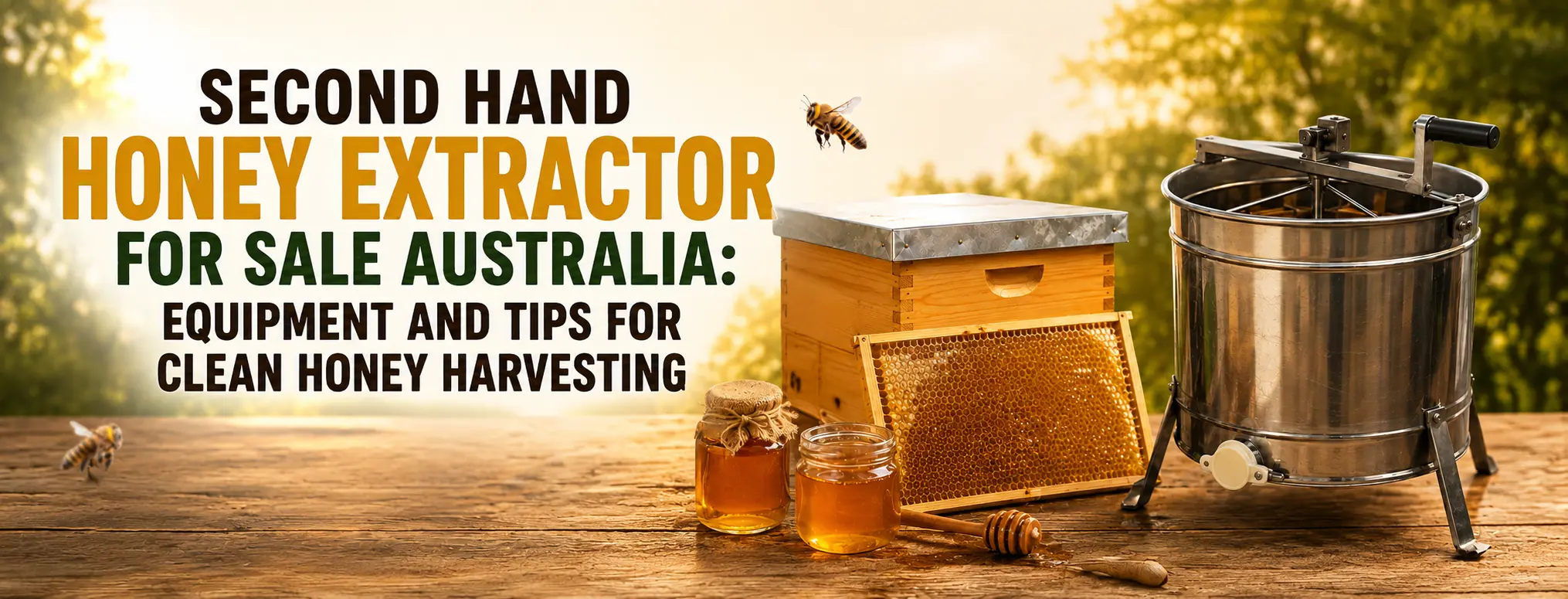
Buying a second hand honey extractor for sale australia can be a practical option for beekeepers who want to harvest honey without paying full price for new equipment. A honey extractor helps remove honey from uncapped frames while keeping the comb mostly intact, which means bees can reuse the drawn comb again.
However, second hand equipment needs careful checking. Since honey is a food product, the extractor must be clean, food-safe, rust-free and easy to sanitise. Therefore, before buying a used extractor, look closely at its condition, material, size and moving parts.
For Australian beekeepers, a good second hand honey extractor can save money and support clean honey harvesting, but only if it is inspected and maintained properly.
What Is a Second Hand Honey Extractor Used For?
A second hand honey extractor is used to spin honey out of frames after the wax cappings have been removed. The frames are placed inside the extractor basket, and as the basket spins, honey is forced out of the comb and drains to the bottom of the drum.
This is helpful because it allows beekeepers to harvest honey without crushing the comb. As a result, extracted frames can often be returned to the hive, where bees can refill them during the next nectar flow.
A honey extractor is useful for:
-
Removing honey from capped frames
-
Keeping drawn comb reusable
-
Reducing wax waste
-
Harvesting cleaner honey
-
Processing more frames faster
-
Supporting small or growing apiaries
For beginners with only a few frames, crush-and-strain may work. However, once harvests become larger, an extractor is usually more efficient.
When to Use It in the Extraction Process
A honey extractor is used after the honey frames are removed from the hive and uncapped. It is not used before checking that the honey is mature. If honey is harvested too early, it may contain too much moisture and could ferment.
The basic process is:
- Select mostly capped honey frames.
- Remove bees from the frames.
- Take frames to a clean extraction area.
- Uncap both sides of the frames.
- Place frames into the extractor.
- Spin slowly, then increase speed.
- Drain honey into a food-grade bucket.
- Strain and settle honey before bottling.
- Clean the extractor after use.
Good timing matters. If the frames are not properly capped, wait until the bees finish ripening the honey.
How to Choose a Second Hand Honey Extractor
When checking a second hand honey extractor for sale australia, condition matters more than appearance. A shiny extractor may still have worn bearings, a leaking honey gate or poor frame support. Meanwhile, an older extractor may work well if it has been cleaned and stored properly.
Before buying, check:
-
Stainless steel condition
-
Rust, dents or cracks
-
Food-safe contact surfaces
-
Basket strength
-
Frame size compatibility
-
Honey gate condition
-
Smooth spinning movement
-
Handle, gears or motor function
-
Stability when operating
-
Ease of cleaning
Avoid extractors with heavy rust, chemical smells, damaged welds or unknown previous use. If the extractor cannot be cleaned properly, it is not worth the risk.
Manual or Electric: Which Is Best?
Manual extractors are usually suitable for small beekeepers. They are cheaper, simple to operate and do not need power. In addition, they give beginners good control over spinning speed, which helps protect fragile comb.
Electric extractors are better for larger harvests. They save time and physical effort, especially when processing many frames. However, they cost more and need extra care around electrical safety.
Choose a manual extractor if:
-
You have one to five hives
-
You harvest small batches
-
You want a budget-friendly option
-
You do not need fast processing
Choose an electric extractor if:
-
You manage several hives
-
You extract larger harvests
-
You want less manual effort
-
You need more consistent spinning
For many hobby beekeepers, a two-frame or four-frame manual extractor is enough.
Cleaning a Used Honey Extractor
Cleaning is essential, especially with second hand equipment. Before first use, wash the extractor thoroughly and inspect all surfaces that touch honey. Remove old wax, propolis, dust and residue.
After each harvest, drain all honey from the drum, then rinse with warm water. Use mild food-safe detergent if needed, rinse well and dry completely before storage. Do not leave honey residue inside because it can attract ants, bees, rodents and mould.
Cleaning steps include:
-
Drain remaining honey
-
Remove wax and debris
-
Rinse with warm water
-
Wash with food-safe cleaner if needed
-
Rinse thoroughly
-
Dry completely
-
Check the honey gate
-
Store covered in a dry place
If the extractor has electrical parts, keep water away from the motor and wiring.
Safety and Hygiene Tips
Honey harvesting should be clean and organised. Since honey is food, use food-grade buckets, clean strainers and dry jars. Also, avoid extracting in dusty areas or places near fuel, chemicals, pets or dirty equipment.
Important safety and hygiene tips include:
-
Use clean, food-safe equipment
-
Keep the extractor stable
-
Balance frames evenly
-
Keep hands away from moving parts
-
Close the lid while spinning
-
Avoid wet areas around electric extractors
-
Cover honey when not working with it
-
Use clean, dry containers
-
Clean spills quickly
-
Store equipment dry after use
Moreover, do not overload the extractor. If it shakes heavily, stop and rebalance the frames.
Maintenance Tips
A second hand extractor should be checked before and after harvest. Small issues are easier to fix before extraction day than during a sticky honey harvest.
Maintenance checks include:
-
Tighten loose screws
-
Check the basket
-
Inspect gears or bearings
-
Test the handle or motor
-
Check the honey gate for leaks
-
Look for rust or sharp edges
-
Make sure the drum dries fully
-
Store away from moisture and pests
Good maintenance helps the extractor last longer and keeps honey harvesting smoother.
Final Thoughts
A second hand honey extractor for sale australia can be a smart choice for small and growing beekeepers. It can reduce costs, speed up harvesting and help preserve drawn comb for future honey flows.
However, always inspect used equipment carefully. Choose food-safe materials, avoid rust or chemical contamination, clean it properly and maintain it after every harvest. With the right care, a second hand extractor can become a valuable part of your honey harvesting setup.
If you need swarm collection equipment, nucleus boxes, protective clothing, or expert beekeeping advice, Hornsby Beekeeping Supplies is here to help. Contact our experienced team on 02 9477 5569 or email info@hornsby-beekeeping.com for trusted products and practical beekeeping support across Australia.
FAQs
What is second hand honey extractor for sale australia used for during honey extraction?
A second hand honey extractor for sale australia is used to spin honey out of uncapped frames while keeping the comb mostly intact. This helps beekeepers harvest honey cleanly and reuse drawn comb.
When is the right time to use second hand honey extractor for sale australia in the extraction process?
Use the extractor after selecting mature capped frames, removing bees and uncapping both sides of each frame. It should be used before filtering, settling and bottling the honey.
How do I clean and maintain second hand honey extractor for sale australia after extracting honey?
Drain remaining honey, remove wax debris, rinse with warm water, wash with mild food-safe cleaner if needed, rinse again and dry fully. Also check the basket, gears, honey gate and moving parts before storage.
Which size or type of second hand honey extractor for sale australia is best for small beekeepers?
A two-frame or four-frame manual extractor is usually best for small beekeepers. It is affordable, easy to use and suitable for smaller harvests from backyard or hobby apiaries.
What safety or hygiene tips should I follow when using second hand honey extractor for sale australia?
Use clean food-grade equipment, balance frames evenly, keep the lid closed, keep hands away from moving parts, avoid wet electrical areas and clean the extractor immediately after use.