

















7 Beekeeping Myths And Facts
Author: Hornsby Beekeeping Date Posted:10 June 2026
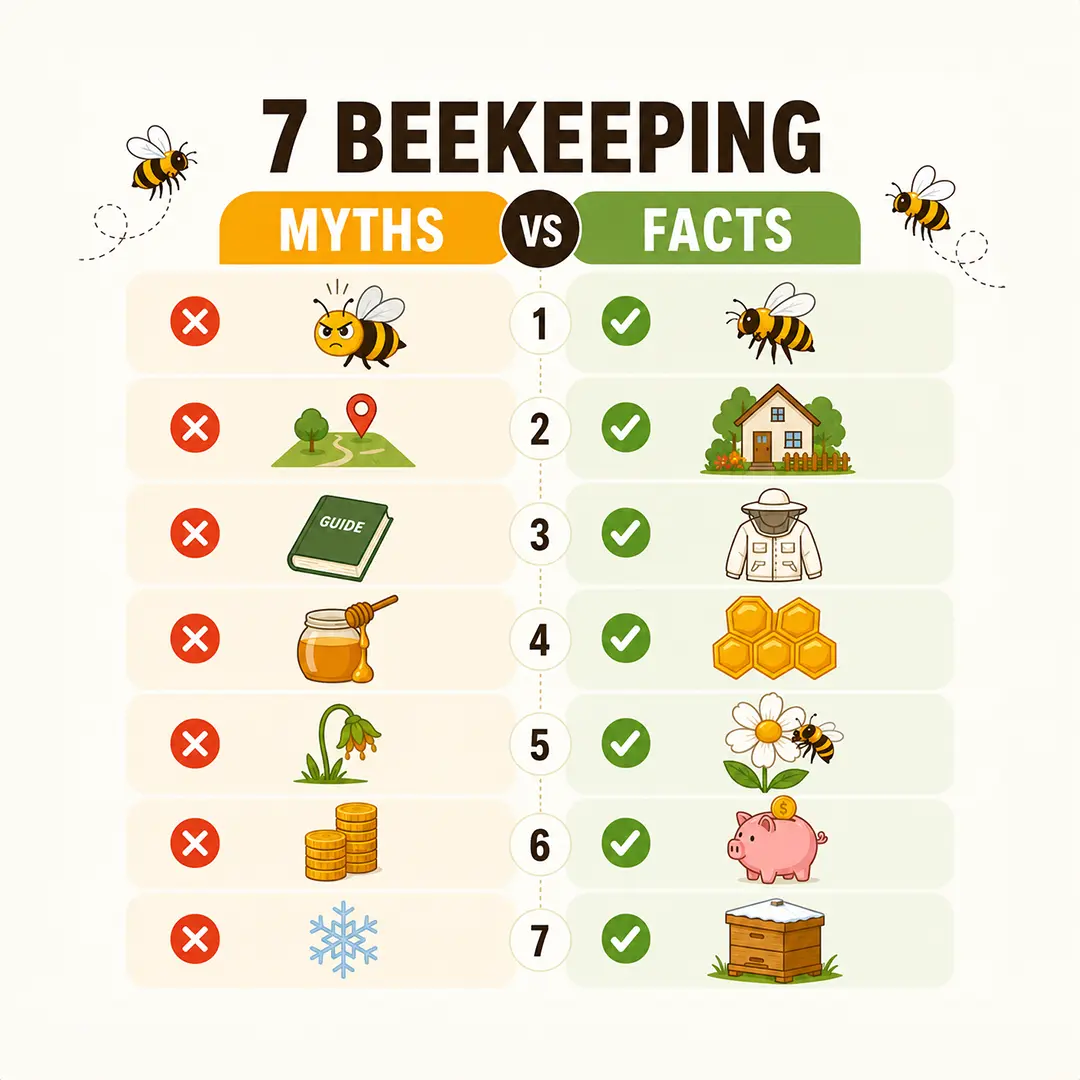
Beekeeping has become increasingly popular among homeowners, gardeners, and sustainability enthusiasts. However, many people are still discouraged from starting because of outdated information and common misconceptions. While keeping bees does require preparation and responsibility, many of the concerns surrounding beekeeping are often exaggerated or simply untrue.
Let's separate fact from fiction and explore the most common beekeeping myths.
What Are the Most Common Beekeeping Myths?
Many people believe that bees can only survive in rural areas, are naturally aggressive, or require a significant investment of time and money. In reality, modern beekeeping is more accessible than ever, and healthy colonies can thrive in a variety of environments when managed properly.
Myth #1: Bees Can Only Thrive in Rural Areas
One of the most common misconceptions is that honey bees need vast farmland to survive.
The Truth
Honey bees are highly adaptable and can thrive in rural, suburban, and even urban settings. Gardens, parks, flowering trees, and backyard plants often provide a diverse and reliable source of nectar and pollen throughout the year.
Worker bees can travel several kilometres from the hive in search of food, allowing them to access a wide range of flowering plants. In many cases, suburban areas offer more diverse forage than large agricultural regions dominated by a single crop.
Myth #2: Beehives Always Swarm and Become Dangerous
The sight of thousands of bees flying together can be intimidating, leading many people to believe swarms are dangerous.
The Truth
Swarming is a natural method of colony reproduction. During a swarm, a portion of the colony leaves with the old queen to establish a new home.
Contrary to popular belief, swarming bees are usually less aggressive because they are focused on relocating rather than defending a hive. Experienced beekeepers can often prevent excessive swarming through regular inspections and proper hive management.
Myth #3: Honey Bees Are Naturally Aggressive
Many people assume that keeping bees means constantly getting stung.
The Truth
Healthy honey bees are generally calm and only become defensive when they feel threatened. Modern beekeepers often select gentle bee strains known for their manageable temperament.
Protective clothing, proper handling techniques, and routine hive inspections significantly reduce the risk of stings. In fact, many beekeepers work around their colonies regularly with very few sting incidents each year.
Myth #4: Beekeeping Requires Too Much Time
Some beginners worry that beekeeping demands daily attention.
The Truth
Compared to many other hobbies or livestock activities, beekeeping is relatively low maintenance. A healthy colony often requires inspections every few weeks during the active season.
Most hobbyist beekeepers spend only a few hours each month monitoring hive health, checking food stores, and ensuring the colony has adequate space. During certain periods, the bees largely manage themselves.
Myth #5: Honey Bees Are the Only Important Pollinators
Honey bees receive most of the attention, but they are not the only insects supporting plant reproduction.
The Truth
Native bees, bumblebees, carpenter bees, butterflies, flies, and other pollinators all play valuable roles in ecosystems and food production.
While honey bees are highly efficient pollinators, maintaining diverse pollinator populations creates healthier gardens and stronger ecosystems. Responsible beekeepers often support both managed honey bees and local native bee species.
Myth #6: Beekeeping Is Too Expensive
The cost of starting a beehive can make some people hesitant.
The Truth
Like most hobbies, there is an initial investment for equipment, protective gear, and bees. However, ongoing costs are usually modest.
Many beekeeping tools can last for years when properly maintained. Once a colony is established, annual expenses often involve basic hive maintenance, supplemental feeding when necessary, and pest management.
For many beekeepers, the value of fresh honey, pollination benefits, and the enjoyment of the hobby outweigh the startup costs.
Myth #7: Your Neighbours Will Not Approve of a Beehive
Neighbour concerns are often one of the biggest barriers for new beekeepers.
The Truth
Most neighbour concerns can be addressed through thoughtful hive placement and responsible management.
Positioning hives away from shared spaces, providing a dedicated water source, and encouraging bees to fly above head height can significantly reduce interactions with people. Many beekeepers also find that sharing a jar of fresh honey helps build positive relationships with neighbours.
Why These Beekeeping Myths Persist
Many misconceptions about beekeeping come from outdated information, sensational media stories, or a lack of understanding about honey bee behaviour.
People often encounter bees only when they are swarming or defending a nest, creating the impression that bees are always aggressive. In reality, most honey bee colonies spend their days foraging, pollinating plants, and supporting the health of their colony.
As public awareness grows, more people are discovering that beekeeping is both manageable and rewarding.
The Truth About Modern Beekeeping
Modern beekeeping combines traditional knowledge with improved hive designs, educational resources, and better colony management practices.
Today's beekeepers have access to training programs, local clubs, online communities, and innovative equipment that make learning easier than ever. Whether your goal is harvesting honey, supporting pollinators, or connecting with nature, beekeeping offers a practical and rewarding experience for beginners and experienced hobbyists alike.
Conclusion
Beekeeping is surrounded by myths that often discourage people from exploring the hobby. The reality is that honey bees can thrive in many environments, are generally non-aggressive when properly managed, and require less time than many people expect.
Understanding the facts behind these common misconceptions can help aspiring beekeepers make informed decisions and enjoy the many benefits of maintaining healthy bee colonies.
FAQs About Beekeeping Myths
Is beekeeping suitable for beginners?
Yes. With proper education, quality equipment, and guidance from experienced beekeepers, beginners can successfully manage healthy colonies.
Are backyard beehives safe?
Well-managed hives are generally safe and can coexist with families, pets, and neighbours when placed appropriately.
How much honey can one hive produce?
Honey production varies depending on climate, forage availability, and colony strength, but a healthy hive can often produce a substantial surplus during a productive season.
Can I keep bees in a suburban backyard?
In many regions, backyard beekeeping is permitted. Always check local regulations and follow best practices for hive placement and management.
Do honey bees improve garden productivity?
Yes. Honey bees help pollinate many fruits, vegetables, herbs, and flowering plants, often leading to improved yields and healthier gardens.