
















Australian Native Bee Guide: Discover Bee Types in Australia
Author: Hornsby Beekeeping Date Posted:12 March 2026
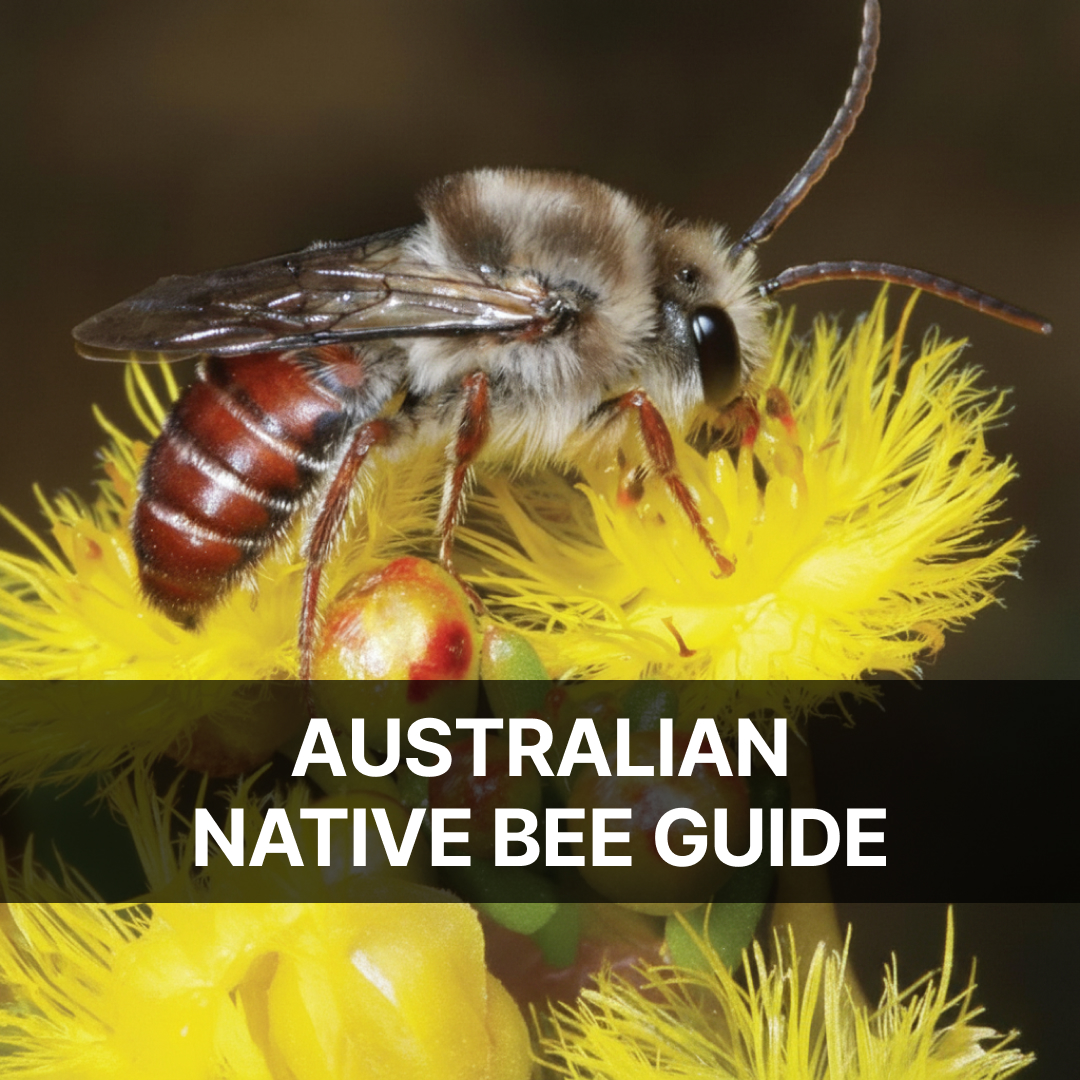
Australia is home to an incredible variety of Australian bees, with more than 2,000 species of Australian native bee found across the country. While many people are familiar with the European honeybee, the diversity of native Australian bee species is far greater and plays an essential role in pollinating Australia’s unique plants and ecosystems.
Unlike honeybees that are kept for honey production, most Australian native bees do not produce large amounts of honey. However, they are extremely important pollinators. Many native plants rely specifically on these Australian bees for pollination, making them vital for maintaining Australia’s natural biodiversity.
Most native Australian bee species are solitary, meaning they do not live in large colonies like honeybees. Instead, they build nests in soil, hollow stems, or small holes in wood. Because Australia has a relatively mild climate, many solitary bees have access to nectar and pollen throughout the year and do not need to store large honey reserves.
Let’s explore some fascinating bee types Australia is known for, many of which you might see in your own garden.
Blue Banded Bee: The Famous Native Blue Bee in Australia
One of the most recognisable Australian native bee species is the blue banded bee. These bees are easily identified by the striking blue stripes that run across their abdomen, which is why they are often referred to as a blue bee Australia gardeners frequently notice.
There are around eleven species of blue banded bees in Australia, typically measuring between 8–14 mm in length. These bees are found across most of the country, although they are generally absent from Tasmania.
Blue banded bees are also known as native blue bees because of their unique colouring. They are solitary insects and usually build nests in clay walls, soil banks, or crevices.
One fascinating feature of the blue banded bee is its ability to perform buzz pollination. During this process, the bee vibrates its body rapidly, sometimes up to 350 times per second to release pollen from flowers. This makes them extremely effective pollinators for certain plants.
Carpenter Bees: Large Australian Bees Found in Warmer Regions
Another interesting group of Australian bees are carpenter bees. These are among the largest bee types Australia has, and they are known for their ability to nest in wood.
Carpenter bees belong to the genus Xylocopa and are commonly found in warmer parts of the country, including Queensland, the Northern Territory, and northern regions of Western Australia and New South Wales.
Unlike many other native Australian bee species, carpenter bees are sometimes described as “para-social.” This means that multiple generations of female bees may share the same nesting site.
Some carpenter bees appear metallic green in colour, making them quite distinctive among Australian native bees.
Teddy Bear Bee: A Unique Australian Native Bee
The teddy bear bee (Amegilla bombiformis) is another Australian native bee which is very fascinating. It gets its name from the soft golden-brown fur that covers its body, giving it a fluffy appearance similar to a teddy bear.
Like many Australian bees, teddy bear bees are solitary insects. They typically build nests in shallow soil or soft earth, often along creek banks or garden soil.
These bees are also excellent buzz pollinators, similar to the blue banded bee. They are mostly found along the east coast of Australia, including Queensland, New South Wales, and parts of Victoria.
Because of their appearance and behaviour, the teddy bear bee is one of the most recognisable bee types Australia gardeners enjoy spotting.
Cuckoo Bees: The Clever Black Bee Australia Has
Cuckoo bees are another unusual native Australian bee species. These bees are sometimes called black bee Australia species because of their darker appearance.
Unlike most Australian bees, cuckoo bees do not build their own nests. Instead, they lay their eggs inside the nests of other bees similar to how cuckoo birds behave.
When the eggs hatch, the young cuckoo bee uses the resources in the host nest to develop. This unique strategy allows them to survive without building or maintaining their own nest.
Cuckoo bees belong to the Thyreus group and can be found across much of Australia except Tasmania.
How You Can Help Native Australian Bees
Supporting Australian native bees is easier than you might think. One of the best ways to help these important pollinators is by planting a diverse garden full of flowering plants.
Gardens that provide flowers throughout the year offer essential nectar and pollen for native Australian bee species. Avoiding pesticides and insecticides can also help protect these important insects.
Moreover, by creating a bee-friendly garden, you can support Australian bees, encourage pollination, and enjoy watching these fascinating insects up close