

















How Bees Communicate: Guide to Bee Communication in the Hive
Author: Hornsby Beekeeping Date Posted:5 May 2026
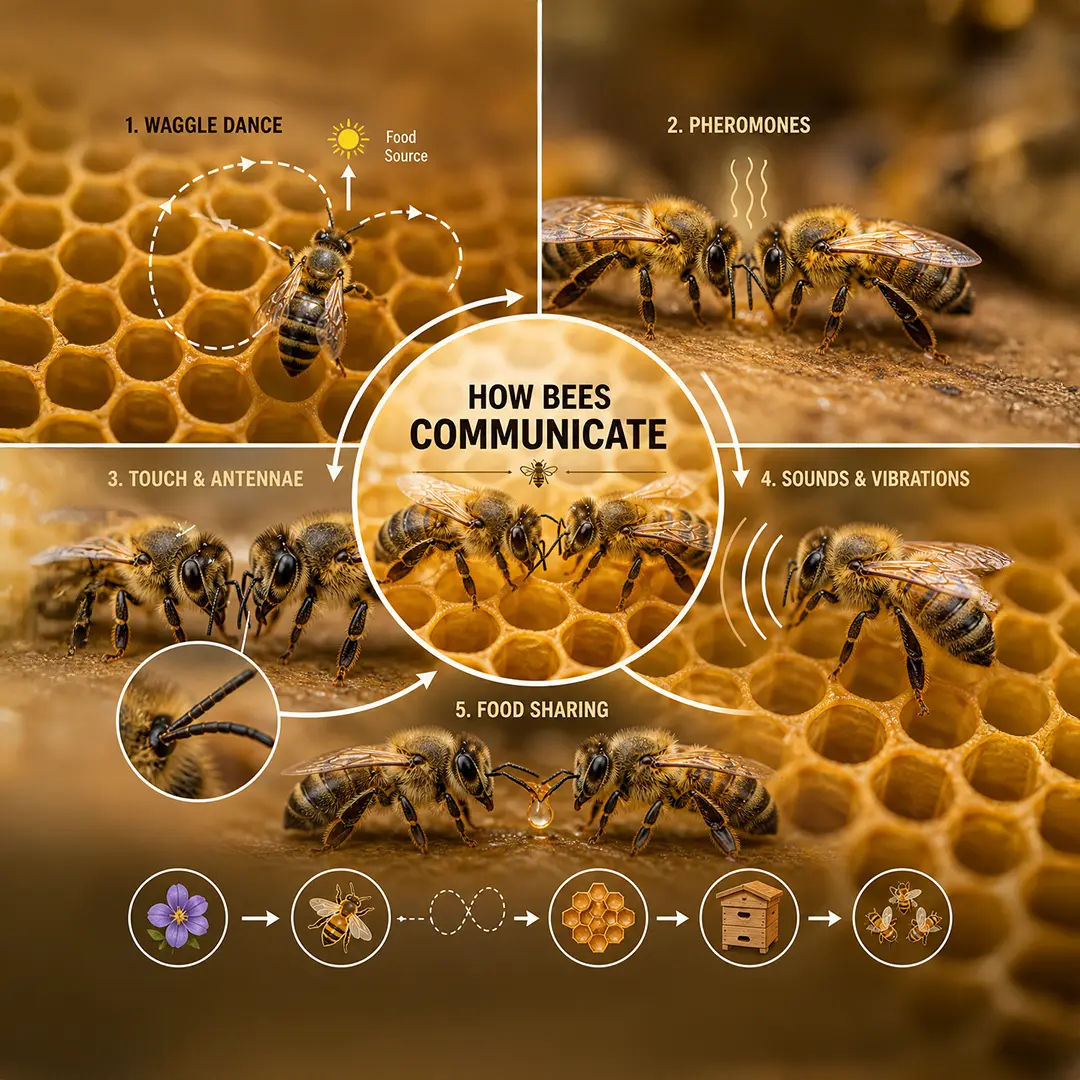
Bees may be small, but their communication system is incredibly advanced. If you’ve ever wondered how bees communicate, the answer involves a combination of movement, scent, touch, sound, and even vibration. Every action inside a hive depends on clear signals shared between thousands of individuals working toward a common goal.
Understanding bee communication not only helps beekeepers manage colonies better, but also reveals how these insects coordinate complex tasks like foraging, defense, and reproduction.
Bee Communication Explained: Why It Matters in a Hive
A honeybee colony can contain tens of thousands of bees. Without a structured way to share information, survival would be impossible. That’s why how bees communicate is central to everything they do.
Communication helps bees:
-
Locate food sources quickly
-
Defend the hive from threats
-
Maintain social structure
-
Regulate temperature and hive conditions
-
Coordinate swarming and reproduction
Each bee plays a role, and communication ensures the colony operates like a single, highly efficient organism.
Roles in the Hive and Their Role in Bee Communication
To fully understand how bees communicate, you need to look at the three main types of bees:
Queen Bee
The queen is the heart of the colony. She communicates mainly through pheromones, which influence the behavior of all other bees. These chemical signals tell the colony that the queen is healthy and active.
Worker Bees
Worker bees are responsible for most communication activities. They gather food, perform dances, release pheromones, and interact physically with other bees.
Drone Bees
Drones have a limited communication role. Their primary purpose is reproduction, but they still respond to pheromones and colony signals.
How Bees Communicate Through Dance Language
One of the most fascinating answers to how bees communicate is through dance. This behavior allows bees to share detailed information about food sources.
Waggle Dance
The waggle dance is used when food is far from the hive. A worker bee moves in a figure-eight pattern while waggling its body. The direction of the waggle indicates the angle relative to the sun, while the duration shows the distance.
Round Dance
When food is nearby, bees perform a round dance. This involves circular movements that signal other bees to search in the surrounding area.
Why Dance Communication Is Important
Dance language allows bees to:
-
Share precise location data
-
Reduce search time for food
-
Maximize efficiency in nectar collection
This system is so accurate that bees can guide others to specific patches of flowers kilometers away.
How Bees Communicate Using Pheromones
Another major part of bee communication involves pheromones. These are chemical signals released by bees to influence behavior.
Types of Pheromones
Queen pheromones: Maintain colony unity and suppress new queen development
Alarm pheromones: Alert other bees to danger
Nasonov pheromones: Help guide bees back to the hive
Brood pheromones: Signal the presence and needs of developing larvae
Why Pheromones Matter
Pheromones act like an invisible messaging system. They spread quickly and trigger immediate responses, making them essential for survival.
How Bees Communicate Through Touch and Antennae
Physical interaction is another important method in how bees communicate.
-
Bees use their antennae to recognize colony members
-
They exchange food through trophallaxis, which also shares chemical signals
-
Touch helps reinforce communication during dances
This direct contact ensures that messages are passed accurately within the hive.
Communication Through Vibration and Sound
Bees don’t “talk,” but they do use sound and vibration effectively.
Vibrational Signals
Bees can send messages through vibrations on the honeycomb. These signals help regulate:
-
Worker activity
-
Foraging behavior
-
Swarming preparation
Buzzing Sounds
The intensity and frequency of buzzing can indicate:
-
Stress or danger
-
Calm conditions
-
Colony activity levels
Beekeepers often rely on sound to understand hive health.
How Bees Communicate When Foraging
Foraging is one of the most communication-heavy activities in a colony.
When a bee finds a food source:
-
It collects nectar or pollen
-
Returns to the hive
-
Performs a dance or releases pheromones
-
Other bees follow the signal
This system ensures that the colony focuses on the best available food sources.
How Bees Communicate Danger and Defend the Hive
Defense is critical, and bee communication plays a key role.
-
Guard bees release alarm pheromones when threatened
-
Other bees respond quickly to defend the hive
-
Increased buzzing acts as a warning signal
If the threat continues, bees may sting as a final defense mechanism.
Communication During Swarming
Swarming is when a colony splits to form a new hive. This process relies heavily on communication.
-
Scout bees search for new locations
-
They return and perform waggle dances
-
The colony “decides” based on the most convincing dances
This collective decision-making process ensures the best possible new home.
How Bees Communicate With Humans
While bees don’t communicate with humans intentionally, their behavior sends clear signals.
-
Calm, steady buzzing = safe conditions
-
Loud, aggressive buzzing = potential danger
-
Defensive movements = warning to stay away
Understanding these signals can help prevent stings and improve hive management.
Why Understanding Bee Communication Is Important
Learning how bees communicate offers several benefits:
-
Helps beekeepers manage colonies effectively
-
Improves honey production
-
Supports pollination success
-
Reduces risks during hive inspections
It also highlights the intelligence and complexity of bees, making them even more fascinating to study.
Conclusion
Understanding how bees communicate reveals a highly organized and intelligent system that keeps the hive functioning smoothly. From intricate dances to chemical signals, every method plays a role in the survival of the colony.
The next time you see bees moving from flower to flower, remember—they’re not just collecting nectar. They’re part of a complex communication network that ensures the success of their entire colony.
FAQs
1. How do bees communicate with each other?
Bees communicate using dances, pheromones, touch, and vibrations to share information about food, danger, and hive activity.
2. What is the waggle dance in bee communication?
The waggle dance is a movement used by bees to show the direction and distance of a food source relative to the sun.
3. Do bees use sound to communicate?
Yes, bees use vibrations and buzzing sounds to signal mood, activity, and danger within the hive.