


















How Honey Is Made: Simple Guide to the Honey-Making Process
Author: Hornsby Beekeeping Date Posted:18 March 2026
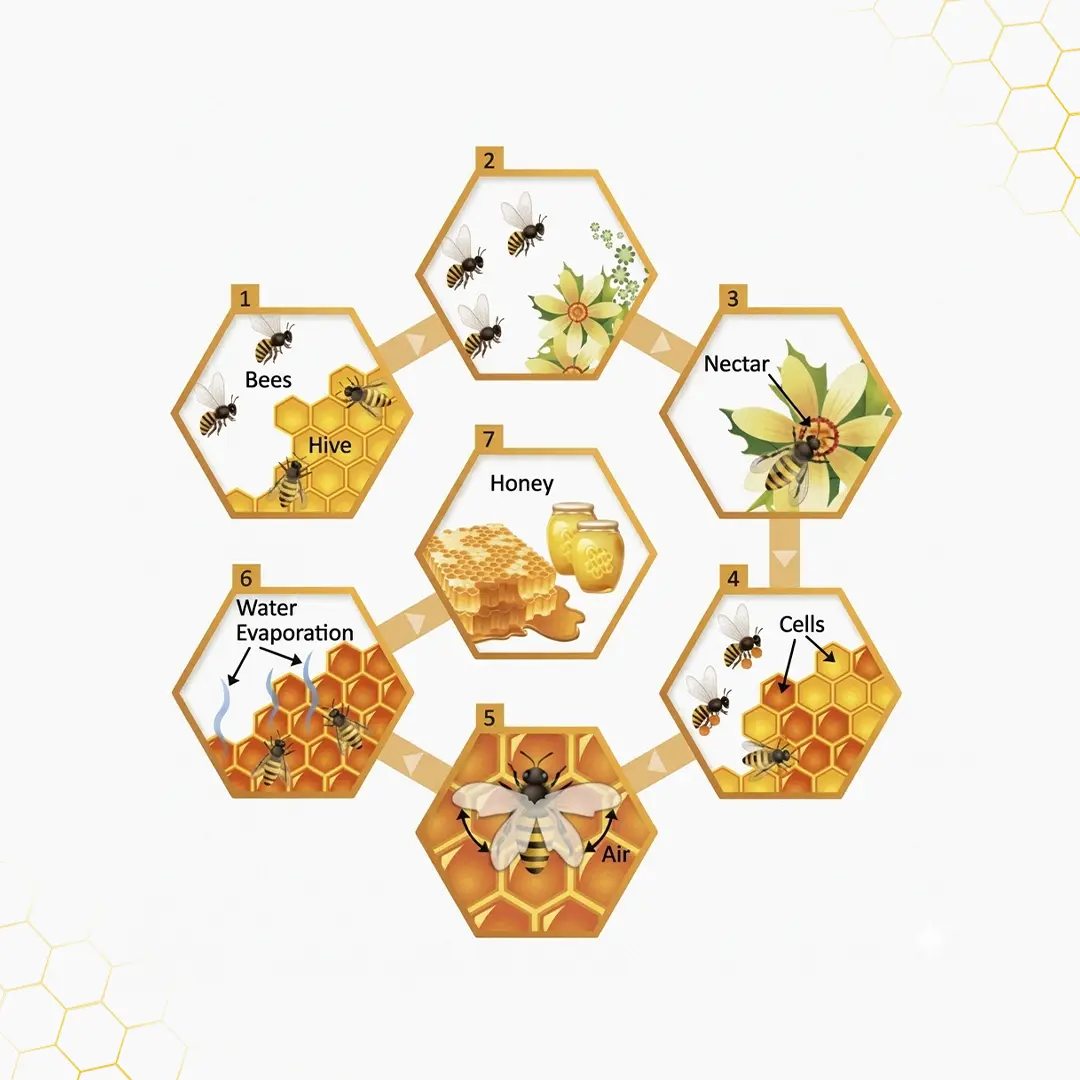
Most people know that bees produce honey, but few understand how honey is made. Behind every jar of honey is a fascinating natural process that involves thousands of worker bees, countless flowers, and weeks of effort.
Bees create honey as a food source to survive, especially during colder months when flowers are scarce. Fortunately for us, they usually produce more than they need, allowing beekeepers to harvest the surplus.
If you are interested in beekeeping or simply curious, understanding the honey-making process gives you a deeper appreciation for this natural product.
Step 1: Collecting Nectar from Flowers
The process of how honey is made begins with worker bees collecting nectar from flowers. These bees travel from plant to plant, using their long, tube-like tongues to extract nectar.
The nectar is stored in a special sac called the “honey stomach.” This is separate from the bee’s digestive stomach and is used only for transporting nectar back to the hive.
A single bee can visit up to 100–150 flowers in one trip. The type of flowers visited affects the flavor, color, and texture of the honey. For example, honey from clover is light and mild, while other varieties may be darker and richer.
Step 2: Passing Nectar Between Bees
Once the worker bee returns to the hive, the next stage in how honey is made begins. The nectar is passed to another worker bee through a process often called “trophallaxis.”
During this transfer, enzymes are added to the nectar. These enzymes help break down complex sugars into simpler ones, making the final product more stable and less likely to spoil.
This step is essential because raw nectar contains high water content and can easily ferment if not processed properly.
Step 3: Evaporation and Thickening
When the nectar is placed into the honeycomb, it still contains a high level of water, making it quite thin. To transform it into honey, worker bees begin removing this excess moisture.
They do this by rapidly fanning their wings, creating airflow inside the hive. This natural ventilation helps evaporate much of the water content from the nectar.
As the moisture level drops, the liquid gradually becomes thicker and more concentrated. This transformation is a key stage in the honey-making process, as it ensures the honey becomes stable, rich, and suitable for long-term storage.
Step 4: Sealing the Honeycomb
After the honey thickens to the proper consistency, bees close each honeycomb cell with a thin coating of beeswax. This acts as a natural lid, protecting the honey and keeping it fresh.
Sealed honey can last for a very long time and serves as a reliable food source for the colony. A healthy hive can produce large amounts of honey each year, much more than the bees actually consume.
Step 5: Harvesting by Beekeepers
This is the stage where humans become part of the process. Beekeepers carefully remove frames filled with capped honey from the hive.
The wax seals are gently scraped off, and the frames are placed in a machine called an extractor. This machine spins the frames to extract the honey while keeping the honeycomb intact.
A well-maintained hive can produce a significant amount of honey annually, depending on environmental conditions and the strength of the colony.
Step 6: Straining and Packaging
After extraction, the honey is strained to remove small particles such as wax or debris. In most cases, honey is kept as natural as possible, with minimal processing.
Some honey may be gently warmed to improve flow during filtering, but it is not heavily altered. It can also be turned into creamed honey by controlling crystallization, resulting in a smoother texture.
Finally, the honey is packaged and labeled before reaching stores, where it is ready to be enjoyed.
Why Understanding How Honey Is Made Matters
Learning how honey is made helps you appreciate the effort and complexity behind every drop. It also encourages responsible beekeeping practices that protect bee populations and ensure sustainable honey production.
Whether you use honey in tea, cooking, or as a natural sweetener, knowing its journey from flower to jar makes it even more valuable.
FAQs
1. How long does it take for bees to make honey?
Bees can take several weeks to turn nectar into honey, depending on weather conditions, nectar availability, and hive activity.
2. Do bees make honey all year round?
No, bees mainly produce honey during warmer months when flowers are available. They store it to survive during winter.
3. Is raw honey better than processed honey?
Raw honey is less processed and retains more natural enzymes and nutrients, while processed honey may be filtered and heated for a smoother texture