

















How to Make Beeswax Candles from Cappings Wax
Author: Hornsby Beekeeping Date Posted:1 July 2026
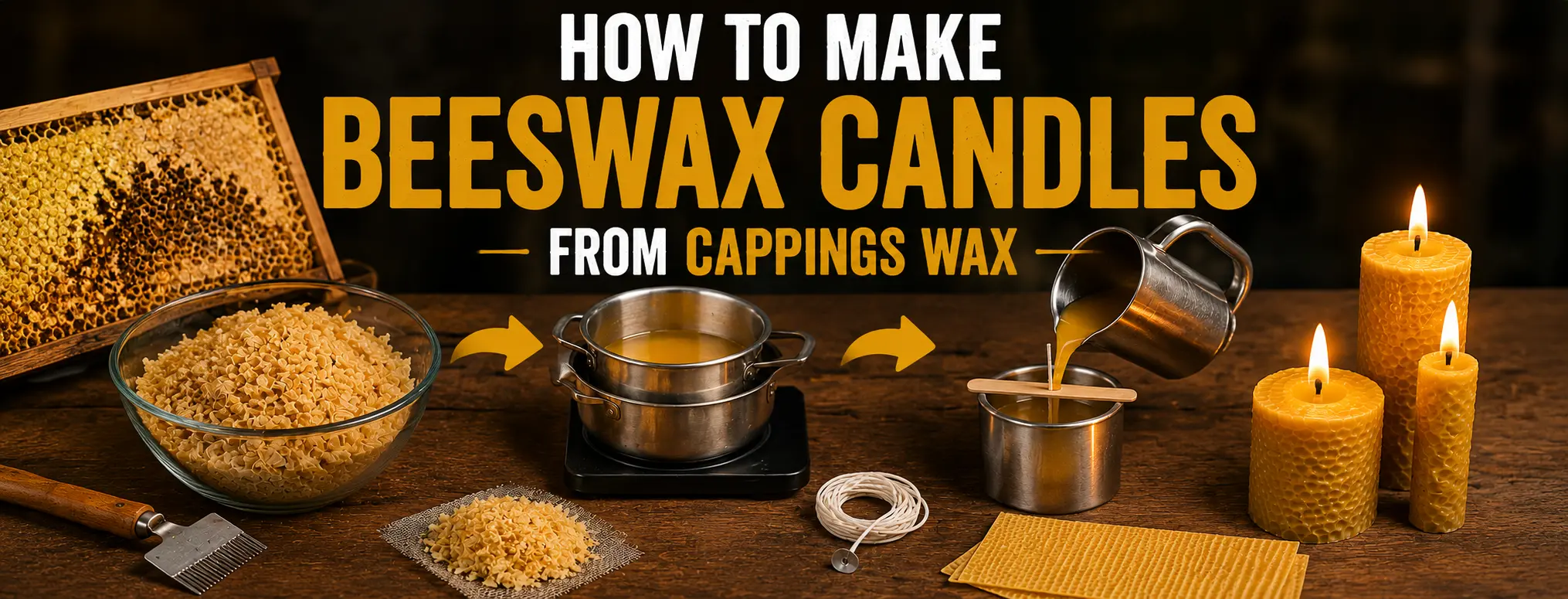
Cappings wax is one of the cleanest and most valuable by-products of honey harvesting. When beekeepers uncap honey frames before extraction, the thin layer of wax removed from the top of sealed honey cells is known as cappings wax. Because it comes from fresh honey storage rather than old brood comb, it is usually lighter, cleaner and better suited to candle making.
For Australian beekeepers, turning cappings wax into candles is a practical way to use more of what the hive produces. Instead of throwing away wax after extraction, you can clean, render and filter it into beautiful beeswax candles for your home, gifts, markets or beekeeping displays.
However, candle making works best when the wax is prepared properly. Raw cappings wax often contains honey, propolis, bee parts and small pieces of hive debris. If it is not cleaned well, candles may burn poorly, smell smoky or contain dark particles. This guide explains how to process cappings wax and make simple beeswax candles safely.
What Is Cappings Wax?
Cappings wax is the wax layer bees use to seal ripe honey inside comb cells. During honey extraction, beekeepers remove these wax cappings with an uncapping knife, fork or other tool so the honey can be extracted from the frame.
This wax is usually considered high-quality because it is newly produced and has not been used for brood rearing. Brood comb often becomes darker over time because it contains cocoons, propolis and other residues. Cappings wax, on the other hand, is usually lighter and has a pleasant natural honey aroma.
That makes cappings wax ideal for:
-
Beeswax candles
-
Wax blocks
-
Beeswax polish
-
Lip balms and salves
-
Craft projects
-
Wax wraps
-
Beekeeping displays
-
Gifts and market products
For candle making, clean cappings wax is especially attractive because it can produce a warm colour, natural scent and long-lasting candle.
Why Use Cappings Wax for Candles?
Beeswax candles are popular because they are natural, firm and beautifully aromatic. When made well, they burn with a warm flame and have a subtle honey-like scent without needing heavy fragrance. Cappings wax is particularly suitable because it is often cleaner than older comb wax.
Using cappings wax also helps beekeepers reduce waste. Honey, wax, propolis and pollen are all valuable hive products, and wax takes significant energy for bees to produce. Making candles is a simple way to respect the effort bees put into building comb.
Cappings wax is a good choice because it is:
-
Usually lighter than old brood comb wax
-
Naturally scented
-
Easier to clean than darker comb
-
Suitable for small home batches
-
Useful for gifts or market products
-
A good way to use honey harvest leftovers
Although it is a simple craft, beeswax candle making still requires care. Melted wax is hot and flammable, so safety should always come first.
Safety First: Working With Beeswax
Before making candles, it is important to understand that beeswax should be melted slowly and carefully. Direct heat can overheat the wax, darken it or create a fire risk. For this reason, a double boiler is one of the safest methods for small-scale candle making.
A double boiler uses water in a lower pot to gently heat a smaller pot or bowl above it. This gives more controlled heat than placing wax directly on a burner. You should also use dedicated wax equipment, because beeswax is difficult to remove completely from pots and utensils.
Basic safety tips include:
-
Never leave melting wax unattended
-
Avoid direct high heat
-
Use a double boiler or controlled wax melter
-
Keep children and pets away from hot wax
-
Keep water away from finished hot wax pours
-
Use heatproof gloves or careful handling
-
Work in a clean, ventilated area
-
Keep wax away from open flames
-
Use equipment only for wax, not food preparation
-
Have a safe plan for spills before you start
A calm, prepared workspace makes the whole process easier and safer.
Equipment You Need
You do not need commercial candle equipment to make a small batch of beeswax candles. Many hobby beekeepers start with simple tools and upgrade later if they make candles regularly.
For a basic batch, prepare:
-
Clean cappings wax
-
Double boiler or dedicated wax melting pot
-
Fine strainer, cheesecloth or muslin
-
Heatproof pouring jug
-
Candle jars or moulds
-
Cotton candle wicks
-
Wick tabs or wick stickers
-
Wick holders, skewers or pegs
-
Thermometer if available
-
Baking paper or newspaper for spills
-
Scissors for trimming wicks
-
Labels if making gifts or market products
It is a good idea to keep candle-making equipment separate from kitchen equipment. Beeswax can leave a stubborn coating that is hard to clean.
Step 1: Drain Honey from the Cappings
Fresh cappings wax usually contains a lot of honey. Before rendering the wax, allow as much honey as possible to drain away. This makes cleaning easier and reduces sticky residue during melting.
Place the cappings in a strainer or uncapping tub and let the honey drain naturally. Some beekeepers leave the cappings to drain overnight in a covered food-safe container. Keep the setup protected from ants, bees and dust.
Avoid leaving exposed honey or cappings outside near hives, as this can trigger robbing. If bees start robbing honey or wax scraps, the situation can become difficult to control and may spread pests or disease between colonies.
Step 2: Rinse the Wax Gently
After draining, rinse the cappings wax gently in cool or lukewarm water to remove leftover honey. Do not use strong water pressure, as small pieces of wax can be lost. The goal is simply to reduce stickiness before melting.
Some beekeepers soak the cappings briefly and change the water until it runs clearer. Others rinse quickly and move straight to rendering. Either method can work, as long as the wax is not left sitting in dirty water for too long.
After rinsing, allow the wax to drain well. Less water and honey in the wax means cleaner rendering and better candle results.
Step 3: Render the Beeswax Slowly
Rendering means melting the wax so it can be separated from impurities. Place the cappings wax in the top of a double boiler and heat it slowly. Beeswax does not need aggressive heat to melt, and overheating can darken the wax or affect the final candle quality.
As the wax melts, impurities may sink or remain trapped in the liquid wax. Stir gently if needed, but do not splash hot wax. Be patient, especially if you are processing a larger batch.
A good rendering process should be:
-
Slow
-
Controlled
-
Low heat
-
Watched carefully
-
Done with dedicated wax equipment
-
Followed by proper filtering
If the wax smells burnt or becomes very dark, it may have been overheated.
Step 4: Filter the Wax
Filtering is one of the most important steps in making clean beeswax candles. Even good capping wax may contain tiny particles of propolis, honey residue, bee parts or hive debris. If these remain in the wax, they can affect the candle’s appearance and burn quality.
Pour the melted wax through cheesecloth, muslin, a fine strainer or a suitable wax filter into a clean heatproof container. Work slowly and carefully because hot wax can burn skin and harden quickly if it cools too fast.
For cleaner candles, filter the wax more than once. A second filtering can remove fine particles that passed through the first time. The cleaner the wax, the smoother and better-looking your candles will be.
Step 5: Prepare Your Jars or Moulds
Before pouring, prepare your candle containers. Beeswax sets fairly quickly, so it is best to have everything ready before the wax is fully melted.
If using jars, secure the wick in the centre of the base with a wick sticker, wax dot or small amount of melted wax. Use a wick holder, skewer or peg to keep the wick centred at the top. If the wick shifts during pouring, the candle may burn unevenly.
If using moulds, thread or position the wick according to the mould design. Make sure the mould is clean, dry and suitable for hot wax. Any water inside a jar or mould can cause problems, so containers should be completely dry before use.
Step 6: Choose the Right Wick
Wick choice is one of the biggest factors in candle success. Beeswax is harder than many other candle waxes, so it needs a wick that can burn hot enough to create a proper melt pool. If the wick is too small, the candle may tunnel down the centre. If it is too large, the flame may become too big or smoky.
The right wick depends on:
-
Candle diameter
-
Jar size
-
Wax purity
-
Whether the candle is poured or rolled
-
Whether oils or fragrance are added
-
Desired burn time
For beginners, it is best to buy wicks recommended for beeswax candles and match them to the diameter of your container or mould. Testing is important because different wax batches can burn slightly differently.
Step 7: Pour the Beeswax
Once the wax is clean and melted, pour it slowly into the prepared jars or moulds. Avoid pouring too quickly, as this can create air pockets or move the wick off centre. Leave a small amount of space at the top of the container.
Beeswax naturally shrinks slightly as it cools. This may create a small dip around the wick. If needed, you can save a little melted wax and do a second top-up pour once the candle begins to set.
For a neater finish:
-
Pour slowly and steadily
-
Keep the wick centred
-
Avoid moving the candle while it cools
-
Keep jars away from cold drafts
-
Save a little wax for topping up
-
Wipe spills before they harden fully
Do not put hot candles straight into the fridge or freezer. Rapid cooling can cause cracking and uneven surfaces.
Step 8: Let Candles Cool and Cure
After pouring, allow the candles to cool at room temperature. Beeswax needs time to set properly, and moving the candle too soon can disturb the surface or wick position.
Once the candle is fully cooled, trim the wick to a suitable length. Many beekeepers and candle makers allow beeswax candles to cure for at least 24 hours before burning. This helps the wax settle and can improve the first burn.
When testing your candle, let it burn long enough for the melt pool to reach close to the edge of the container. This helps prevent tunnelling on future burns.
Adding Scent or Colour
Pure beeswax already has a natural honey-like scent, so many beekeepers prefer to leave it unscented. This keeps the candle simple, natural and connected to the hive. However, some candle makers add fragrance or colour for decorative products.
If you choose to add scent, use candle-safe fragrance or essential oils suitable for wax and follow recommended usage rates. Too much fragrance can affect burning and may create an overpowering smell. Colour should also be used carefully, as heavy additives can change how the candle burns.
For a natural beekeeping-style product, simple is often best. Clean beeswax, a good wick and careful pouring usually create a beautiful candle without extra additives.
Rolled Beeswax Candles as an Easy Alternative
If you do not want to melt wax, rolled beeswax candles are an easier option. These are made using sheets of beeswax foundation wrapped around a wick. They do not require rendering, filtering or hot wax, so they are popular for beginners, children’s craft activities and gift making.
However, rolled candles are different from poured cappings wax candles. They usually use foundation sheets rather than rendered cappings wax. They can be attractive and simple, but they may burn differently from poured beeswax candles.
If your goal is to use cappings wax from your honey harvest, pouring candles is the better method.
Common Candle Making Mistakes
Beeswax candle making is simple once you understand the basics, but beginners often run into the same problems. Most issues come from poor filtering, overheating, wrong wick size or rushing the cooling process.
Common mistakes include:
-
Melting wax directly over high heat
-
Leaving hot wax unattended
-
Not draining honey from cappings first
-
Filtering only once when wax is still dirty
-
Using the wrong wick size
-
Pouring into damp jars or moulds
-
Moving candles before they set
-
Cooling candles too quickly
-
Adding too much fragrance
-
Burning the candle for too short a time on the first use
Avoiding these mistakes will give you cleaner, safer and better-burning candles.
Troubleshooting Beeswax Candles
Even experienced candle makers test and adjust. If your first batch is not perfect, the problem can usually be fixed in the next one.
If the candle tunnels down the middle, the wick is probably too small or the first burn was too short. If the flame is too large or smoky, the wick may be too big or too long. If the candle has dark specks, the wax may need better filtering. If the top cracks, it may have cooled too quickly.
Common problems and likely causes include:
-
Tunnelling: wick too small or short burn time
-
Smoky flame: wick too large or wick not trimmed
-
Dark particles: wax not filtered enough
-
Cracked surface: cooling too quickly
-
Weak scent: natural beeswax scent varies
-
Uneven burn: wick not centred
-
Poor flame: wrong wick type for beeswax
Testing is part of the process. Make small batches first, record your wick size and adjust from there.
Best Uses for Homemade Beeswax Candles
Homemade beeswax candles are useful, attractive and meaningful because they come directly from your own beekeeping work. They make excellent gifts and can also become a small value-added product for beekeepers who sell honey or bee-related items.
Good uses include:
-
Home décor
-
Gifts for family and friends
-
Market stall products
-
Beekeeping workshop demonstrations
-
Christmas or seasonal candles
-
Natural table candles
-
Gift packs with honey
-
Educational displays about hive products
If selling candles, make sure they are labelled properly and comply with any relevant local product and market requirements.
Storing Finished Beeswax Candles
Beeswax candles store well when kept clean, dry and away from heat. Because beeswax can absorb odours from its surroundings, store candles away from strong-smelling chemicals, fuels, cleaning products or scented items.
Storage tips include:
-
Keep candles in a cool, dry place
-
Avoid direct sunlight
-
Protect from dust
-
Store away from strong odours
-
Keep away from heat sources
-
Wrap or box candles for gifting
-
Label batches if making several types
Good storage keeps candles looking and smelling fresh.
Final Thoughts
Making beeswax candles from cappings wax is a rewarding way to use more of what your hive produces. Cappings wax is usually light, clean and naturally aromatic, making it one of the best wax sources for candle making.
The process is simple when done carefully. Drain the honey, rinse the wax, render it slowly, filter it well, choose the right wick and allow the candles to cool properly. A clean batch of cappings wax can become beautiful candles for your home, gifts or small beekeeping products.
For Australian beekeepers, beeswax candle making is also a great way to reduce waste and add value to the honey harvest. With patience, safety and good preparation, your cappings wax can become something useful, natural and long-lasting.
If you need swarm collection equipment, nucleus boxes, protective clothing, or expert beekeeping advice, Hornsby Beekeeping Supplies is here to help. Contact our experienced team on 02 9477 5569 or email info@hornsby-beekeeping.com for trusted products and practical beekeeping support across Australia.
FAQs
What is cappings wax?
Cappings wax is the thin layer of wax bees use to seal ripe honey in comb cells. Beekeepers remove it before honey extraction, making it a clean and valuable source of beeswax.
Is cappings wax good for candle making?
Yes, cappings wax is excellent for candle making because it is usually lighter and cleaner than old brood comb wax. It also has a pleasant natural honey aroma.
Do I need to clean cappings wax before making candles?
Yes, cappings wax should be drained, rinsed, rendered and filtered before candle making. This removes honey, debris, propolis and other particles that can affect candle quality.
What is the safest way to melt beeswax?
A double boiler is one of the safest methods for small-scale beeswax melting. Avoid direct high heat and never leave melting wax unattended.
Why should beeswax be filtered?
Filtering removes small particles of debris, propolis and honey residue. Cleaner wax produces better-looking candles and can improve burn quality.
Why is my beeswax candle tunnelling?
Tunnelling usually happens when the wick is too small or the candle is not burned long enough during the first use. Choose a wick suited to the candle diameter and allow a proper melt pool.