

















Life Cycle of Honeybee: Complete Guide from Egg to Adult
Author: Hornsby Beekeeping Date Posted:6 May 2026
The life cycle of honeybees is one of nature’s most fascinating biological processes. Inside a hive, thousands of bees work together, yet every individual follows a clearly defined development journey. From a tiny egg to a fully functioning adult, each stage plays a crucial role in the survival of the colony.
Understanding the honeybee life cycle helps beekeepers maintain healthy hives and gives deeper insight into how bees grow, adapt, and contribute to pollination.
The 4 Stages in the Life Cycle of Honeybee
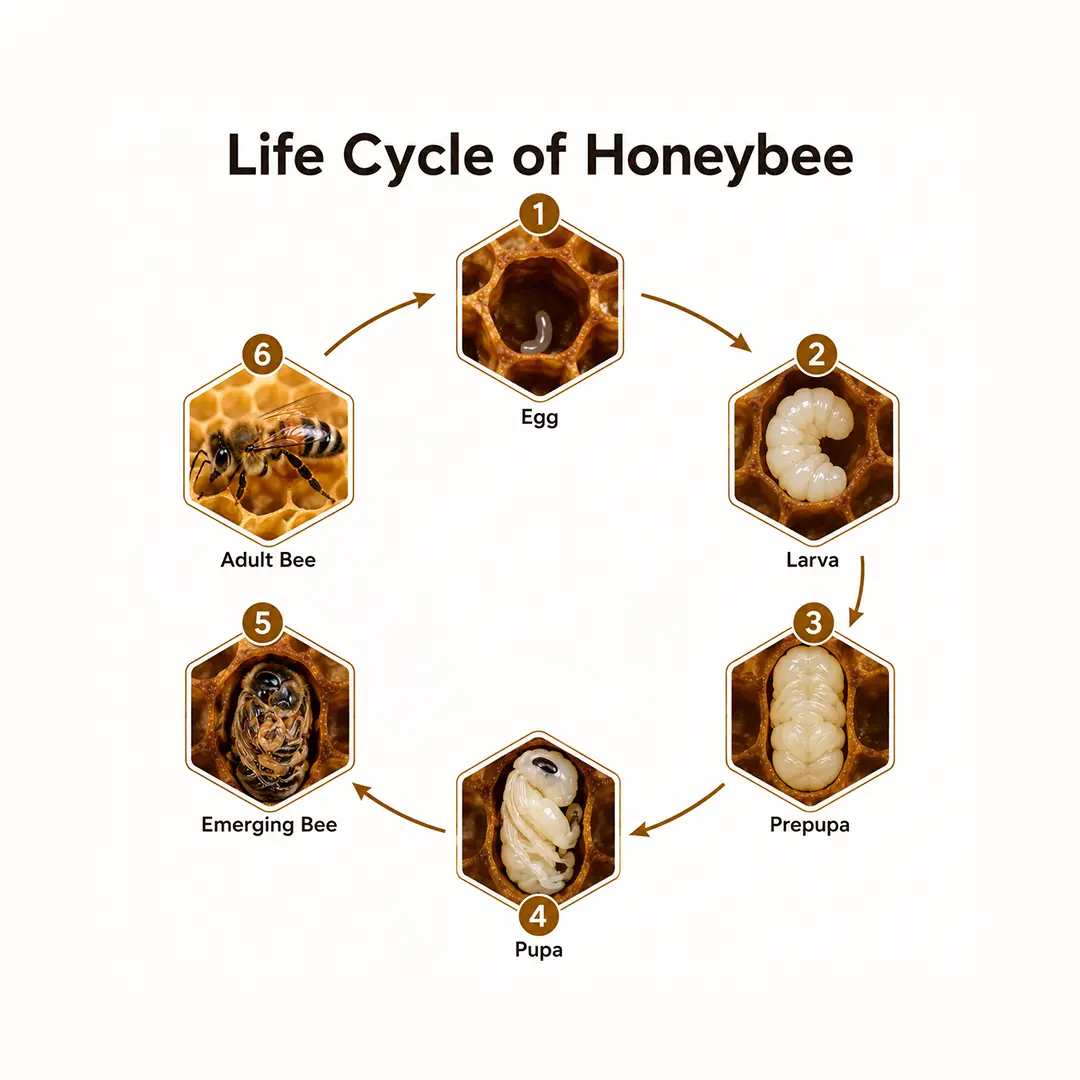
Every honeybee passes through four main stages:
-
Egg
-
Larva
-
Pupa
-
Adult
Although the stages are the same, the duration of the life cycle of honeybee varies depending on whether the bee becomes a queen, worker, or drone.
Egg Stage in the Life Cycle of Honeybee
The life cycle of honeybee begins when the queen lays eggs inside hexagonal wax cells. A healthy queen can lay up to 2,000–3,000 eggs per day.
-
Eggs appear as tiny white grains
-
Each egg stands upright in the cell
-
This stage lasts about 3 days
Fertilized eggs develop into worker bees or queens, while unfertilized eggs become drones. The pattern of egg-laying (brood pattern) also indicates the health of the colony.
Larva Stage of Honeybee Development
After three days, the egg hatches into a larva which is a small, soft, C-shaped organism. This is one of the fastest growth phases in the honeybee life cycle.
During this stage:
-
Larvae are fed royal jelly initially
-
Worker and drone larvae later receive bee bread
-
Queen larvae continue receiving royal jelly
This diet determines the bee’s future role. The larva grows rapidly and sheds its skin multiple times before the cell is sealed.
Pupa Stage in the Life Cycle of Honeybee
Once the cell is capped with wax, the larva enters the pupa stage, where transformation occurs.
Inside the sealed cell:
-
Body parts like wings, legs, and eyes develop
-
The bee takes its final form
Development time varies:
-
Queen: ~16 days total lifecycle
-
Worker: ~21 days
-
Drone: ~24 days
This stage is critical, as the bee fully develops into its adult structure.
Adult Stage of Honeybee Life Cycle
After completing development, the adult bee chews through the wax cap and emerges.
Each type of bee has a unique role:
-
Queen bee: Lays eggs and controls the colony
-
Worker bees: Clean, feed larvae, build comb, and forage
-
Drone bees: Mate with queens
Worker bees change roles as they age, starting with indoor tasks and eventually becoming foragers.
Honeybee Lifespan Based on Role
The life cycle of honeybee doesn’t end the same way for every bee:
-
Queen: 2–3 years
-
Worker (summer): 4–6 weeks
-
Worker (winter): up to 6 months
-
Drone: lives until mating or is removed from the hive
Seasonal changes also affect lifespan, especially for worker bees.
Unique Insight: What Makes the Honeybee Life Cycle Special?
What sets the honeybee life cycle apart is how nutrition controls development. A larva fed only royal jelly becomes a queen, while others become workers. This ability to “design” roles based on diet is rare in nature.
Another unique aspect is how the colony functions as a single unit—individual bees may live short lives, but the colony itself can survive for years.
Conclusion
The life cycle of honeybees is a perfect example of nature’s efficiency and organization. From egg to adult, every stage is carefully structured to support the colony’s survival.
Whether you’re a beginner beekeeper or simply curious about bees, understanding this lifecycle gives you a deeper appreciation of how these small insects sustain entire ecosystems.
FAQs
1. How long is the life cycle of a honeybee?
The full life cycle of honeybee takes about 16–24 days, depending on the type of bee.
2. What are the stages of honeybee development?
Egg, larva, pupa, and adult are the four stages in the honeybee life cycle.
3. How can you identify the age of a honeybee?
You can estimate age by observing body hair and wings. Young bees are fuzzy, while older bees appear smoother with worn wings.