

















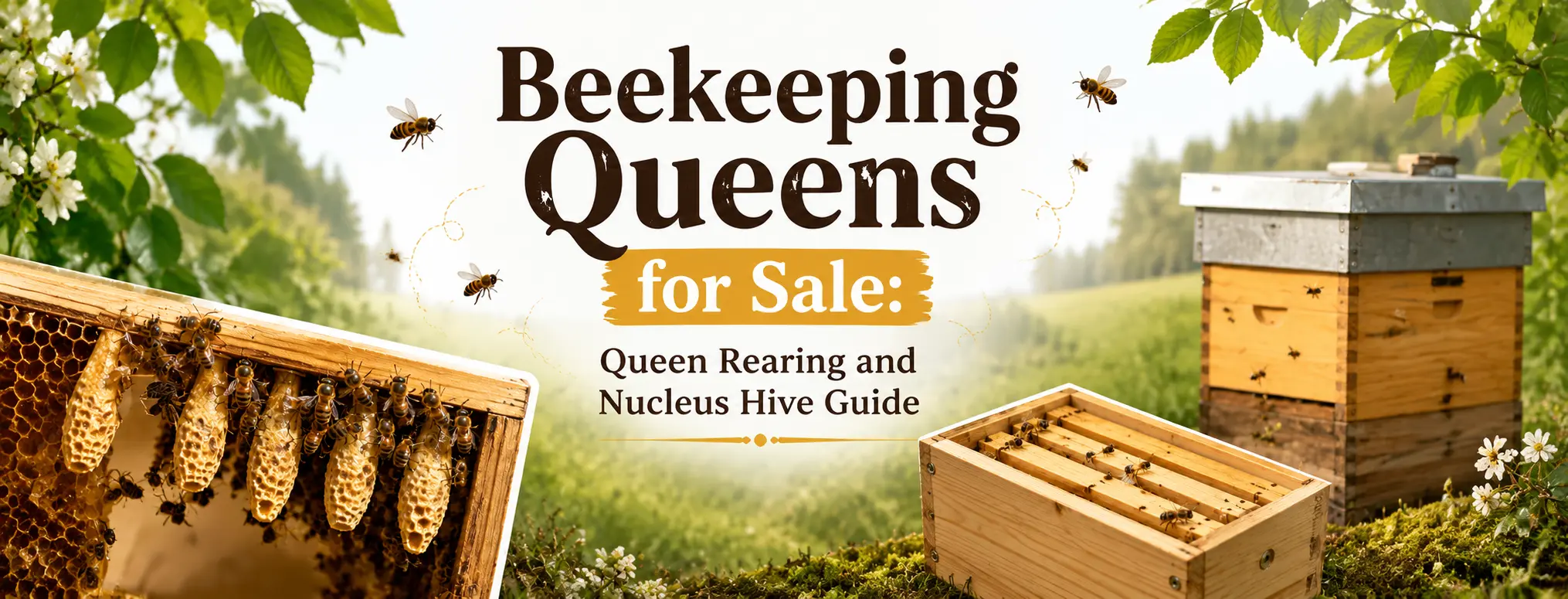
Beekeeping Queens for Sale: Queen Rearing and Nucleus Hive Guide
Author: Hornsby Beekeeping Date Posted:13 July 2026
Beekeeping queens for sale are important for beekeepers who want to requeen weak colonies, create nucleus hives or improve colony performance. A strong queen can support steady brood production, calmer hive behaviour and better seasonal growth. However, choosing the right queen is not only about availability. It is also about timing, colony condition and your long-term apiary goals.
For Australian beekeepers, queen management is especially useful during spring build-up, hive splitting and requeening. A good queen can help a colony recover from poor laying, queen loss or weak brood patterns. Therefore, understanding how to choose and use purchased queens is an important skill for both beginners and growing apiaries.
What Are Beekeeping Queens for Sale?
Beekeeping queens for sale are mated queen bees supplied for use in managed hives. They are often used to replace an old or failing queen, start a nucleus colony or improve colony traits such as temperament, brood strength and productivity.
A purchased queen usually arrives in a queen cage with attendant bees and candy or a release plug, depending on the supplier. The cage helps protect her while the colony becomes familiar with her scent. Because bees may reject a queen if she is introduced too quickly, careful introduction is essential.
Beekeeping queens for sale are useful for:
-
Requeening weak colonies
-
Creating nucs
-
Replacing lost queens
-
Improving colony temperament
-
Supporting hive splits
-
Keeping backup queens
-
Expanding an apiary
However, a new queen will not fix every hive problem. If a colony is diseased, starving or heavily affected by pests, those issues must also be managed.
Why Queens Matter in Queen Rearing and Nucs
The queen is central to colony development because she lays the eggs that build the future workforce. In a nucleus hive, this is even more important because the colony is small and needs steady brood production to grow.
A nuc with a healthy mated queen can build faster than a queenless nuc waiting to raise its own queen. As a result, purchased queens are often helpful when beekeepers want more predictable timing. They can also reduce the waiting period between making a nuc and seeing new worker brood.
Queen management supports:
-
Faster nuc development
-
More controlled hive splits
-
Better requeening outcomes
-
Stronger colony recovery
-
More reliable apiary planning
Meanwhile, poor queen quality can slow the whole colony. That is why queen selection should be done carefully.
When to Use Purchased Queens
Beekeepers should use beekeeping queens for sale when the colony has a clear queen issue or when a planned nuc needs a mated queen. Timing matters because queen acceptance is usually better when the colony is prepared properly.
You may use a purchased queen when:
-
The old queen has poor laying
-
The brood pattern is patchy
-
The colony is queenless
-
A hive is overly defensive
-
You are making a nucleus hive
-
You want to improve colony genetics
-
A split needs a reliable queen
-
A backup queen is needed for the apiary
Before introducing a queen, confirm the colony is queenless or ready to accept her. If another queen or queen cell is present, the bees may reject the new queen.
How to Choose the Right Queen
The right queen depends on what you want from the colony. For backyard beekeepers, calm temperament may be a priority. For honey production, strong brood build-up and good seasonal performance may matter more. In addition, local climate suitability should be considered.
When choosing a queen, check:
-
Supplier reputation
-
Queen mating quality
-
Colony temperament history
-
Brood pattern strength
-
Local suitability
-
Disease and pest awareness
-
Swarming tendency
-
Queen age if available
-
Delivery or pickup conditions
It is also wise to buy queens from trusted suppliers who understand local beekeeping conditions. A queen suited to your region is more likely to perform well through seasonal changes.
Equipment That Works Well With Purchased Queens
Having the right equipment ready makes queen introduction and nuc management much easier. Since queen introduction is time-sensitive, everything should be prepared before the queen arrives.
Useful equipment includes:
-
Nucleus hive boxes
-
Queen cages
-
Drawn comb
-
Brood frames
-
Honey and pollen frames
-
Feeders
-
Entrance reducers
-
Hive tool and smoker
-
Protective clothing
-
Queen marking tools
-
Record book or inspection sheet
A nuc box is especially helpful because it gives a small colony a manageable space. In addition, entrance reducers help small colonies defend themselves while they build strength.
Basic Queen Introduction Tips
Queen introduction should be calm and careful. First, make sure the colony is ready. Then place the queen cage where bees can access it but not harm the queen. Avoid rushing the release because the colony needs time to accept her scent.
General tips include:
-
Remove old queen before introduction
-
Check for queen cells
-
Keep the colony calm
-
Place the cage securely
-
Avoid disturbing the hive too soon
-
Confirm release at the right time
-
Check for eggs after acceptance
-
Keep clear records
After introduction, give the bees time. Opening the hive too often can disturb the process and reduce acceptance.
Common Queen-Rearing Mistakes to Avoid
Queen work can be rewarding, but mistakes often happen when beekeepers rush. A purchased queen is valuable, so the colony must be prepared properly before she is introduced.
Avoid these mistakes:
-
Introducing a queen into a queenright colony
-
Missing hidden queen cells
-
Using weak nucs with too few bees
-
Leaving the colony short of food
-
Disturbing the hive too soon
-
Releasing the queen too quickly
-
Ignoring pest or disease problems
-
Forgetting to record queen origin and date
-
Buying queens without checking supplier quality
Most importantly, do not expect a queen to solve poor hive management. She needs healthy bees, food stores and suitable conditions to perform well.
Final Thoughts
Beekeeping queens for sale are valuable for requeening, nuc creation and planned colony improvement. A strong queen can support better brood production, calmer bees and more reliable apiary growth. However, success depends on choosing the right queen, preparing the colony and avoiding rushed introduction.
For Australian beekeepers, purchased queens can be especially useful during spring splits, queen replacement and nucleus hive management. With good equipment, careful timing and clear records, queen management becomes much easier and more successful.
If you need swarm collection equipment, nucleus boxes, protective clothing, or expert beekeeping advice, Hornsby Beekeeping Supplies is here to help. Contact our experienced team on 02 9477 5569 or email info@hornsby-beekeeping.com for trusted products and practical beekeeping support across Australia.
FAQs
What is beekeeping queens for sale and why is it important in queen rearing?
Beekeeping queens for sale refers to mated queen bees supplied for requeening, nuc creation or colony improvement. They are important because a strong queen supports brood production, colony growth and better hive management.
When should beekeepers use beekeeping queens for sale for nucs or queen management?
Beekeepers should use purchased queens when making nucs, replacing failing queens, managing splits or recovering queenless colonies. They are most useful when the colony is healthy and prepared for introduction.
How do I choose the right beekeeping queens for sale for my colony goals?
Choose queens based on temperament, brood strength, supplier reputation, local suitability and your apiary goals. For backyard hives, calm behaviour may matter most, while honey producers may focus on strong seasonal build-up.
What equipment works well with beekeeping queens for sale?
Useful equipment includes nuc boxes, queen cages, drawn comb, brood frames, feeders, entrance reducers, protective clothing, hive tools and inspection records.
What common queen-rearing mistakes should be avoided with beekeeping queens for sale?
Avoid introducing queens into queenright colonies, missing queen cells, using weak nucs, releasing queens too quickly, disturbing the hive too soon and ignoring food, pest or disease problems.