
















Common Signs of an Unhealthy Beehive and What to Do
Author: Hornsby Beekeeping Date Posted:23 June 2026
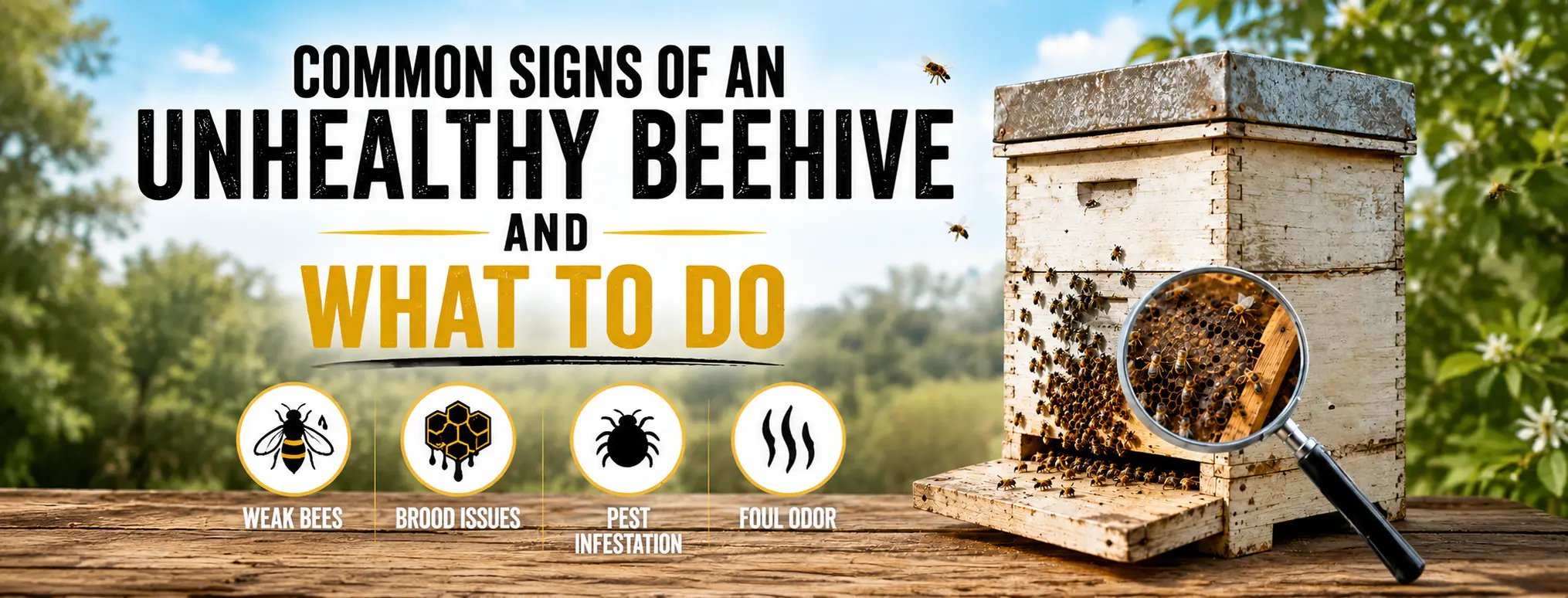
A healthy beehive is active, organised and balanced. Bees are bringing in pollen, broods are developing in a steady pattern, the queen is laying well, and the colony has enough food to support its population. An unhealthy hive, however, may show warning signs long before it collapses.
Australian beekeepers should learn how to recognise changes in bee behaviour, brood appearance, hive smell, food stores and pest pressure. Early action can save a colony, protect nearby hives and reduce the spread of pests and diseases.
Why Hive Health Checks Matter
A beehive can decline for many reasons. Queen failure, starvation, pests, disease, pesticide exposure, robbing, poor weather and overcrowding can all weaken a colony. Some problems can be corrected with good management, while others require urgent action or reporting.
Regular hive inspections help you understand what is normal for your colony. Once you know the normal brood pattern, entrance activity and food levels, unusual changes become easier to spot.
Sign 1: Poor or Patchy Brood Pattern
A healthy queen usually lays in a compact, consistent brood pattern. Some gaps are normal, but a very patchy brood pattern can suggest a problem.
Possible Causes
-
Failing queen
-
Poorly mated queen
-
Brood disease
-
Chilled brood
-
Pest damage
-
Nutritional stress
What to Do
Inspect the brood carefully. Look for eggs, larvae and capped brood. If the queen is failing but the colony is otherwise healthy, requeening may be needed. If brood appears sunken, discoloured, ropey, chalky or foul-smelling, seek expert advice and follow disease reporting requirements.
Sign 2: Unusual Brood Colour or Texture
Healthy larvae are usually pearly white and well positioned in the cell. Unhealthy brood may look brown, yellow, grey, sunken, dried, twisted, melted or chalky.
What to Do
Do not ignore abnormal brood. Take clear photos, isolate suspect equipment and contact an experienced beekeeper, apiary officer or local biosecurity authority if you suspect a notifiable disease.
Avoid moving frames from a sick hive into a healthy hive until you know what the issue is.
Sign 3: Bad Smell from the Hive
A healthy hive usually smells warm, waxy, sweet or slightly resinous. A foul, sour or rotten smell is a warning sign.
Possible Causes
-
American foulbrood
-
European foulbrood
-
Fermented stores
-
Dead brood
-
Dead colony
-
Moisture problems
What to Do
Stop and investigate carefully. If the smell is associated with abnormal brood, do not transfer equipment to other hives. Get a proper diagnosis before taking action.
Sign 4: Deformed Wings or Weak Adult Bees
Adult bees with deformed wings, shortened bodies, trembling, crawling behaviour or poor flight may indicate virus pressure, mite issues or other serious stress.
What to Do
Check for Varroa mite using an appropriate monitoring method for your region. Also inspect brood health, food stores and colony strength. If you find mites or suspect a notifiable pest, follow current reporting rules in your state or territory.
Sign 5: Low Bee Population
A hive with too few bees may struggle to keep brood warm, defend against pests or collect enough food.
Possible Causes
-
Queen failure
-
Swarming
-
Starvation
-
Pesticide exposure
-
Varroa mite
-
Disease
-
Robbing
-
Poor nutrition
What to Do
Check whether the hive is queen-right. Look for eggs or young larvae. Assess food stores and pest levels. If the colony is weak but disease-free, it may need feeding, reduced hive space, requeening or combining with another healthy colony.
Sign 6: No Eggs or Young Larvae
If there are no eggs or young larvae, the colony may be queenless or the queen may have stopped laying.
What to Do
Search carefully for the queen. Check for queen cells. Consider the season, weather and recent swarm activity. If the colony is queenless, options include introducing a new queen, adding a frame of young brood from a healthy hive or combining with another colony.
Sign 7: Bees Acting Aggressively
Some colonies are naturally more defensive, but sudden aggression may indicate stress.
Possible Causes
- Queenlessness
- Robbing
- Lack of nectar
- Pest pressure
- Rough handling
- Poor weather
- Strong odours or vibration
What to Do
Avoid working bees in cold, rainy or nectar-poor conditions. Use smoke correctly and work calmly. If aggression continues, inspect for queen problems, pests and food shortage.
Sign 8: Robbing Behaviour
Robbing happens when bees from other colonies steal honey from a weak hive. It can cause fighting, dead bees and rapid colony collapse.
Signs of Robbing
-
Fighting at the entrance
-
Bees searching cracks around the hive
-
Wax cappings scattered near the entrance
-
Frenzied flight activity
-
Weak colony unable to defend itself
What to Do
Reduce the entrance, avoid spilling honey or syrup, stop unnecessary inspections and do not leave comb exposed. Strengthen or combine weak colonies only if they are disease-free.
Sign 9: Lack of Food Stores
Starvation can happen even when flowers are nearby, especially during drought, cold weather or nectar gaps.
What to Do
Check honey and pollen stores. If the colony is light and nectar is unavailable, provide appropriate feed. Feed carefully and avoid contaminating honey intended for extraction.
Sign 10: Visible Pests in the Hive
Small hive beetle, wax moth, ants, mice and Varroa mite can all cause issues depending on the colony condition and region.
What to Do
Strong colonies can often manage some pests better than weak colonies. Keep hives strong, reduce empty space, remove old damaged comb, maintain equipment and use suitable pest management tools.
What a Healthy Hive Should Look Like
A healthy hive usually has:
-
Good entrance activity in suitable weather
-
Bees bringing in pollen
-
Fresh eggs and larvae
-
Compact brood pattern
-
Enough honey and pollen stores
-
Calm behaviour during inspections
-
No foul odour
-
Low pest pressure
-
Dry, clean equipment
-
A productive queen
When to Ask for Help
Contact an experienced beekeeper, club mentor, apiary officer or local biosecurity authority if you see:
-
Suspicious brood disease
-
Deformed bees
-
Unusual mites
-
Sudden colony collapse
-
Foul smell
-
Large numbers of dead bees
-
Repeated queen failure
-
Signs you cannot confidently identify
It is better to ask early than to risk losing the colony or spreading disease.
Final Thoughts
The earlier you recognise an unhealthy beehive, the better your chance of fixing the problem. Pay attention to brood, bee behaviour, food stores, pests, queen performance and hive smell. A consistent inspection routine helps you notice small changes before they become major issues.
If you need swarm collection equipment, nucleus boxes, protective clothing, or expert beekeeping advice, Hornsby Beekeeping Supplies is here to help. Contact our experienced team on +612 9477 5569 or email info@hornsby-beekeeping.com for trusted products and practical beekeeping support across Australia.
FAQs
What is the first sign of an unhealthy beehive?
A poor brood pattern, low bee population, lack of eggs, unusual smell or abnormal bee behaviour can be early signs of trouble.
What does healthy brood look like?
Healthy larvae are usually pearly white, and capped brood should appear consistent and compact with only small natural gaps.
Why are my bees crawling instead of flying?
Crawling bees may indicate disease, pesticide exposure, Varroa-related virus issues or other colony stress. Inspect the hive and seek expert advice if the issue continues.
Should I combine a weak hive with a strong hive?
Only combine colonies if the weak hive is disease-free. Never combine a sick colony with a healthy one without identifying the problem.
How often should I check hive health?
During active seasons, inspect regularly. In cooler months, reduce inspections and only open the hive when weather conditions are suitable.