


















Complete Guide to Requeening a Hive
Author: Hornsby Beekeeping Date Posted:30 June 2026
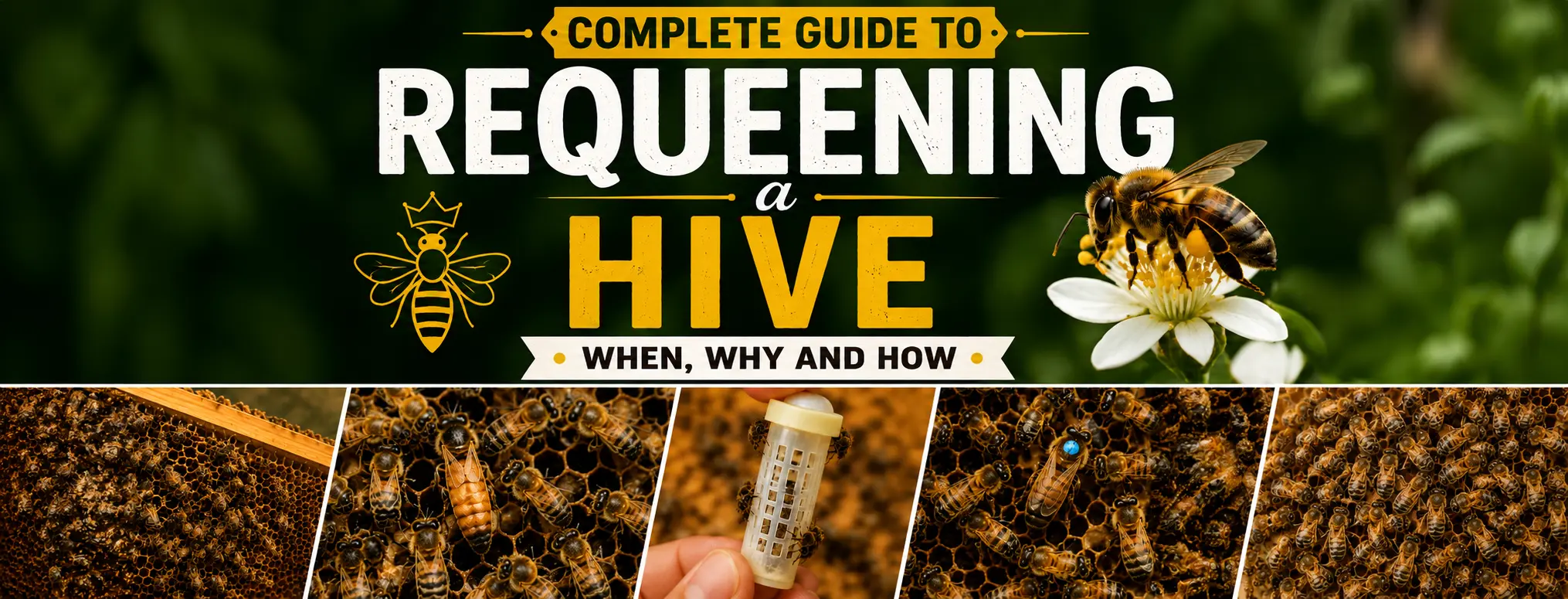
Requeening a hive is one of the most important management skills a beekeeper can learn. The queen is responsible for laying the eggs that keep the colony growing, so her performance directly affects brood health, hive temperament, honey production and long-term colony strength. When a queen begins to fail, the whole hive can slowly decline even if the bees still look active at the entrance.
For Australian beekeepers, requeening is often done to replace an old queen, improve poor brood patterns, reduce aggressive behaviour or strengthen a colony before a major nectar flow. It can also be useful when a hive is queenless or when a beekeeper wants to introduce better genetics from a trusted queen breeder.
However, requeening should not be rushed. A new queen must be introduced at the right time, in the right conditions and with careful handling. If the colony does not accept her, the requeening attempt can fail. This guide explains when to requeen a hive, why it matters and how to do it safely and effectively.
When Should You Requeen a Hive?
You should consider requeening a hive when the current queen is old, missing, poorly mated, failing to lay well or producing a weak brood pattern. Requeening can also help improve colony temperament, productivity and overall hive strength.
In most Australian regions, requeening is usually easier during active seasons when bees are bringing in nectar and pollen, the weather is mild and queens are available. Spring and early autumn are common requeening periods, although timing can vary depending on your local climate.
A hive may need requeening if you notice:
-
Patchy or weak brood pattern
-
No eggs or young larvae
-
Too many drone cells in worker brood areas
-
Poor colony build-up
-
Aggressive bee behaviour
-
Repeated queen cell production
-
A queen that is old, injured or missing
-
Low honey production linked to weak colony strength
What Does Requeening Mean?
Requeening means replacing the existing queen in a colony with a new queen. This may involve removing the old queen and introducing a purchased mated queen, giving the colony a queen cell, combining the hive with a nucleus colony, or allowing the bees to raise a new queen from suitable young brood.
In practical beekeeping, most hobbyists prefer introducing a mated queen because it gives the colony a faster return to egg laying. When a mated queen is accepted, she can usually begin laying sooner than a virgin queen or emergency queen raised by the bees.
Requeening is not only about replacing a queen that has died. It is also a proactive management tool. Many experienced beekeepers requeen before a colony becomes seriously weak, because a strong new queen can improve the hive’s performance before problems become harder to fix.
Why Requeening Is Important for Hive Health
A productive queen lays a steady pattern of worker brood, which creates the workforce needed for foraging, brood care, defence and honey storage. If her laying slows down or becomes irregular, the colony may not raise enough young bees to replace older workers.
Over time, this can lead to a weaker hive. A weak colony may struggle to defend itself from robbing, small hive beetle, wax moth and other pests. It may also fail to build up in spring or miss the best nectar flow of the season.
Requeening can help by restoring strong brood production and improving the colony’s future population. In some cases, it can also change the behaviour of the hive. If a colony is consistently aggressive and the issue is genetic rather than environmental, replacing the queen with calmer stock may gradually improve temperament as her daughters replace older workers.
Common Reasons to Requeen a Hive
Not every hive needs a new queen, but there are several situations where requeening can be the best option. The key is to inspect properly and understand what the hive is telling you.
1. The Queen Is Old or Failing
Queens can live for several years, but their laying performance often declines with age. An older queen may lay fewer eggs, produce a patchy brood pattern or fail to build the colony strongly during spring. If the colony has enough food and no obvious disease but still remains weak, the queen may be the problem.
2. The Brood Pattern Is Poor
A healthy queen usually lays in a compact pattern, with eggs, larvae and capped brood arranged in a fairly organised brood nest. Some gaps are normal, but a very patchy pattern can indicate queen failure, poor mating, disease or brood stress.
Before replacing the queen, inspect carefully. If the brood looks abnormal, smells bad or appears diseased, seek expert advice before moving frames or introducing a new queen.
3. The Hive Is Queenless
A queenless hive may have no eggs, no young larvae and no visible queen. The bees may sound unsettled, become more defensive or begin raising emergency queen cells if suitable larvae are available. If the colony cannot raise a good queen or needs faster recovery, introducing a mated queen may be the better option.
4. The Hive Is Too Aggressive
Some colonies become defensive because of weather, food shortage, queenlessness, rough handling or pest pressure. However, if a hive remains highly aggressive over repeated inspections and other causes have been ruled out, requeening with calmer genetics may help.
5. The Colony Is Not Building Up
A hive that fails to expand during good conditions may have a queen problem. If nearby colonies are growing well but one hive remains weak, check the queen, brood pattern, food stores and pest levels. If the queen is laying poorly, requeening may be needed.
6. You Want Better Genetics
Beekeepers may requeen to improve traits such as calmness, productivity, brood pattern, disease resistance or suitability for local conditions. Buying from a reputable Australian queen breeder can help introduce more reliable genetics into your apiary.
Best Time to Requeen a Hive in Australia
The best time to requeen depends on your climate, queen availability and colony condition. In many Australian regions, spring and early autumn are common requeening periods because the colony is active and conditions are usually more favourable for queen acceptance.
Spring requeening can help build a strong workforce before the main honey flow. However, it must be timed carefully because spring is also swarm season. If a hive is already preparing to swarm, simply adding a new queen without managing congestion may not solve the problem.
Autumn requeening can be useful because a young queen can help the colony enter winter in better condition. However, it should be done early enough for the queen to be accepted and begin laying before cold weather or reduced forage slows the colony.
As a general guide, avoid requeening during:
-
Very cold weather
-
Extreme heatwaves
-
Severe nectar dearth
-
Heavy robbing pressure
-
Major pest or disease problems
-
Times when the colony is too weak to support a new queen
If the hive is queenless or failing badly, requeening may still be necessary outside the ideal window. In that case, extra care is needed.
Before You Requeen: Hive Assessment Checklist
Before replacing the queen, inspect the hive carefully. Requeening works best when you understand the real cause of the problem. A hive may look weak because of a failing queen, but it may also be suffering from pests, disease, starvation or recent swarming.
Check the following before requeening:
-
Is the queen present?
-
Are there fresh eggs or young larvae?
-
Is the brood pattern compact or patchy?
-
Are there queen cells?
-
Is the colony strong enough to accept a new queen?
-
Are there signs of brood disease?
-
Are food stores adequate?
-
Is there enough pollen coming in?
-
Are pests such as Varroa mite, small hive beetle or wax moth present?
-
Has the colony recently swarmed?
This checklist helps avoid wasting a good queen on a colony that first needs pest control, feeding, disease diagnosis or combining with another hive.
Choosing the Right Replacement Queen
The quality of the replacement queen matters. A strong, healthy, mated queen from a trusted source gives the hive a better chance of recovery and future productivity.
When choosing a queen, consider:
-
Suitability for your Australian climate
-
Calm temperament
-
Strong laying pattern
-
Healthy appearance
-
Reputable queen breeder
-
Good transport and handling
-
Availability at the right season
-
Biosecurity requirements in your state or territory
Do not buy queens from unknown or unreliable sources. A poor-quality queen can create more problems than she solves.
How to Requeen a Hive Step by Step
There are several ways to requeen a hive, but introducing a purchased mated queen in a cage is one of the most common methods for small-scale beekeepers. The aim is to remove the old queen, allow the colony to recognise that it needs a queen, and then introduce the new queen slowly enough for the bees to accept her.
Step 1: Prepare Before Opening the Hive
Before you start, make sure you have everything ready. Requeening is easier when the process is calm and organised.
You will need:
-
New mated queen in a cage
-
Queen marking pen if needed
-
Small brush or clip
-
Hive record notes
-
Feeder if conditions require support
-
Spare nucleus box if you need to temporarily hold frames or bees
Choose a mild day with good weather. Avoid opening the hive during rain, strong wind, extreme heat or when bees are already stressed.
Step 2: Find and Remove the Old Queen
The old queen must usually be removed before the new queen is introduced. Work through the brood nest slowly and carefully. The queen is often found on frames with eggs or young larvae, but she may move quickly when the hive is disturbed.
Once found, remove her from the colony. Some beekeepers keep her temporarily in a small cage or nucleus box until they are sure the new queen has been accepted. This can be useful if the new queen introduction fails and the original queen is still viable.
Step 3: Wait Before Introducing the New Queen
Many beekeepers allow a short queenless period before introducing the new queen. This gives the colony time to realise the old queen is gone. The timing varies depending on method, queen type and beekeeper preference, but the principle is the same: the colony must be ready to accept a replacement.
Do not leave the colony queenless for too long without a plan, especially if it has no suitable young brood. A long queenless period can cause stress and may increase the risk of laying workers.
Step 4: Place the Queen Cage Correctly
The new queen is usually introduced in her cage, not released directly into the hive. Place the cage in the brood area where bees can contact her through the cage. This allows the colony to become used to her scent before she is released.
Make sure the cage is secure and positioned so the queen has airflow and contact with worker bees. Follow the instructions provided by the queen breeder, because cage types and release methods can vary.
Step 5: Leave the Hive Undisturbed
After introducing the queen, avoid unnecessary inspections. Opening the hive too soon can disrupt the process and may increase the chance of rejection. Many beekeepers wait several days before checking whether the queen has been released and accepted.
When you inspect, do it gently. Look for signs that the queen is alive, moving normally and beginning to lay. Fresh eggs are one of the best signs that requeening has succeeded.
Step 6: Confirm Queen Acceptance
Do not assume the job is complete until you confirm the new queen has been accepted. A successful requeening should eventually show a calm colony, fresh eggs, young larvae and a developing brood pattern.
Look for:
-
New eggs in worker cells
-
Young larvae after several days
-
Bees behaving normally around the queen
-
No aggressive balling of the queen
-
No emergency queen cells being built
-
Gradual improvement in brood pattern
If there are no eggs after a reasonable period, inspect carefully. The queen may not have been accepted, may not have been released, or may have a laying issue.
Other Requeening Methods
Although a caged mated queen is common, it is not the only method. Different situations may require different approaches.
Requeening With a Nucleus Colony
A nucleus colony with a laying queen can be combined with a queenless or failing hive. This method can be useful because the queen is already accepted by her own small colony. However, combining must be done carefully and only when both colonies are healthy.
Using a Queen Cell
Some beekeepers introduce a mature queen cell instead of a mated queen. This can work, but it takes longer because the queen must emerge, mate successfully and begin laying. It also depends on good weather, mature drones and successful mating flights.
Letting the Hive Raise Its Own Queen
A colony can raise a queen if it has eggs or very young larvae. However, this method takes time and can be risky if conditions are poor or if the hive is already weak. The new queen must emerge, mate and return successfully before the colony can recover.
For beginners, a purchased mated queen is often the simplest and most reliable option when quick recovery is needed.
Common Requeening Mistakes to Avoid
Requeening can fail if the colony is not prepared or if the new queen is handled incorrectly. Many failures happen because the beekeeper rushes the process or misses another problem inside the hive.
Avoid these mistakes:
-
Introducing a new queen while the old queen is still present
-
Releasing the queen directly without an introduction period
-
Disturbing the hive too soon after introduction
-
Requeening a diseased colony without diagnosis
-
Ignoring signs of queen cells
-
Introducing a queen during heavy robbing
-
Using poor-quality or poorly handled queens
-
Leaving the colony queenless for too long
-
Failing to check for eggs after introduction
-
Requeening when the colony is too weak to support her
A calm, planned approach gives the new queen a much better chance of acceptance.
What to Do If the New Queen Is Rejected
Sometimes a colony rejects a new queen despite careful handling. If this happens, do not panic. First, inspect the hive to understand why the queen failed.
Possible reasons include:
-
The old queen was still in the hive
-
A virgin queen was present
-
The colony had queen cells
-
The hive was stressed by robbing or poor weather
-
The bees were queenless too long
-
The new queen was damaged or weak
-
The colony had laying workers
-
Pest or disease pressure was too high
Once you understand the cause, you can decide whether to introduce another queen, combine the colony with a stronger hive or seek advice from an experienced beekeeper.
Aftercare: Managing the Hive After Requeening
After requeening, the colony needs time to adjust. Even if the queen is accepted, it will take several weeks before her new workers begin replacing the older bees in the colony. This means improvements in temperament, strength and productivity may not be immediate.
During the aftercare period, keep inspections gentle and purposeful. Check that the queen is laying, monitor food stores and make sure the hive has enough bees to care for brood. If conditions are poor, feeding may be needed, but do not feed while honey supers for human harvest are on the hive.
It is also wise to keep notes. Record the date of requeening, queen source, queen strain if known, acceptance result and brood performance. These records help you judge whether the queen is performing well over time.
Requeening Checklist for Australian Beekeepers
Use this checklist before, during and after requeening:
-
Confirm the hive really needs requeening
-
Check brood pattern, eggs and queen status
-
Inspect for pests and disease
-
Order a quality mated queen from a trusted source
-
Choose suitable weather for hive work
-
Find and remove the old queen
-
Introduce the new queen in a cage
-
Follow the queen breeder’s instructions
-
Avoid disturbing the hive too soon
-
Check later for queen release and fresh eggs
-
Record the requeening date and results
-
Monitor brood pattern over the next few weeks
This simple process helps make requeening more organised and less stressful for both the beekeeper and the colony.
Final Thoughts
Requeening a hive is an important skill that can improve colony strength, brood pattern, temperament and productivity. It is especially useful when a queen is old, missing, failing or producing poor brood. However, successful requeening depends on good timing, careful inspection and patient queen introduction.
For Australian beekeepers, the best results usually come from working with the season, using quality queens, monitoring colony health and avoiding rushed inspections. A well-requeened hive can recover strongly and become easier to manage in future seasons.
If you need swarm collection equipment, nucleus boxes, protective clothing, or expert beekeeping advice, Hornsby Beekeeping Supplies is here to help. Contact our experienced team on 02 9477 5569 or email info@hornsby-beekeeping.com for trusted products and practical beekeeping support across Australia.
FAQs
What is requeening a hive?
Requeening a hive means replacing the current queen with a new queen. This is usually done when the existing queen is old, failing, missing, aggressive or not producing a strong brood pattern.
When is the best time to requeen a hive in Australia?
Spring and early autumn are common times to requeen in many Australian regions because colonies are active and conditions are often suitable. However, timing depends on local climate, queen availability and colony condition.
How do I know if my hive needs a new queen?
Your hive may need a new queen if you see patchy brood, no eggs, poor colony growth, too many drone cells, repeated queen cells, queenlessness or ongoing aggressive behaviour.
Can a hive requeen itself?
Yes, a hive can raise its own queen if it has eggs or very young larvae. However, this takes longer and depends on successful queen development, mating weather and drone availability.
How long does it take for a new queen to start laying?
A mated queen may begin laying soon after she is accepted and released, but timing can vary. Check gently after several days and look for fresh eggs before assuming the introduction has succeeded.
Should I remove the old queen before requeening?
In most cases, yes. If the old queen remains in the hive, the colony may reject or kill the new queen.
Why did my bees reject the new queen?
Queen rejection can happen if the old queen is still present, the colony has queen cells, the hive is stressed, the queen was released too quickly, or the colony has been queenless for too long.
Can requeening make bees calmer?
Yes, requeening can improve temperament if aggression is linked to genetics. However, it may take several weeks for the new queen’s workers to replace older bees.
Should beginners requeen a hive themselves?
Beginners can requeen with good preparation, but it is helpful to learn from an experienced beekeeper or local bee club first. Queen handling and timing are important for success.
What should I do after requeening?
Leave the hive mostly undisturbed at first, then check carefully for queen release, fresh eggs and a developing brood pattern. Continue monitoring food stores, pests and colony strength.