

















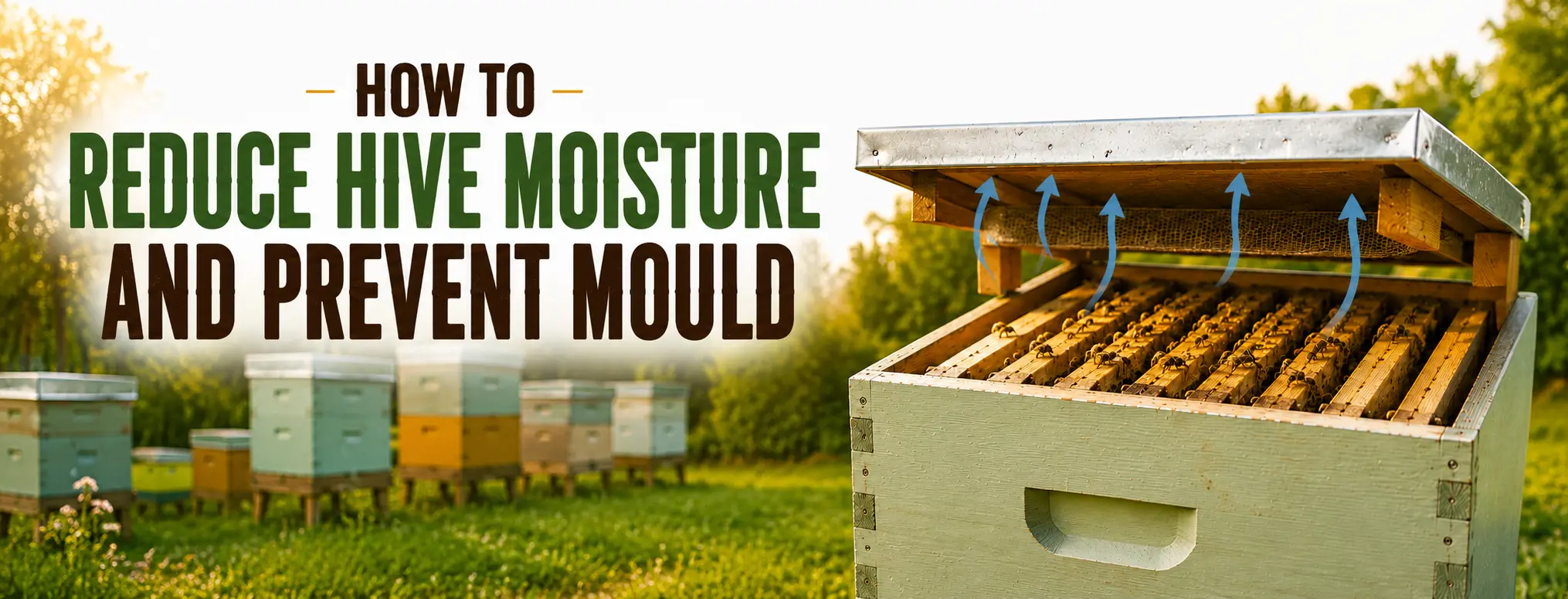
How to Reduce Hive Moisture and Prevent Mould
Author: Hornsby Beekeeping Date Posted:1 July 2026
Moisture is one of the most overlooked problems in beekeeping. Many new beekeepers worry about cold weather, pests or honey stores, but damp conditions inside the hive can be just as damaging. A colony can often manage cool temperatures if it is strong and well supplied, but too much moisture can chill bees, encourage mould and make the hive harder to keep healthy.
In Australian beekeeping, moisture problems can appear in different ways depending on the region. Cooler southern areas may see condensation during winter, while humid coastal regions may struggle with damp equipment, mouldy frames or poor airflow. Even in warmer areas, heavy rain, shaded hive sites and weak colonies can create moisture issues.
The aim is not to create a dry, windy hive. Bees need a stable internal environment. The goal is to help moisture escape while still allowing the colony to maintain warmth, defend the hive and care for broods. This guide explains why hive moisture happens, how to recognise it and what Australian beekeepers can do to prevent mould.
Why Moisture Builds Up Inside a Beehive
A beehive naturally produces moisture. Bees breathe, consume honey, regulate temperature and cluster together in cooler weather. As warm air rises inside the hive and meets a cold surface, condensation can form. If that moisture drips back onto bees or frames, the colony may become stressed.
Moisture can also enter from outside. Rain leaks, damp ground, poor drainage, cracked boxes, loose lids and shaded hive locations can all contribute to a damp hive. In some cases, the problem is not one major leak but a combination of small issues that slowly create poor hive conditions.
Moisture is more likely to become a problem when:
-
The colony is weak and cannot manage the hive space
-
Too many empty boxes are left on during cooler months
-
The hive is in a damp or shaded location
-
The lid or boxes are leaking
-
Airflow is poor
-
Frames are not covered by bees
-
Old equipment is cracked or warped
-
The hive is sitting close to wet ground
-
Heavy rain or humidity continues for long periods
Understanding the cause is important because the solution depends on whether the moisture is coming from condensation, poor ventilation, hive leaks or weak colony strength.
Why Hive Moisture Can Be Harmful
A little moisture inside a hive is normal, but excessive moisture can create problems. Damp frames may grow mould, unused comb may become unpleasant, and bees may struggle to maintain the brood nest properly. If condensation drips onto the cluster during cold weather, it can be more harmful than cold air alone.
Moisture can also make other problems worse. Weak colonies may struggle to defend damp unused frames from pests. Small hive beetle and wax moth are more likely to become a concern when the colony is already stressed or not covering the equipment properly.
Too much moisture can lead to:
-
Mouldy frames or inner covers
-
Chilled bees or brood
-
Damp, unhealthy hive conditions
-
Poor overwintering strength
-
Increased stress in weak colonies
-
Fermented stores in some situations
-
Higher pest pressure in unused comb
-
Damaged wooden hive equipment
For this reason, moisture control should be part of normal seasonal hive management, especially before winter and during long wet periods.
Signs Your Hive Has Too Much Moisture
Moisture problems are not always obvious from outside the hive. During inspections, look carefully at the lid, inner cover, walls, frames and bottom board. A damp smell or mouldy surfaces can suggest that the hive environment needs attention.
Common signs include:
-
Water droplets under the lid or inner cover
-
Mould on frames, walls or unused comb
-
Damp or musty smell inside the hive
-
Wet bottom board
-
Bees clustered away from damp frames
-
Frames not covered by bees becoming mouldy
-
Condensation on plastic or metal hive parts
-
Rotting or swollen timber
-
Dead bees on a damp bottom board
-
Poor colony strength after winter
A small amount of mould on unused outer frames may happen in some conditions, especially if the colony is small. However, widespread mould, dripping condensation or damp brood areas should be treated seriously.
Check the Hive Lid and Weatherproofing
The first step in moisture control is checking whether water is entering from outside. A leaking lid can create problems quickly, especially during heavy rain. Even a small gap can allow water to enter and soak frames or the inner cover.
Inspect the lid, corners, box joints and any cracks in the timber. Make sure boxes sit flat and are not warped. If the lid is damaged, repair or replace it before the wet season or winter begins. A hive should be weatherproof without being completely sealed.
When checking weatherproofing, look for:
-
Cracked or warped lids
-
Gaps between boxes
-
Rusted or damaged metal covers
-
Timber rot
-
Water marks inside the hive
-
Poorly fitting inner covers
-
Boxes not sitting square
-
Leaks after storms
Good weatherproofing prevents rain from entering while still allowing controlled airflow.
Improve Ventilation Without Overdoing It
Ventilation helps moisture escape, but too much airflow can make it harder for bees to keep the hive warm. The right amount depends on your hive type, climate, colony strength and season.
In cooler weather, warm moist air rises from the cluster. If it cannot escape or be absorbed, condensation may form under the lid. Some beekeepers use controlled upper ventilation, insulated covers or moisture-absorbing materials to reduce condensation. The key is to avoid creating cold drafts directly through the brood nest.
Good ventilation may include:
-
Keeping the entrance clear
-
Using a slightly ventilated lid or inner cover where suitable
-
Making sure boxes fit properly without large uncontrolled gaps
-
Avoiding blocked entrances from grass or dead bees
-
Using screened bottom boards where appropriate for your climate
-
Ensuring stored equipment is dry before placing it on the hive
Ventilation should be controlled and intentional. Random cracks, loose lids or badly aligned boxes are not good ventilation; they are management problems.
Use Insulation Carefully in Cooler Regions
In cooler parts of Australia, insulation can help reduce condensation by keeping the top of the hive warmer. When the underside of the lid is very cold, warm moist air from the colony can condense there and drip back down. A well-insulated top can reduce this risk.
However, insulation should be used carefully. It should not trap moisture inside the hive or block necessary airflow. It should also be protected from bees, pests and water damage depending on the material used.
Insulation may be useful when:
-
Winters are cold or damp
-
Condensation forms under the lid
-
Colonies are strong but still experiencing moisture issues
-
Hives are exposed to cold winds
-
Temperature swings are common
In warm or humid areas, the approach may be different. Beekeepers may focus more on drainage, airflow and hive placement rather than heavy insulation.
Reduce Unused Hive Space
A common reason for mouldy frames is too much space for the colony to manage. If bees are not covering the frames, those frames may become cold, damp and poorly defended. This is especially common in winter or after a colony has weakened.
Reducing excess space helps bees keep the hive warmer, drier and easier to defend. A smaller, well-populated hive is often healthier than a large hive with many empty frames.
Consider reducing space if:
-
Bees cover only a few frames
-
Outer frames are mouldy and unused
-
Honey supers are empty after the season
-
The colony is weak after swarming or queen failure
-
Pest pressure is increasing
-
The hive feels too large for the bee population
Do not leave empty boxes on the hive just because they were used during honey season. Match hive size to colony strength.
Choose a Dry, Well-Drained Hive Location
Hive placement has a major effect on moisture. A hive placed in a damp, shaded corner may struggle with mould even if the equipment is in good condition. Poor drainage, long wet grass and lack of sunlight can all increase moisture around the hive.
A better location should provide morning sun, airflow and dry ground. Morning sun helps warm the hive and encourages bee activity, while airflow helps reduce lingering dampness. In hot areas, some afternoon shade may still be useful, but the site should not be dark and wet all day.
A good hive location should have:
-
Well-drained ground
-
Morning sun where possible
-
Airflow around the hive
-
Protection from flooding
-
Stable hive stands
-
Short grass around the entrance
-
No water pooling under the hive
-
Safe access for inspections
If a hive site remains damp after rain, consider moving the hive to a better location when safe and practical.
Keep Hives Raised Off the Ground
Hive stands are useful for moisture control. When a hive sits directly on damp ground, moisture can move into the base and timber equipment may deteriorate faster. Raising the hive improves airflow underneath and helps keep equipment dry.
A good hive stand should be stable, strong and level. It should keep the hive high enough to reduce ground moisture but still comfortable for inspections. In areas with ants, livestock or flood risk, stand height and design may need extra thought.
Benefits of hive stands include:
-
Better airflow under the hive
-
Less contact with damp ground
-
Easier inspections
-
Reduced timber rot
-
Better protection from minor water pooling
-
Improved pest and ant management options
A simple, strong hive stand can make a noticeable difference in damp conditions.
Tilt the Hive Slightly Forward
A slight forward tilt helps water drain out of the hive instead of pooling inside. This is especially useful after rain or when condensation forms on internal surfaces. The tilt should be subtle; the hive still needs to be stable and safe.
The entrance should generally be the lower side so any water can move out. Avoid tilting too much, as this can make frames uneven and create handling issues.
This small adjustment can help reduce:
-
Water pooling on the bottom board
-
Damp debris inside the entrance
-
Moisture sitting under frames
-
Mould risk near the front of the hive
It is a simple step, but it can be helpful in wet conditions.
Remove or Replace Mouldy Frames
Not all mouldy frames are the same. Light mould on unused outer frames may be cleaned by bees when the colony strengthens and conditions improve. However, heavily mouldy, damaged or foul-smelling frames should be handled carefully.
If the frame contains brood disease symptoms, do not treat it as a simple moisture issue. Seek advice and follow local biosecurity requirements. Mould and disease are different problems, but beginners may confuse them.
When deciding what to do with mouldy frames, consider:
-
How much mould is present?
-
Is the colony strong enough to clean it?
-
Does the frame smell rotten or abnormal?
-
Is there any suspicious brood?
-
Is the comb old, black or damaged?
-
Is the frame worth saving?
Old, badly damaged or heavily mouldy comb is often better replaced. A good comb is valuable, but an unhealthy comb should not be kept just to save money.
Manage Feeders and Syrup Carefully
Feeding can sometimes add moisture to the hive, especially when syrup is used in cool or damp conditions. Bees need to process syrup, and excess moisture may contribute to humidity if the colony is not strong enough or ventilation is poor.
Feeding should be done only when needed and in a way that suits the season. Avoid overfeeding syrup when the colony cannot use or store it properly. Also, do not feed sugar syrup while honey supers for human consumption are on the hive.
Feeding tips include:
-
Feed only when stores are low
-
Use suitable feeders that do not leak
-
Avoid spilling syrup inside the hive
-
Do not overfeed weak colonies
-
Remove empty or dirty feeders
-
Check whether moisture increases after feeding
-
Consider weather conditions before feeding syrup
Good feeding supports bees. Poor feeding can create dampness, robbing and storage problems.
Prevent Mould in Stored Equipment
Hive moisture is not only a problem in active colonies. Stored beekeeping equipment can also become mouldy if it is packed away wet or kept in a damp place. Frames, supers, lids and feeders should be dry before storage.
Drawn comb is especially valuable, but it can also attract pests and mould if stored poorly. Store equipment in a dry, protected and ventilated area, off the ground and away from rain or damp concrete.
To prevent mould in stored equipment:
-
Dry boxes and frames before storage
-
Store equipment off the ground
-
Keep storage areas ventilated
-
Avoid damp sheds or dark corners
-
Protect comb from wax moth, beetles and rodents
-
Clean feeders before storing them
-
Check stored gear regularly
Good storage saves time and money before the next beekeeping season.
Seasonal Moisture Management in Australia
Moisture management changes with the season. In autumn, the goal is to prepare colonies before cold or wet weather arrives. This is the right time to reduce unused space, check food stores, repair lids and make sure colonies are strong.
In winter, inspections should be limited and done only when weather allows. The focus should be on external checks, hive weight, entrance condition and making sure the hive remains dry and secure. Opening the hive too often in cold weather can create more stress.
In spring, colonies begin expanding again, and bees may clean light mould from unused frames as they grow. However, if mould is heavy or equipment is damaged, replace or clean it before adding space. In summer, moisture issues may be more related to humidity, storms, poor ventilation or shaded hive sites.
Common Moisture Control Mistakes
Many moisture problems come from small management mistakes. The good news is that most can be prevented with seasonal checks and better hive setup.
Common mistakes include:
-
Leaving empty supers on weak colonies
-
Ignoring leaking lids
-
Placing hives in damp, shaded corners
-
Blocking ventilation completely
-
Creating large uncontrolled gaps
-
Leaving hives directly on wet ground
-
Storing frames before they are dry
-
Overfeeding syrup in damp conditions
-
Confusing mould with brood disease
-
Waiting until winter to fix autumn problems
Moisture control works best when it is done before the problem becomes serious.
Hive Moisture Prevention Checklist
Use this checklist during autumn, winter and long wet periods:
-
Check lids for leaks and damage
-
Keep hives raised off the ground
-
Choose dry, well-drained hive sites
-
Reduce unused hive space
-
Keep entrances clear
-
Improve controlled ventilation
-
Avoid cold drafts through the brood nest
-
Consider top insulation in cooler areas
-
Tilt hives slightly forward for drainage
-
Remove badly mouldy or damaged frames
-
Store spare equipment dry and protected
-
Feed carefully and only when needed
-
Inspect on warm, suitable days only
-
Keep clear hive records
This checklist helps create a drier, healthier hive environment without overcomplicating management.
Final Thoughts
Reducing hive moisture and preventing mould is about balance. Bees need a stable hive environment, not a sealed box full of condensation and not a cold, drafty hive with too much airflow. The best approach is controlled ventilation, good weatherproofing, dry hive placement and colony strength that matches the space inside the hive.
For Australian beekeepers, moisture control should begin before winter or long wet periods. Check lids, reduce unused space, keep hives off damp ground and make sure the colony is strong enough to manage its equipment. If mould appears, assess whether it is light and manageable or whether frames need to be removed and replaced.
A dry, well-managed hive gives bees a better chance to stay healthy through changing weather, cooler nights and wet seasons.
If you need swarm collection equipment, nucleus boxes, protective clothing, or expert beekeeping advice, Hornsby Beekeeping Supplies is here to help. Contact our experienced team on 02 9477 5569 or email info@hornsby-beekeeping.com for trusted products and practical beekeeping support across Australia.
FAQs
Why is there moisture inside my beehive?
Moisture can come from bee respiration, condensation, rain leaks, damp ground, poor ventilation or too much unused hive space. The first step is to identify whether the moisture is coming from inside the colony or entering from outside.
Is mould in a beehive dangerous?
Light mould on unused frames may sometimes be cleaned by bees when the colony becomes stronger. However, heavy mould, foul smells, damp brood areas or suspicious brood should be treated seriously and investigated.
How do I stop condensation in my hive?
Improve controlled ventilation, check the lid for leaks, reduce unused space, keep the hive off damp ground and consider top insulation in cooler regions. Avoid creating cold drafts through the brood nest.
Should I add more ventilation to a damp hive?
Ventilation can help, but it must be controlled. Large random gaps can create drafts, robbing risks and pest entry. Use proper ventilation methods suited to your hive and climate.
Should I remove mouldy frames?
If frames are heavily mouldy, damaged, old or foul-smelling, replacing them may be best. If there is any sign of brood disease, seek advice before moving or reusing equipment.
Does hive insulation help with moisture?
In cooler regions, top insulation can help reduce condensation by keeping the lid area warmer. However, insulation should not trap moisture or block necessary airflow.