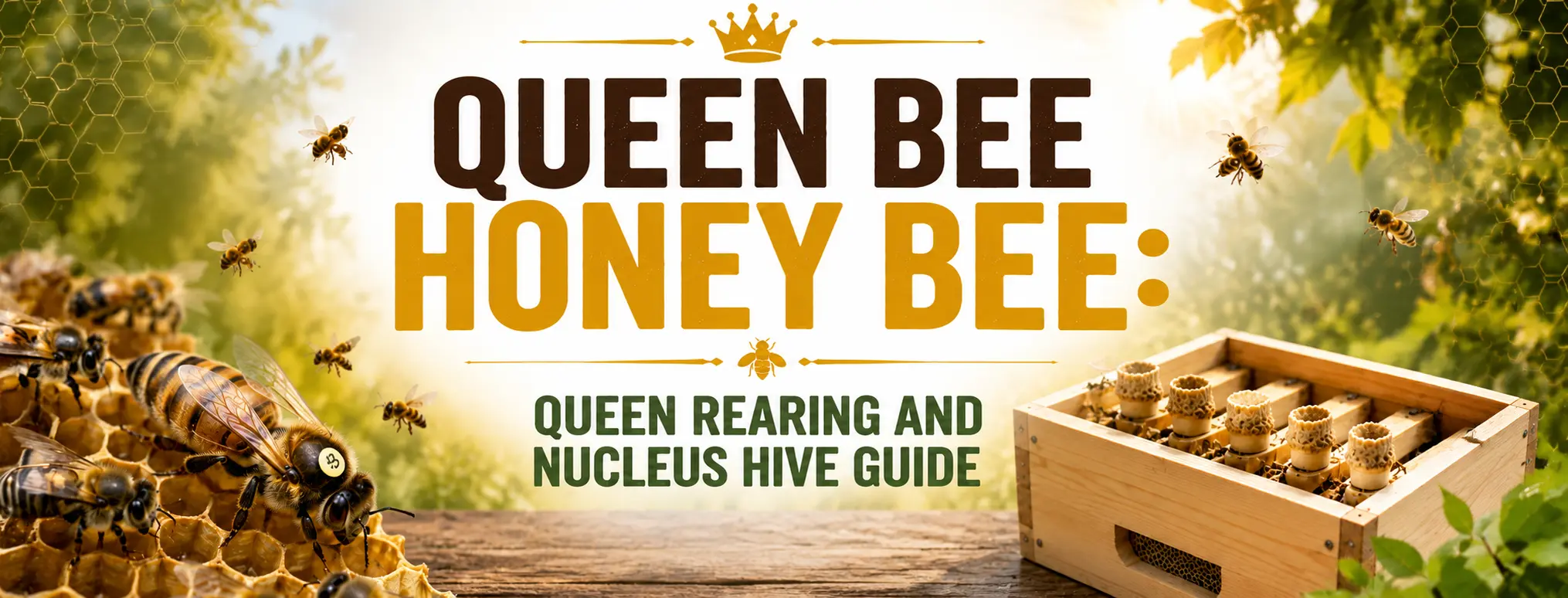
A healthy queen is one of the most important parts of a productive honey bee colony. She controls much of the colony’s future through her egg laying, genetics and pheromones. Therefore, when beekeepers talk about queen bee honey bee management, they are usually talking about keeping colonies strong, replacing failing queens and creating nucleus hives for growth.
For Australian beekeepers, queen management is especially useful when building nucs, preventing colony decline or improving hive performance. A good queen can support steady brood production, calm colony behaviour and better seasonal build-up. However, queen rearing and nuc management require timing, patience and the right equipment.
Why Queen Management Matters
The queen is not the “boss” of the hive in a human sense, but she is central to colony stability. If she is young, healthy and well mated, the hive usually has a better chance of building strong brood patterns. On the other hand, if she is old, failing or poorly mated, the colony may become weak, patchy or difficult to manage.
Good queen management helps beekeepers:
-
Replace failing queens
-
Build nucleus colonies
-
Improve colony strength
-
Support steady brood production
-
Reduce queenless hive problems
-
Manage splits more successfully
-
Maintain better apiary genetics
As a result, queen care is not only for advanced beekeepers. Even beginners should understand the signs of a healthy queen and when a colony may need help.
When to Use Queen Bee Honey Bee Management for Nucs
Queen bee honey bee management becomes important when you want to create a nuc, replace a poor queen or recover a colony that has lost its queen. A nucleus hive is a small colony usually made with bees, brood, food stores and either a mated queen or queen cell.
Nucs are useful because they give beekeepers flexibility. For example, they can be used to replace winter losses, expand an apiary, support queen introduction or hold spare queens. In addition, nucs are easier to manage than full-size hives when colony numbers are small.
You may use queen management for nucs when:
-
Making a controlled hive split
-
Introducing a new mated queen
-
Raising queen cells
-
Replacing an old or failing queen
-
Keeping a backup colony
-
Expanding your apiary
-
Supporting a weak but healthy colony
However, do not make nucs from weak or unhealthy hives. Strong parent colonies give nucs a much better start.
How to Choose the Right Queen
Choosing the right queen depends on your colony goals. Some beekeepers want calm bees for backyard hives, while others focus on honey production, brood strength, disease resistance or good overwintering ability. Therefore, the “best” queen is not always the same for every beekeeper.
When choosing a queen, consider:
-
Colony temperament
-
Brood pattern
-
Honey production history
-
Local climate suitability
-
Disease and pest tolerance
-
Swarming tendency
-
Supplier reputation
-
Queen age and mating quality
A good queen should support a consistent brood pattern and calm colony behaviour. Meanwhile, avoid using queens from aggressive, weak or disease-prone colonies unless you are correcting the problem through requeening.
Equipment That Works Well With Queen Management
Queen rearing and nucleus hive work are much easier when the right equipment is ready before you start. Since timing matters, it is better to prepare everything early rather than rushing when queen cells are already developing.
Useful equipment includes:
-
Nucleus hive boxes
-
Frames with drawn comb
-
Frames with honey and pollen
-
Queen cages
-
Queen marking tools
-
Queen excluder
-
Grafting tools if raising queens
-
Cell cups or queen cell bars
-
Feeders
-
Entrance reducers
-
Protective clothing
-
Hive tool and smoker
-
Record book or inspection sheet
In addition, spare nuc boxes are very useful during swarm season. They allow you to manage splits, hold extra queens or create backup colonies without disturbing full-size hives too much.
Basic Nuc Setup With a Queen
A good nuc needs the right balance of bees, brood and food. If it has too few nurse bees, it may struggle to care for brood. If it has too little food, it may stall during poor weather. For this reason, setup should be balanced from the beginning.
A simple nuc may include:
-
One or two brood frames
-
A frame of honey and pollen
-
Enough nurse bees to cover brood
-
Drawn comb or foundation
-
A mated queen or queen cell
-
Reduced entrance for defence
-
Feeding if natural stores are low
After setup, place the nuc in a safe location and avoid disturbing it too often. However, check at the right time to confirm queen acceptance, egg laying and colony growth.
Common Queen-Rearing Mistakes to Avoid
Queen rearing can be rewarding, but mistakes can quickly lead to failed queens or weak nucs. The most common problem is poor timing. Queens develop on a schedule, and missing the right inspection window can cause queen cells to be damaged, chilled or destroyed.
Avoid these mistakes:
-
Starting nucs from weak colonies
-
Using poor-quality brood
-
Disturbing queen cells too often
-
Introducing queens into queenright colonies
-
Failing to check queen acceptance
-
Not providing enough nurse bees
-
Leaving nucs short of food
-
Ignoring robbing or pest pressure
-
Forgetting to record queen age and origin
-
Rushing inspections in poor weather
Most importantly, do not assume every queen cell will produce a strong queen. Mating success, weather and drone availability all affect results.
Final Thoughts
Queen bee honey bee management is an important skill for beekeepers who want stronger colonies, better nucs and more control over their apiary. A healthy queen supports brood production, colony stability and seasonal growth. Meanwhile, nucleus hives give beekeepers a practical way to expand, replace losses and manage queens more effectively.
The best results come from strong parent colonies, careful timing, clean equipment and good records. With patience and practice, queen management can become one of the most useful skills in beekeeping.
If you need swarm collection equipment, nucleus boxes, protective clothing, or expert beekeeping advice, Hornsby Beekeeping Supplies is here to help. Contact our experienced team on 02 9477 5569 or email info@hornsby-beekeeping.com for trusted products and practical beekeeping support across Australia.
FAQs
When should beekeepers use queen bee honey bee for nucs or queen management?
Beekeepers should use queen bee honey bee management when making nucs, replacing failing queens, managing splits or keeping backup colonies. It is most useful when parent colonies are strong and conditions support queen acceptance or mating.
How do I choose the right queen bee honey bee for my colony goals?
Choose a queen based on your goals, such as calm temperament, strong brood pattern, honey production, disease tolerance and local climate suitability. A trusted supplier and good colony history are also important.
What equipment works well with queen bee honey bees?
Useful equipment includes nucleus boxes, drawn comb, brood frames, queen cages, feeders, entrance reducers, grafting tools, queen marking tools, protective clothing and clear inspection records.
What common queen-rearing mistakes should be avoided with queen bee honey bees?
Avoid starting with weak colonies, disturbing queen cells too often, introducing queens incorrectly, leaving nucs short of food, ignoring pests and failing to check queen acceptance at the right time.