
















Why Are My Bees Not Producing Honey? Common Causes Explained
Author: Hornsby Beekeeping Date Posted:24 June 2026
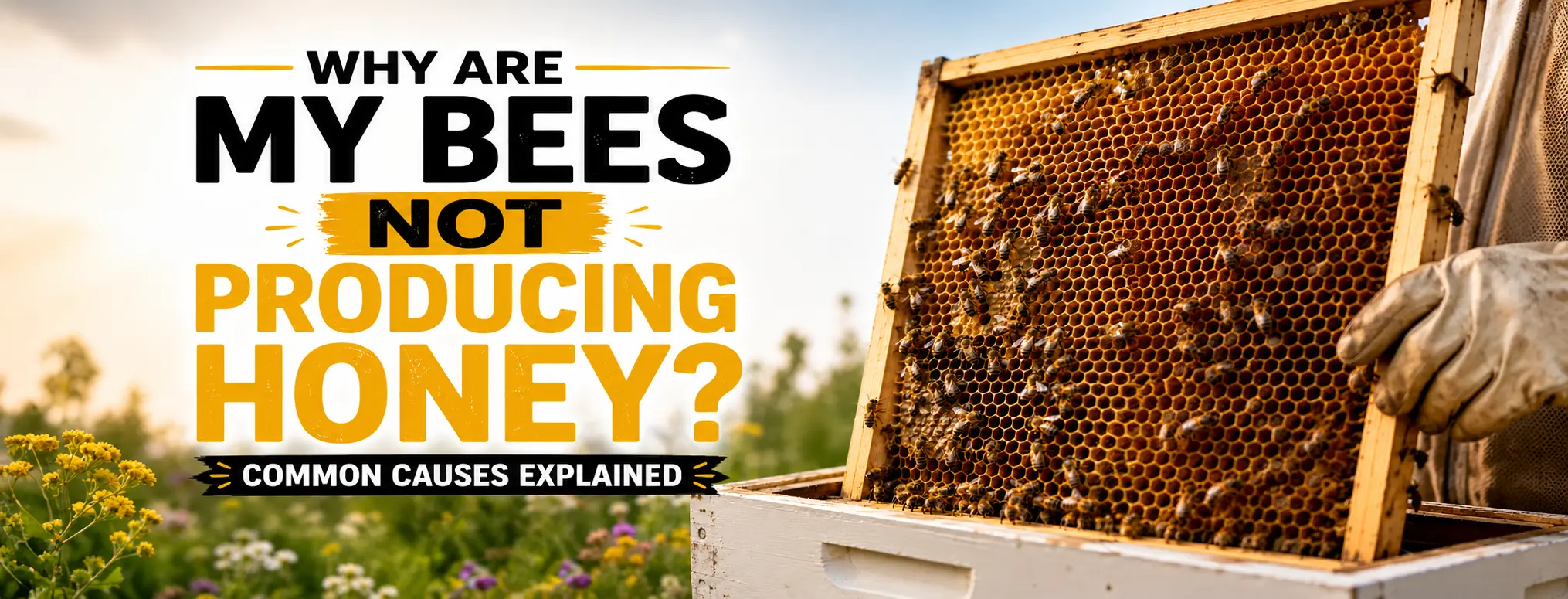
One of the most common questions new beekeepers ask is, “Why are my bees not producing honey?”
It can be frustrating to see bees flying in and out of the hive every day, only to open the honey super and find little or no stored honey.
In many cases, the bees are working hard, but the colony may not be strong enough, the nectar flow may be poor, or the hive may be using most of its resources for survival instead of surplus honey storage.
For Australian beekeepers, honey production depends on many factors.
Weather, rainfall, flowering plants, colony strength, queen health, pests, disease, hive space and seasonal timing all play a role.
A hive may look active from the outside but still be unable to produce a harvestable honey crop.
This guide explains the most common reasons bees are not producing honey and what you can do to support better hive performance.
Understanding How Bees Produce Honey
Honey production starts with nectar.
Worker bees collect nectar from flowers and bring it back to the hive.
Inside the hive, bees pass the nectar between workers and reduce its moisture content.
Once the nectar is thick enough, bees store it in wax cells and cap it with wax.
That capped honey becomes the beekeeper’s harvestable crop.
However, bees do not make honey for humans first.
They make honey for their own survival.
If the colony needs food for brood, energy, heat regulation or survival during a nectar gap, the bees will use the honey themselves.
A beekeeper can only harvest true surplus honey.
Reason 1: There Is No Strong Nectar Flow
The most common reason bees are not producing honey is simple.
There may not be enough nectar available.
Bees can only make honey when flowering plants are producing nectar in useful amounts.
A garden full of flowers does not always mean a strong nectar flow.
Some flowers produce little nectar.
Some produce nectar only under certain weather conditions.
Some may provide pollen but not much nectar.
In Australia, nectar flow can vary greatly between regions and seasons.
A strong hive in one suburb may produce honey, while another hive only a few kilometres away may produce very little because local flowering conditions are different.
Signs of Poor Nectar Flow
- Bees are flying but little nectar is stored.
- Honey supers remain empty.
- Bees consume existing stores quickly.
- Flowers are present but dry conditions reduce nectar.
- Colonies become more defensive.
- Robbing activity increases between hives.
What to Do
-
Check local flowering conditions.
-
Talk to nearby beekeepers about their honey flow.
-
Avoid harvesting too early.
-
Leave enough stores for the bees.
-
Consider planting bee-friendly flowers that bloom across different seasons.
-
Keep records so you can understand your local nectar flow over time.
Reason 2: The Colony Is Not Strong Enough
A weak colony cannot produce much honey. Honey production requires a large workforce.
The hive needs enough forager bees to collect nectar and enough house bees to process and store it. If the colony population is low, most bees may be focused on brood care, defence and basic survival.
There may not be enough surplus workforce for honey production.
Signs of a Weak Colony
- Only a few frames are covered with bees.
- The brood pattern is small or patchy.
- There are not many foragers returning with nectar or pollen.
- The colony struggles to defend against pests.
- The hive feels light.
- Honey supers are ignored.
What to Do
-
Check whether the queen is laying well.
-
Make sure the brood pattern is healthy.
-
Reduce excess empty space if the colony is small.
-
Feed only if stores are low and honey supers for harvest are not on the hive.
-
Monitor for pests and disease.
-
Allow the colony to build before expecting a honey crop.
Reason 3: The Queen Is Failing or Missing
-
A strong honey-producing hive needs a healthy queen.
-
The queen controls colony growth through egg laying.
-
If she is old, poorly mated, failing or missing, the colony may not raise enough new workers to support honey production.
-
A hive may still have bees flying for a while after queen failure, but its long-term strength will decline.
Signs of Queen Problems
-
No eggs or young larvae are present.
-
The brood pattern is patchy.
-
There are many drone cells but few worker cells.
-
The colony sounds unsettled.
-
Bees may become more defensive.
-
Queen cells may be present.
-
The population slowly declines.
What to Do
-
Inspect the brood nest carefully.
-
Look for eggs, young larvae and capped worker brood.
-
If the queen is failing, requeening may be needed.
-
If the colony is queenless, you may need to introduce a queen, add a frame of young brood from a healthy hive, or combine the colony with another hive if it is disease-free.
Reason 4: The Hive Swarmed Recently
Swarming is a natural process where part of the colony leaves with a queen to start a new colony. After a swarm, the original hive may have fewer bees and a break in brood production. This can reduce honey production dramatically.
Even if the hive still has bees, it may no longer have the workforce needed to collect and store surplus honey.
Signs Your Hive May Have Swarmed
-
Bee numbers suddenly drop.
-
Queen cells are present.
-
The hive seems less crowded than before.
-
There are fewer foragers.
-
There is a gap in eggs or young larvae.
-
Honey production slows or stops.
What to Do
-
Check whether the hive has a laying queen.
-
Avoid disturbing virgin queens too much while they are mating.
-
Make sure the colony has enough food.
-
Give the hive time to rebuild.
-
Use swarm prevention methods in future seasons, especially during spring.
Reason 5: The Hive Has Too Much or Too Little Space
-
Hive space affects honey production.
-
If the hive is overcrowded, bees may swarm or store nectar poorly.
-
If the hive has too much empty space, the colony may struggle to manage temperature, defend the hive and draw comb efficiently.
-
The goal is to match hive space to colony strength.
Too Much Space
-
Weak colonies may ignore honey supers.
-
They may struggle to protect empty frames from pests.
-
They may focus on survival instead of comb building and honey storage.
Too Little Space
-
Strong colonies may become crowded.
-
Bees may backfill the brood nest with nectar.
-
Swarming pressure may increase.
-
Honey storage may become disorganised.
What to Do
-
Add supers when bees are covering most frames and nectar flow is active.
-
Remove unnecessary empty boxes from weak colonies.
-
Make sure frames are clean, usable and correctly spaced.
-
Do not add boxes just because the calendar says it is honey season.
-
Respond to the actual strength of the hive.
Reason 6: Weather Conditions Are Poor
Honey production depends heavily on weather.
Bees need suitable flying conditions and plants need suitable weather to produce nectar.
Too much heat, drought, rain, wind or cold can reduce honey production.
In Australia, weather can change quickly.
A promising season can become poor if drought dries flowers, rain washes nectar away or heatwaves reduce foraging time.
Weather Problems That Reduce Honey Production
-
Drought reduces nectar availability.
-
Heavy rain stops bees from foraging.
-
Strong wind limits flight activity.
-
Heatwaves reduce midday foraging.
-
Cold snaps slow colony build-up.
-
Bushfire smoke can affect bee activity and access to forage.
What to Do
-
Monitor weather patterns during honey season.
-
Avoid taking honey when future nectar flow is uncertain.
-
Provide water during hot weather.
-
Check food stores after long wet or dry periods.
-
Be patient during poor seasons.
-
Not every year will produce a strong honey crop.
Reason 7: Bees Are Using Honey for Brood Rearing
A growing colony uses a lot of food. During spring build-up, bees may collect nectar but use much of it to feed brood and support colony expansion. This is normal.
A hive may need to build its population before it can store surplus honey.
New colonies, nucleus hives and recently split colonies often need time before they produce harvestable honey.
Signs This Is Happening
-
The brood nest is expanding.
-
The queen is laying strongly.
-
Bees are bringing in pollen.
-
Honey stores are present but not increasing quickly.
-
The colony is growing but not filling supers yet.
What to Do
-
Allow the colony to build.
-
Do not harvest too early.
-
Make sure the hive has enough room when it becomes stronger.
-
Support healthy brood development by monitoring food stores and pests.
-
A strong colony today may become a honey-producing colony later in the season.
Reason 8: The Bees Have Not Drawn Comb Yet
Bees cannot store much honey without a drawn comb. If you have added new frames with foundation, the bees must build a wax comb before they can store large amounts of nectar.
Comb building takes energy, nectar and a strong workforce.
A new hive may spend its first season building a comb instead of producing a large honey crop.
Signs Comb Building Is the Issue
-
Frames are still mostly foundation.
-
Bees are clustered on frames but not storing much honey.
-
Nectar flow is weak or inconsistent.
-
The colony is new or recently expanded.
What to Do
-
Be patient with new colonies.
-
Add frames gradually based on colony strength.
-
Avoid adding too much undrawn equipment at once.
-
Use a drawn comb where available and safe.
-
Do not expect maximum honey production from a hive that is still building its structure.
Reason 9: Pests or Disease Are Weakening the Hive
Pests and diseases can reduce honey production by weakening the colony. A hive affected by Varroa mite, small hive beetle, wax moth, brood disease or poor nutrition may not have enough healthy bees to gather and process nectar.
Even a small pest problem can become serious if the colony is already weak.
Signs of Pest or Disease Pressure
-
Patchy brood.
-
Deformed wings.
-
Crawling bees.
-
Unusual mites.
-
Small hive beetles in the hive.
-
Wax moth damage.
-
Bad smell from brood frames.
-
Dead larvae or abnormal broods.
-
Weak population despite available forage.
What to Do
-
Inspect brood frames carefully.
-
Monitor for Varroa according to current Australian guidance.
-
Keep colonies strong.
-
Reduce excess space in weak hives.
-
Remove damaged comb where appropriate.
-
Seek expert help if you suspect a notifiable disease.
-
Do not move frames from sick hives into healthy hives until the problem is identified.
Reason 10: You Harvested Too Early or Too Often
Sometimes bees are producing honey, but the beekeeper removes it too soon. Uncapped nectar is not mature honey. If frames are taken before bees have finished reducing the moisture content, the honey may ferment.
Also, if too much honey is removed, bees may need to rebuild stores before they can create surplus again.
Signs You May Be Harvesting Too Early
-
Frames contain mostly uncapped nectar.
-
Honey is not fully sealed with wax cappings.
-
The colony has limited stores left after harvest.
-
Honey production slows after repeated harvesting.
-
Bees become defensive during nectar shortage.
What to Do
-
Harvest only capped honey frames.
-
Leave enough stores for the colony.
-
Avoid harvesting before a known nectar gap or poor weather period.
-
Do not remove honey from weak colonies.
-
Remember that colony health comes before honey yield.
Reason 11: The Hive Is in a Poor Location
Hive location can affect honey production.
Bees need access to good forage, clean water, morning sun, shelter from strong wind and safe flight paths. A hive placed in a poor location may stay alive but produce little honey.
Location Problems
-
Not enough flowering plants nearby.
-
Too much shade and dampness.
-
Strong wind at the entrance.
-
No reliable water source.
-
High competition from nearby hives.
-
Exposure to extreme afternoon heat.
-
Nearby pesticide use.
What to Do
-
Observe the hive entrance and surrounding area.
-
Check what is flowering within flying range.
-
Provide water.
-
Improve shelter from wind.
-
Consider moving the hive if the location is consistently poor.
-
Avoid placing too many hives in one area if forage is limited.
Reason 12: There Is Too Much Competition for Forage
In some areas, there may be many managed hives and limited nectar sources.
When too many colonies compete for the same flowers, each hive may store less honey. This is especially important in urban areas or during poor seasons.
Signs of Forage Competition
-
Many hives are kept close together.
-
Honey supers stay light across multiple colonies.
-
Bees fly long distances to forage.
-
Robbing pressure increases.
-
Nearby beekeepers also report poor honey production.
What to Do
-
Keep hive numbers suitable for your area.
-
Plant more bee-friendly flowers.
-
Avoid overstocking small sites.
-
Talk to local beekeepers about forage conditions.
Consider moving hives only if safe, legal and practical.
How to Tell If Your Hive Is Healthy but Not Making Honey
A hive can be healthy and still not produce harvestable honey. This is important to understand.
Not every healthy colony produces a surplus every season.
A Healthy Hive May Have:
-
A good brood pattern.
-
A productive queen.
-
Calm bee behaviour.
-
Enough bees covering frames.
-
Pollen coming into the hive.
-
No major pest or disease signs.
-
Enough stores for its own needs.
Why It Still May Not Produce Honey
-
The nectar flow may be poor.
-
The colony may be young.
-
The season may be too dry.
-
The hive may be recovering from swarming.
-
The bees may be building comb.
-
The weather may not support honey production.
-
In this situation, the best action is usually patience and good management.
What Should You Do If Your Bees Are Not Producing Honey?
Start with a full but careful hive assessment. Do not assume the problem is one single issue.
Honey production depends on the whole colony and the environment around it.
Step-by-Step Hive Check
-
Check the queen status.
-
Look for eggs and young larvae.
-
Assess brood pattern.
-
Check bee population.
-
Look at food stores.
-
Inspect for pests and disease.
-
Check whether honey supers have drawn comb.
-
Review local flowering conditions.
-
Consider recent weather.
-
Compare with nearby beekeepers.
-
Review your inspection records.
-
This process helps you understand whether the issue is inside the hive, outside in the environment, or related to timing.
How to Encourage Better Honey Production
You cannot force bees to make honey, but you can create better conditions for surplus honey storage.
Build Strong Colonies Before Nectar Flow
A strong colony before the honey flow has a better chance of producing surplus honey. Manage queen health, brood space and pest pressure early.
Add Supers at the Right Time
Add honey supers when the colony is strong and nectar flow is starting. Do not wait until the hive is overcrowded.
Do not add too much space to weak colonies.
Protect the Colony From Stress
-
Provide water in summer.
-
Reduce robbing risk.
-
Avoid rough inspections.
-
Monitor pests regularly.
-
Keep the hive dry and well maintained.
Leave Enough Honey for Bees
Healthy bees need their own food first. Taking too much honey can weaken the colony and reduce future production.
Plant Bee-Friendly Flowers
Planting nectar and pollen-rich flowers can support bees during seasonal gaps.
In Australian gardens, consider climate-suitable plants such as lavender, rosemary, grevillea, bottlebrush, banksia, basil, borage, salvia, sunflowers and flowering gums where appropriate.
When Should You Expect Honey From a New Hive?
New beekeepers often expect honey in the first season. Sometimes this happens, but often it does not.
A new hive may need to build comb, grow population and establish itself before producing surplus honey. In many cases, the first season is about colony development, not honey harvest.
A strong second season may produce better results if the colony survives well, stays healthy and enters spring with good strength.
Final Thoughts
If your bees are not producing honey, it does not always mean something is wrong.
They may be building comb, feeding brood, recovering from swarming, dealing with poor weather or waiting for a stronger nectar flow. However, low honey production can also point to queen problems, weak colony strength, pests, disease, poor hive placement or poor management timing.
The best approach is to inspect carefully, understand your local flowering conditions and support colony health before expecting a harvest. Healthy bees come first. Surplus honey comes after the colony has enough strength, food and favourable conditions.
If you need swarm collection equipment, nucleus boxes, protective clothing, or expert beekeeping advice, Hornsby Beekeeping Supplies is here to help.
Contact our experienced team on 02 9477 5569 or email info@hornsby-beekeeping.com for trusted products and practical beekeeping support across Australia.
FAQs
Why are my bees active but not making honey?
Bees may be active but still not storing honey if nectar flow is poor, the colony is weak, the bees are raising brood, or they are using nectar for daily survival instead of surplus storage.
How long does it take for a new hive to produce honey?
A new hive may take a full season or more before producing harvestable honey.
Many new colonies spend their first season building comb and growing population.
Can a weak queen reduce honey production?
Yes.
A failing queen can reduce brood production, which lowers the number of worker bees available for nectar collection and honey processing.
Do bees make honey without a nectar flow?
No.
Bees need nectar to make honey.
If plants are not producing nectar, bees cannot store much honey even if they are flying every day.
Should I feed bees that are not making honey?
Only feed if the colony is short of stores.
Do not feed while honey supers for human harvest are on the hive, because sugar syrup can contaminate honey.
Why is my honey super empty?
The super may be empty because the colony is not strong enough, the nectar flow is weak, the bees have not drawn comb, or the super was added too early.
Can weather stop honey production?
Yes.
Drought, rain, heatwaves, cold snaps, wind and bushfire smoke can all reduce nectar collection and honey storage.
Is it normal to get no honey in the first year?
Yes, it can be normal.
A first-year colony often focuses on building comb, raising brood and establishing food stores before producing surplus honey.