
















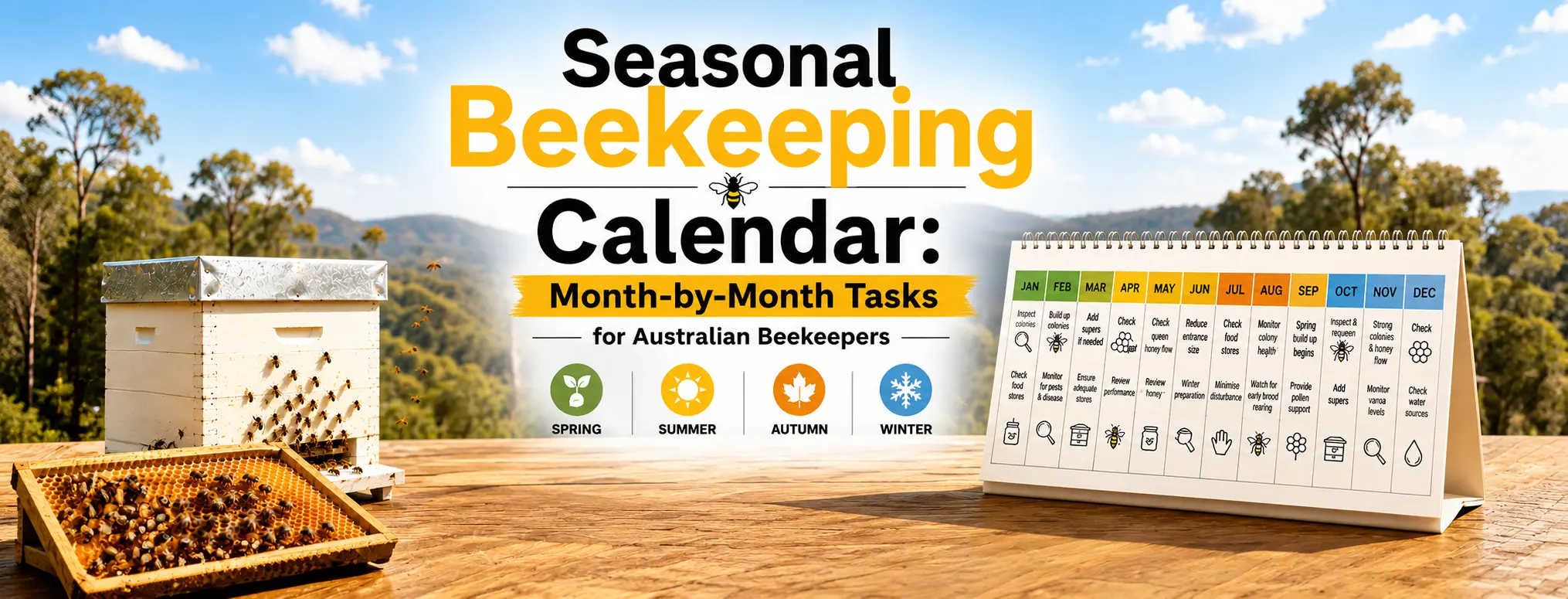
Seasonal Beekeeping Calendar: Month-by-Month Tasks for Australian Beekeepers
Author: Hornsby Beekeeping Date Posted:23 June 2026
Australian beekeeping is seasonal, but it is not the same in every region. A hive in coastal New South Wales, inland Victoria, tropical Queensland or Western Australia may behave differently depending on temperature, rainfall, local nectar flow and colony strength. That is why the best beekeeping calendar should be used as a practical guide, not a fixed rulebook.
This month-by-month beekeeping calendar is designed for Australian hobbyists and small-scale beekeepers who want to keep their colonies healthy, productive and well prepared throughout the year. It covers hive inspections, feeding, swarm control, honey harvesting, pest monitoring and seasonal equipment checks.
Why Australian Beekeepers Need a Seasonal Hive Calendar
Bees respond quickly to changes in weather, nectar availability and colony population. If a beekeeper waits too long, a small issue can become a major problem. A seasonal calendar helps you:
-
Prepare hives before nectar flow begins
-
Reduce the risk of swarming in spring
-
Monitor pests and diseases at the right time
-
Make sure bees have enough food during colder months
-
Plan honey harvesting without weakening the colony
-
Keep accurate notes for future hive management
A strong beekeeping routine also supports better biosecurity. In Australia, beekeepers should regularly inspect hives, monitor for pests such as Varroa mite, and keep records of hive condition, treatments and movement.
January: Summer Hive Strength and Heat Management
January is often hot across many parts of Australia. Strong colonies may be working hard if nectar is available, while weaker colonies may struggle during dry spells.
Key January Tasks
Check that hives have good ventilation and enough water nearby. Avoid opening hives during extreme heat unless necessary. Inspect honey supers and make sure bees have enough room if the honey flow is active.
Watch for signs of heat stress such as bearding at the hive entrance, melted comb, reduced activity or bees clustering outside the hive. If shade is limited, consider using a temporary shade cloth while keeping the hive entrance open and airflow clear.
What to Watch For
Look for robbing behaviour, wax moth activity in weak colonies, small hive beetle pressure and low food stores during dry periods.
February: Honey Harvesting and Pest Monitoring
February is a common honey harvesting period in many Australian regions, depending on local flowering conditions. Always leave enough honey for the bees, especially if the next nectar flow is uncertain.
Key February Tasks
Inspect frames before harvesting. Only remove capped honey frames that are ready. Keep honey supers clean and avoid leaving exposed honey around the apiary, as this can trigger robbing.
This is also a good month to review your pest monitoring routine. Check brood health, adult bee appearance and hive strength. Record your findings so you can compare colony performance across the season.
March: Preparing Colonies for Autumn
March is a transition month. The hive may still be active, but the colony will gradually begin preparing for cooler weather.
Key March Tasks
Reduce unnecessary empty space in weak hives. Remove unused supers if bees are not covering the frames. Check that the queen is laying well and that brood patterns are healthy.
If nectar is limited, assess food stores carefully. Feeding may be needed in some regions, but avoid feeding sugar syrup when honey supers for human consumption are on the hive.
Autumn Hive Check
Look for:
-
Enough stored honey and pollen
-
Healthy brood pattern
-
A productive queen
-
Low pest pressure
-
No unusual odour or diseased brood
April: Strengthen Hives Before Cooler Weather
April is an important month for preparing bees for winter, especially in cooler Australian climates.
Key April Tasks
Make sure each colony has enough stores. Combine weak colonies only if they are disease-free. Check hive lids, bases and boxes for gaps, leaks or damage.
Autumn is also a smart time to review biosecurity records, equipment condition and pest monitoring results. A healthy autumn colony is more likely to survive winter and build strongly in spring.
May: Reduce Hive Disturbance
By May, many hives slow down. Brood nests may shrink and bees may become more defensive if food is scarce.
Key May Tasks
Keep inspections short and purposeful. Avoid breaking the brood nest unnecessarily. Check stores by lifting the back of the hive or quickly inspecting outer frames when weather allows.
Make sure the hive is dry, stable and protected from strong wind. Dampness is often more harmful than cold, so good ventilation and a weatherproof lid are important.
June: Winter Protection and Food Stores
June is winter for most Australian regions, although northern areas may still have active bees.
Key June Tasks
Avoid frequent inspections in cold weather. Check from the outside first. Watch entrance activity on mild days and ensure the entrance is not blocked by dead bees, grass or debris.
If the colony is light and at risk of starvation, provide suitable feed. Strong colonies with enough stores should be left mostly undisturbed.
Winter Warning Signs
Be concerned if there is no flight activity on warm days, large numbers of dead bees at the entrance, water leaking into the hive or obvious signs of pests in weak colonies.
July: Plan for Spring Build-Up
July is a preparation month. Some regions begin seeing early brood expansion as days slowly lengthen.
Key July Tasks
Prepare spare frames, brood boxes, lids, bases and swarm control equipment before spring arrives. Clean and repair old equipment. Order protective clothing, feeders, frames or nucleus boxes before demand increases.
If weather allows, do a brief inspection to check stores and colony strength. Do not overwork the hive in cold conditions.
August: Early Spring Inspections
August can bring early spring activity in many parts of Australia. Colonies may start expanding quickly if pollen becomes available.
Key August Tasks
Inspect brood pattern, queen performance and food stores. Add space only when bees are ready. Too much empty space can chill brood, while too little space can encourage swarming.
Begin swarm prevention planning. Strong colonies may need extra room, requeening, splitting or brood management depending on your beekeeping goals.
September: Swarm Control Season Begins
September is one of the most important months in the Australian beekeeping calendar. Colonies can expand rapidly and swarm pressure can increase.
Key September Tasks
Inspect every 7 to 10 days if conditions are warm and the colony is strong. Look for queen cells, crowded brood boxes and bees filling available space quickly.
Add supers when needed, but do not add too much space too early. Manage strong colonies before they become overcrowded.
Spring Checklist
- Check for queen cells
- Confirm queen-right colony status
- Add space for expansion
- Monitor Varroa and other pests
- Prepare swarm catch boxes
- Keep accurate inspection notes
October: Peak Growth and Nectar Flow
October is often a busy month for beekeepers. Many colonies are strong, nectar may be flowing and swarm risk remains high.
Key October Tasks
Continue swarm checks. Add honey supers when bees are covering frames and need more storage space. Monitor brood health and pest levels.
This is also a good time to raise queens, make nucleus colonies or split strong hives if you have the experience and equipment.
November: Honey Production and Hive Balance
November can be a productive honey month in many regions. The challenge is balancing honey production with colony health.
Key November Tasks
Check honey supers regularly. Make sure the colony has enough space and that frames are being drawn and filled properly.
Watch for signs of queen failure, disease, robbing or pest pressure. Strong hives can hide problems until they become serious, so do not rely only on entrance activity.
December: Summer Readiness
December brings heat, strong bee activity and holiday-season distractions. Hives should be prepared for hot weather and sudden nectar changes.
Key December Tasks
Provide water, shade where needed and good ventilation. Harvest honey only when frames are ready and always leave enough stores for the colony.
Inspect after storms, extreme heat or bushfire smoke events where relevant. Make sure lids are secure and equipment is in good condition.
Essential Equipment for Seasonal Beekeeping
A good seasonal routine is easier when your equipment is ready before you need it. Australian beekeepers should keep the following on hand:
-
Protective bee suit, gloves and veil
-
Smoker and hive tool
-
Spare frames and boxes
-
Feeders
-
Queen excluder
-
Nucleus box or swarm collection box
-
Pest monitoring equipment
-
Record-keeping notebook or digital inspection log
Final Thoughts
A successful beekeeping year depends on observation, timing and preparation. Use this seasonal beekeeping calendar as a month-by-month guide, but always adjust your tasks to your local climate, nectar flow and colony condition. Regular inspections, good record keeping and early action can help you prevent many common hive problems before they become serious.
If you need swarm collection equipment, nucleus boxes, protective clothing, or expert beekeeping advice, Hornsby Beekeeping Supplies is here to help. Contact our experienced team on +612 9477 5569 or email info@hornsby-beekeeping.com for trusted products and practical beekeeping support across Australia.
FAQs
What is the busiest season for Australian beekeepers?
Spring is usually the busiest season because colonies expand quickly, swarm risk increases and beekeepers need to manage space, brood health and pest monitoring.
How often should I inspect my beehive in Australia?
During spring and active nectar flow, many beekeepers inspect every 7 to 10 days. In winter, inspections should be less frequent and only done when weather conditions are suitable.
When should I prepare my hive for winter?
Start preparing in autumn. Check food stores, reduce excess space, repair equipment and make sure the colony is strong before cold weather arrives.
Can this calendar be used in all Australian states?
Yes, but it should be adjusted to your local climate. Northern Australia, coastal regions, inland areas and cooler southern regions can have different flowering times and hive activity.
What records should be kept for each hive?
Record inspection dates, queen status, brood pattern, food stores, pest checks, treatments, hive movements, feeding and any unusual signs of disease or stress.