
















Complete Guide to Varroa Monitoring for Australian Beekeepers
Author: Hornsby Beekeeping Date Posted:22 June 2026
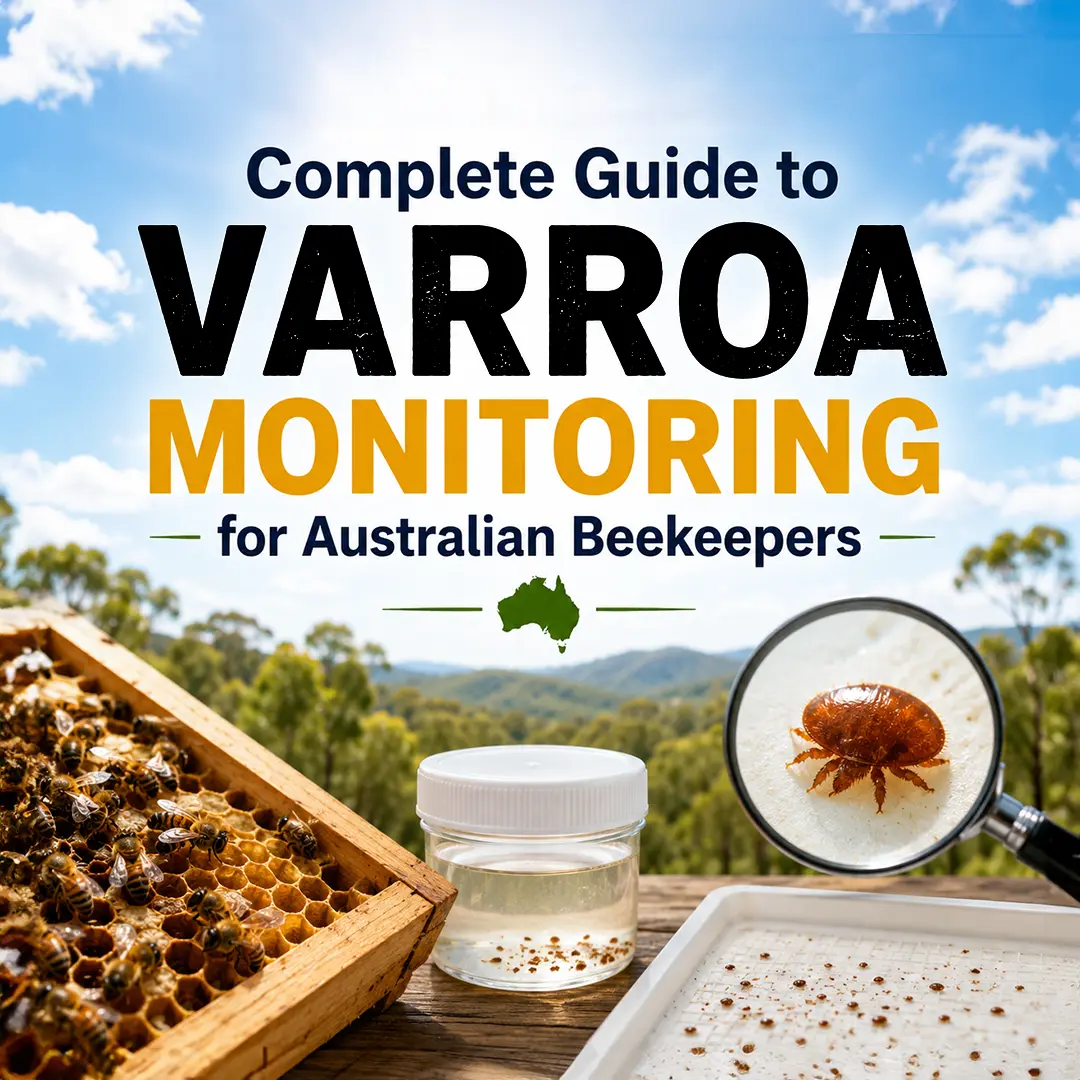
The arrival and spread of Varroa mites has transformed beekeeping in Australia. Once considered one of the few countries free from this devastating pest, Australian beekeepers must now actively monitor and manage Varroa populations to protect colony health and maintain productive hives.
Varroa destructor is widely recognised as one of the most serious threats facing honey bees worldwide. Without regular monitoring and timely intervention, mite populations can rapidly increase, weakening colonies and potentially leading to colony collapse.
The good news is that effective Varroa management starts with consistent monitoring. By regularly testing your colonies, you can detect mite levels early and make informed treatment decisions before serious damage occurs.
This guide explains why Varroa monitoring matters, the most effective testing methods, and how Australian beekeepers can develop a successful monitoring program.
How Often Should You Monitor for Varroa?
Australian beekeepers should monitor their colonies for Varroa mites regularly throughout the active season. Many experts recommend testing every 4 to 6 weeks during spring, summer, and autumn, with additional testing before and after Varroa treatments.
Frequent monitoring allows beekeepers to identify rising mite populations before they reach damaging levels.
What Is Varroa Destructor?
Varroa destructor is an external parasitic mite that feeds on both adult bees and developing brood.
Adult female mites enter brood cells before they are capped and reproduce inside the developing bee brood. As mite numbers increase, colonies become weakened and more susceptible to disease.
Varroa mites can:
-
Reduce bee lifespan
-
Weaken colony populations
-
Transmit harmful viruses
-
Reduce honey production
-
Increase winter colony losses
-
Lead to colony collapse if unmanaged
Because mite populations can grow rapidly, routine monitoring is essential.
Why Is Varroa Monitoring Important?
Many colonies with significant Varroa infestations initially appear healthy.
Unfortunately, visible symptoms often develop only after mite populations have already reached damaging levels.
Regular monitoring helps beekeepers:
-
Detect infestations early
-
Assess mite population growth
-
Determine when treatment is required
-
Evaluate treatment effectiveness
-
Reduce colony losses
-
Develop long-term management plans
Without monitoring, treatment decisions become guesswork.
Signs of a Varroa Infestation
Although monitoring provides the most accurate assessment, some colonies may show visible symptoms when infestations become severe.
Potential signs include:
-
Deformed wings on newly emerged bees
-
Patchy brood patterns
-
Reduced colony population
-
Crawling bees near the hive entrance
-
Increased virus symptoms
-
Declining honey production
-
Sudden colony collapse
However, waiting for these symptoms to appear can be risky.
Best Varroa Monitoring Methods for Australian Beekeepers
Several proven techniques are available for measuring Varroa mite levels.
Each method offers advantages and limitations.
Alcohol Wash Method
The alcohol wash is widely considered the gold standard for Varroa monitoring.
How It Works
Approximately 300 bees are collected from brood frames and placed into a container containing alcohol. The alcohol dislodges mites from the bees, allowing them to be counted.
Advantages
-
Highly accurate
-
Reliable results
-
Industry standard method
-
Ideal for treatment decisions
Disadvantages
-
Requires sacrificing sampled bees
-
Some beekeepers may find the process difficult
Despite this limitation, alcohol washes remain one of the most effective monitoring methods available.
Sugar Shake Method
The sugar shake, sometimes called the powdered sugar roll, offers a non-lethal alternative.
How It Works
Collected bees are coated in powdered sugar, which causes mites to lose their grip and fall from the bees.
The bees can then be returned to the hive.
Advantages
-
Non-lethal to sampled bees
-
Relatively simple
-
Suitable for hobby beekeepers
Disadvantages
- Slightly less accurate than alcohol washes
- Environmental conditions can affect results
- Many backyard beekeepers prefer this method due to its non-destructive nature.
Sticky Mat Monitoring
Sticky mats provide another useful monitoring technique.
Special sticky boards are placed beneath screened bottom boards to capture naturally falling mites.
Advantages
- Non-invasive
- Easy to perform
- Useful for long-term monitoring
- Can help assess treatment success
Disadvantages
-
Less precise than alcohol washes
-
Results may vary depending on colony size and brood levels
Sticky boards are often used alongside other monitoring methods.
Drone Brood Inspection
Because Varroa mites prefer drone brood, uncapping drone cells can help detect infestations.
Advantages
- Quick field assessment
- Useful as an early warning tool
Disadvantages
-
Not sufficiently accurate for treatment decisions
-
Labour intensive
Drone brood inspection should generally supplement rather than replace formal testing methods.
Which Varroa Monitoring Method Is Best?
For most Australian beekeepers, alcohol washes provide the most reliable data for making treatment decisions.
Many integrated pest management programs combine several methods, including:
-
Alcohol washes
-
Sticky mat counts
-
Post-treatment monitoring
-
Visual inspections
Using multiple monitoring tools provides a more complete understanding of colony health.
How Many Bees Should Be Sampled?
Most monitoring protocols recommend sampling approximately 300 adult bees.
This sample size typically provides accurate estimates of mite populations.
Bees should ideally be collected from brood frames, where nurse bees carrying Varroa mites are commonly found.
Avoid sampling:
-
The queen
-
Bees from honey supers
-
Very young, newly emerged bees
Always inspect carefully to ensure the queen is not accidentally included.
When Should You Monitor for Varroa?
Varroa populations fluctuate throughout the year.
Monitoring should occur:
Early Spring
Establish baseline mite levels before populations begin increasing.
Mid-Spring to Summer
During periods of rapid brood expansion, mite populations often increase quickly.
Testing every 4 to 6 weeks is recommended.
Late Summer and Autumn
Monitoring during autumn is especially important because colonies begin raising the long-lived winter bees needed for colony survival.
High mite loads at this time can severely affect overwintering success.
Before and After Treatment
Testing both before and after treatment helps determine whether control measures have been effective.
Understanding Treatment Thresholds
Treatment thresholds vary depending on:
-
Season
-
Colony strength
-
Local recommendations
-
Environmental conditions
Australian beekeepers should always follow guidance issued by local biosecurity authorities and industry organisations.
Treatment decisions should be based on monitoring results rather than fixed calendar schedules alone.
Integrated Pest Management (IPM) for Varroa
Successful Varroa control rarely relies on a single treatment method.
Integrated Pest Management (IPM) combines:
-
Regular monitoring
-
Cultural practices
-
Mechanical controls
-
Chemical treatments when necessary
-
Record keeping
This approach reduces treatment resistance and promotes sustainable mite management.
Mechanical Varroa Control Options
Non-chemical management practices may include:
-
Drone brood removal
-
Queen caging
-
Brood interruption
-
Screened bottom boards
These methods can help reduce mite populations as part of an overall management strategy.
Chemical and Organic Treatments
When mite levels exceed recommended thresholds, treatment may become necessary.
Available treatment options include:
Always use approved products according to label directions and local regulations.
Keep Detailed Monitoring Records
Good record keeping is essential for long-term success.
Record information such as:
-
Monitoring dates
-
Testing methods used
-
Mite counts
-
Treatments applied
-
Treatment effectiveness
-
Colony observations
Historical records help identify seasonal trends and improve management decisions.
Common Varroa Monitoring Mistakes
Avoid these common errors:
-
Monitoring too infrequently
-
Failing to test after treatment
-
Sampling too few bees
-
Missing seasonal monitoring windows
-
Relying solely on visual signs
-
Ignoring rising mite trends
Consistent monitoring is far more effective than occasional testing.
Conclusion
Varroa mites are now a major challenge for Australian beekeepers, but regular monitoring can dramatically improve colony survival and productivity. By testing your colonies consistently and responding to rising mite levels early, you can protect your bees and develop a more sustainable Varroa management program.
If you need Varroa testing equipment, sticky mats, approved treatments, or expert beekeeping advice, Hornsby Beekeeping Supplies is here to help. Contact our team on 02 9477 5569 or email info@hornsby-beekeeping.com for trusted products and professional support.
Frequently Asked Questions
How often should I test for Varroa mites?
Most beekeepers should monitor every 4 to 6 weeks during spring, summer, and autumn, as well as before and after treatments.
What is the most accurate Varroa testing method?
The alcohol wash is generally considered the most accurate and reliable method for measuring Varroa mite levels.
Can I see Varroa mites without testing?
Severe infestations may become visible, but relying on visual signs alone often means infestations are already advanced.
Are sticky mats enough for Varroa monitoring?
Sticky mats are useful but are often most effective when combined with other monitoring methods such as alcohol washes or sugar shakes.
Why is autumn Varroa monitoring important?
High mite levels in autumn can weaken winter bees and significantly increase the risk of colony losses during winter.