


















How to Install a Package of Bees Step by Step
Author: Hornsby Beekeeping Date Posted:18 June 2026
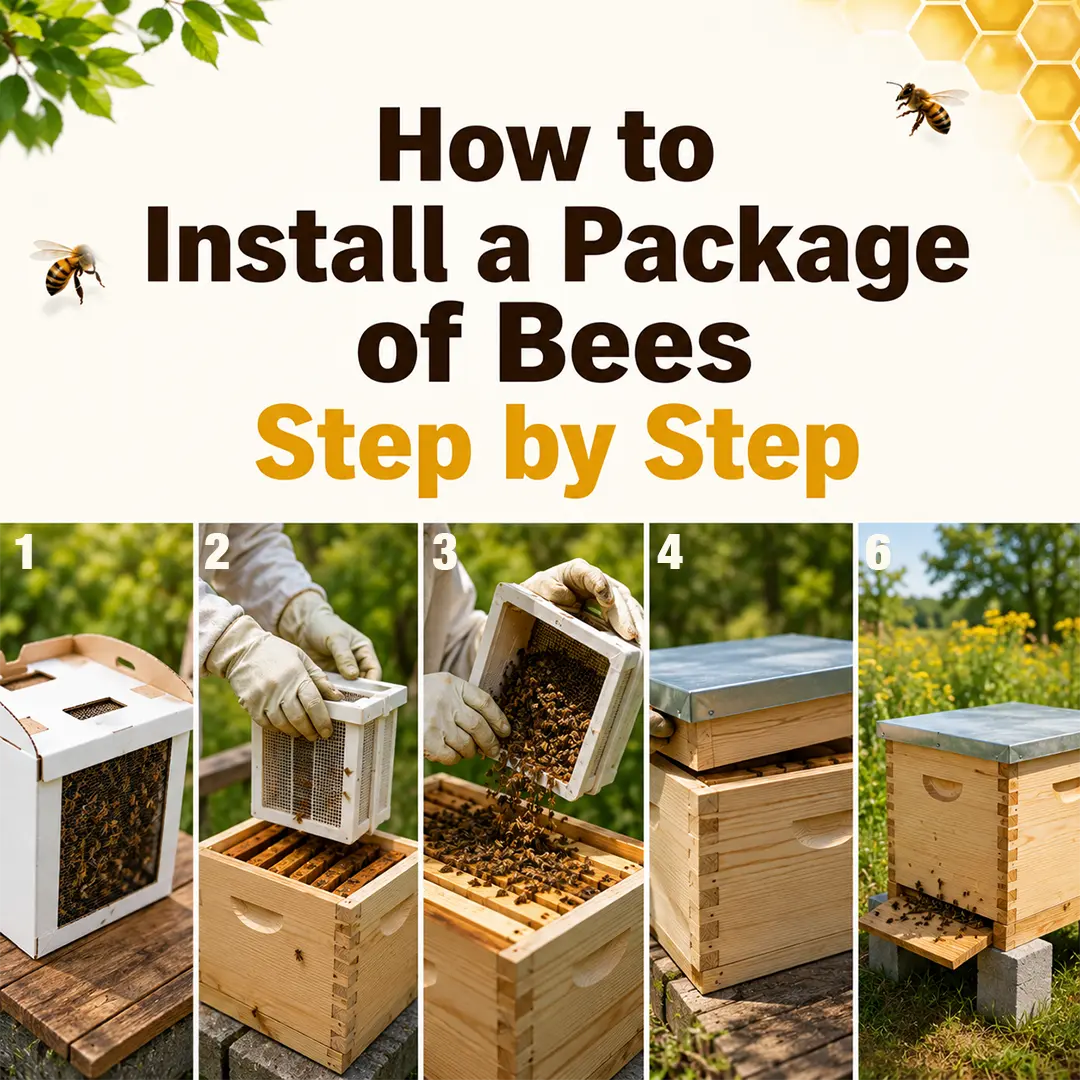
Installing a package of bees is one of the most common ways to start a new honey bee colony. While the process may seem intimidating at first, proper preparation and a careful approach can help your bees settle into their new home quickly and successfully.
A package of bees typically contains a mated queen in a separate cage along with thousands of worker bees. Once installed correctly, the workers accept the queen, begin building comb, and establish a thriving colony.
This guide explains exactly how to install a package of bees step by step, including common mistakes to avoid and tips for helping your new colony get off to a strong start.
What Is a Package of Bees?
A package of bees is a screened box containing a queen bee and a population of worker bees, usually between 8,000 and 12,000 individuals.
Unlike a nucleus colony (nuc), a package does not contain brood, honey, or drawn comb. The bees must build the colony from scratch once they are introduced into their new hive.
Many beginner beekeepers choose package bees because they are widely available, easy to transport, and often more affordable than established colonies.
What Equipment Do You Need Before Installing Bees?
Before your bees arrive, make sure everything is ready.
You'll need:
Having your equipment prepared beforehand reduces stress on both you and the bees during installation.
When Is the Best Time to Install a Package of Bees?
The best time to install bees is during spring when temperatures are mild and nectar sources begin to bloom.
Choose a calm day with:
-
Temperatures above 15°C
-
Minimal wind
-
No heavy rain forecast
-
Daylight remaining after installation
Installing bees during favourable weather helps them adjust more quickly to their new environment.
Step 1: Prepare the Hive
Before opening the package, ensure the hive is completely assembled.
Position the hive in its permanent location and check that:
-
Frames are properly spaced
-
Hive components fit securely
-
Feeder is ready
-
Entrance reducer is installed if needed
Removing several central frames will create enough space for the queen cage and the package bees during installation.
Preparation before opening the package makes the process much smoother.
Step 2: Light Your Smoker
A smoker is not always necessary when working with package bees because they are generally calm. However, having one ready is recommended.
Use a few gentle puffs if the bees become agitated.
Avoid excessive smoke, as new bees are already experiencing stress from transport and relocation.
Step 3: Remove the Syrup Can
Most bee packages include a syrup can that provides food during transport.
Carefully remove the package lid and gently lift out the syrup can.
Some bees may gather around the opening, so move slowly and avoid sudden movements.
Once removed, place the can aside.
Step 4: Remove the Queen Cage
The queen is usually housed in a small cage separate from the worker bees.
Carefully remove the queen cage and inspect her condition.
Look for:
-
Active movement
-
No visible injuries
-
Presence of attendant bees if included
A healthy queen is critical to the success of the new colony.
Step 5: Prepare the Queen Cage for Release
Most queen cages include a candy plug that worker bees gradually eat through over several days.
This delayed release allows workers time to accept the queen.
If your supplier provides specific instructions regarding the queen cage, always follow those recommendations.
Do not release the queen immediately unless advised by an experienced beekeeper or supplier.
Step 6: Place the Queen Cage in the Hive
Position the queen cage between two central brood frames.
The screen side should remain accessible to worker bees so they can feed and communicate with the queen.
Secure the cage according to the manufacturer's instructions.
Proper placement improves acceptance and increases the likelihood of a successful colony establishment.
Step 7: Shake the Bees into the Hive
This is often the step that makes new beekeepers nervous, but it is usually straightforward.
Hold the package over the open hive and give it a firm shake.
Thousands of bees will fall into the empty space between the frames.
Some bees may remain inside the package. Gently shake again until most have been transferred.
The bees typically settle quickly around the queen cage.
Step 8: Reinstall the Frames
Once the bees are inside the hive, carefully replace the removed frames.
Work slowly to avoid crushing bees.
Ensure the frames remain evenly spaced and the queen cage stays in position.
Proper frame spacing encourages straight comb building and efficient brood development.
Step 9: Feed the Colony Immediately
Newly installed package bees need a reliable food source while they establish their colony.
Provide sugar syrup as soon as installation is complete.
Benefits of feeding include:
-
Faster comb construction
-
Improved brood production
-
Reduced colony stress
-
Better queen acceptance
Continue feeding until the colony is drawing comb well and natural forage becomes abundant.
Step 10: Close the Hive and Leave the Bees Alone
Once everything is in place:
-
Install the inner cover
-
Replace the roof
-
Reduce the entrance if necessary
Resist the temptation to inspect the colony immediately.
New bees need time to organize, orient themselves, and begin building their new home.
When Should You Check the Hive Again?
Most beekeepers perform their first inspection approximately 5 to 7 days after installation.
During this inspection, check for:
-
Queen release
-
Fresh eggs
-
Comb construction
-
Adequate food stores
The presence of eggs is one of the best indicators that the queen has been accepted and is laying successfully.
Common Mistakes When Installing Package Bees
Releasing the Queen Too Early
Premature release may result in queen rejection or loss.
Forgetting to Feed
Package bees need supplemental feeding while establishing the colony.
Installing During Poor Weather
Cold, rainy, or windy conditions increase stress and slow colony development.
Frequent Inspections
Opening the hive too often can disrupt colony growth during the critical establishment period.
Crushing Bees During Reassembly
Move slowly when replacing frames and hive components.
Expert Tips for Better Package Bee Success
Experienced beekeepers often follow these simple practices:
-
Install bees on the day they arrive whenever possible.
-
Keep package bees cool and shaded before installation.
-
Feed consistently during the first few weeks.
-
Avoid unnecessary hive disturbances.
-
Monitor queen acceptance closely during the first inspection.
These small steps can significantly improve colony survival and growth.
Final Thoughts
Installing a package of bees is an exciting milestone for any beekeeper. With proper preparation, careful handling, and ongoing support, a package can develop into a productive and healthy colony within a matter of weeks.
By following a step-by-step approach, providing adequate food, and giving the bees time to settle, you'll create the best possible foundation for long-term beekeeping success.
Frequently Asked Questions
How long does it take package bees to settle into a hive?
Most package bees begin orienting themselves immediately and usually settle within a few days.
Should I feed package bees after installation?
Yes. Feeding sugar syrup helps support comb building, brood production, and colony establishment.
How many bees are in a package?
Most packages contain between 8,000 and 12,000 worker bees along with a mated queen.
When should I inspect a newly installed package?
The first inspection is usually performed 5 to 7 days after installation to verify queen release and egg laying.
Are package bees suitable for beginner beekeepers?
Yes. Package bees are one of the most common and beginner-friendly ways to start a new honey bee colony.