


















Installing a Nucleus Hive (Nuc): A Step-by-Step Guide for New Beekeepers
Author: Hornsby Beekeeping Date Posted:19 June 2026
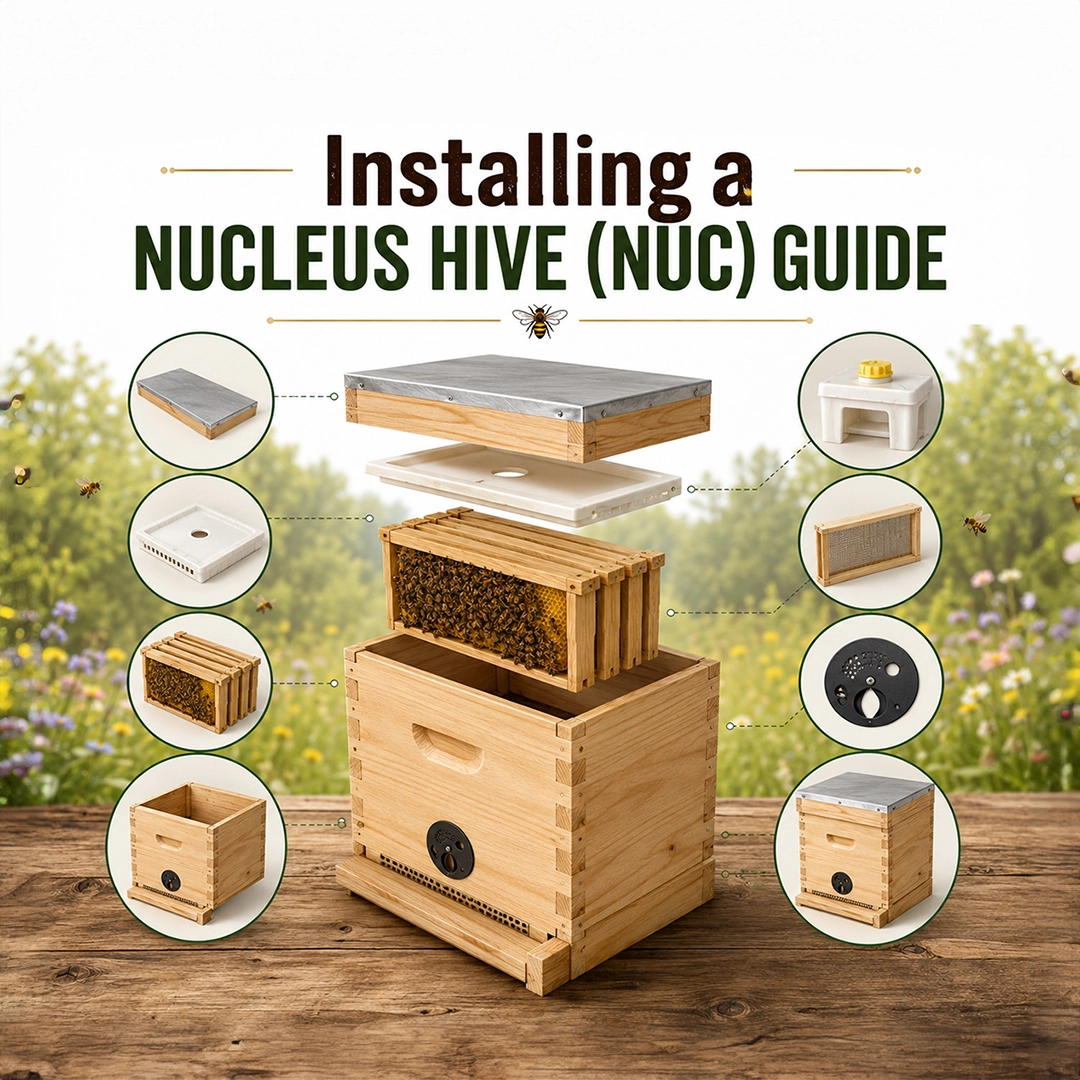
A nucleus hive, often called a nuc, is one of the easiest and most reliable ways to start a new bee colony. Unlike a package of bees, a nuc already contains an active queen, worker bees, brood, and food stores. This gives the colony a significant head start and improves the chances of early success.
For beginner beekeepers, installing a nuc is often less stressful than starting with a package of bees because the colony is already functioning and established.
This guide explains how to install a nucleus hive safely and correctly while helping your bees settle into their new home as quickly as possible.
What Is a Nucleus Hive?
A nucleus hive is a small, established colony that usually consists of:
-
A laying queen
-
Worker bees
-
Developing brood
-
Honey stores
-
Pollen reserves
Most nucs are supplied on 4–5 frames and are transferred into a full-sized hive after purchase.
Because the queen is already accepted by the colony and actively laying eggs, nucs typically develop faster than package bees.
Why Choose a Nuc Instead of a Package of Bees?
Many new beekeepers prefer nucs because they offer several advantages:
-
Faster colony growth
-
Established brood pattern
-
Lower risk of queen rejection
-
Easier management for beginners
-
Earlier honey production potential
Although nucs generally cost more than packages, they often provide a stronger start during the beekeeping season.
When Is the Best Time to Install a Nuc?
The ideal time to install a nucleus hive is during spring or early summer when nectar and pollen sources are readily available.
Installing bees during warm weather allows the colony to expand quickly and build up resources before colder months arrive.
Try to avoid installing a nuc during:
-
Heavy rain
-
Strong winds
-
Extremely hot afternoons
-
Cold weather conditions
A calm, mild day is usually best.
Equipment You'll Need Before Installation
Before collecting your nuc, make sure your hive is fully prepared.
Essential Equipment
Having everything ready before the bees arrive helps reduce stress on the colony.
Choosing the Right Hive Location
Before installation, select a suitable location for your hive.
A good hive site should provide:
-
Morning sunlight
-
Protection from strong winds
-
Good drainage
-
Easy access for inspections
-
Nearby forage sources
-
Access to fresh water
Avoid placing hives in areas prone to flooding or excessive shade.
How to Install a Nucleus Hive
Step 1: Prepare the Hive
Set up the hive in its permanent location before bringing the bees home.
Ensure the hive is level from side to side and slightly tilted forward to allow water to drain from the entrance.
Remove enough empty frames to create space for the nuc frames.
Step 2: Allow the Bees to Settle
After transporting the nuc, place it beside the prepared hive and allow the bees a few minutes to settle.
This helps reduce agitation before opening the box.
If the weather is warm and calm, installation can begin immediately.
Step 3: Lightly Use Your Smoker
Apply a small amount of cool smoke at the entrance and under the lid.
Avoid excessive smoke, as a nuc colony is relatively small and usually calm.
The goal is simply to make inspections easier.
Step 4: Transfer Frames Carefully
Open the nuc box and remove frames one at a time.
Place each frame into the new hive in the exact order and orientation it was originally positioned.
This is important because:
-
Brood remains together
-
The colony structure is preserved
-
The queen is less likely to become separated
Work slowly and carefully throughout the process.
Step 5: Check for the Queen
You do not necessarily need to find the queen during installation.
However, if you happen to spot her, make sure she is safely transferred with the frames.
If the colony contains eggs and young brood, this is usually a good sign that the queen is present and laying successfully.
Step 6: Add Remaining Frames
Once all nuc frames have been transferred, add the remaining brood frames to fill the hive box.
Keep the nuc frames grouped together in the centre of the brood box.
This helps the colony maintain brood temperature more effectively.
Step 7: Close the Hive
Replace the inner cover and roof carefully.
Reduce unnecessary disturbance once installation is complete.
The bees will begin orientating themselves to their new location shortly after leaving the hive entrance.
What to Expect After Installation
Newly installed bees typically spend the first few days:
-
Exploring their surroundings
-
Collecting nectar and pollen
-
Caring for brood
-
Expanding comb
-
Establishing normal colony routines
Some increased activity at the entrance is completely normal.
You may also notice orientation flights as worker bees learn the location of their new home.
When Should You Inspect the Hive?
Avoid opening the hive immediately after installation.
Allow approximately 7–10 days before performing the first inspection.
During this inspection, check for:
-
Eggs and young brood
-
Queen activity
-
Food stores
-
Healthy bee population
-
Signs of disease or pests
Frequent inspections during the first week can disrupt colony development.
Common Mistakes When Installing a Nuc
Installing During Poor Weather
Rain, strong winds, and cold temperatures can make installation more difficult for both bees and beekeepers.
Mixing Frame Order
Changing the order of brood frames can disrupt the colony's organisation and brood nest.
Forgetting a Water Source
Bees require water for cooling the hive and feeding brood.
Provide a nearby water source from day one.
Inspecting Too Often
New beekeepers are often eager to check on their bees. However, excessive inspections can stress the colony and slow development.
Signs Your Nuc Is Thriving
A healthy nuc colony will typically show:
-
Consistent brood pattern
-
Active foraging
-
Growing bee population
-
Fresh comb construction
-
Stored nectar and pollen
As the colony expands, additional hive boxes may be required to provide more space.
Conclusion
Installing a nucleus hive is one of the most rewarding steps in beekeeping. Because a nuc already contains an established queen, brood, and worker bees, it often develops more quickly than a package colony and gives beginners a stronger foundation for success.
By preparing your equipment, choosing a suitable hive location, and transferring frames carefully, you'll help your new colony settle in and thrive.
If you need assistance choosing a nuc, setting up your hive, or selecting the right beekeeping equipment, the team at Hornsby Beekeeping Supplies is here to help. Contact us on +612 9477 5569 or email info@hornsby-beekeeping.com for expert advice and quality beekeeping supplies.
FAQs
How long does it take a nuc to establish itself?
Most nucleus colonies begin settling immediately and can show significant growth within a few weeks, depending on weather conditions, forage availability, and queen performance.
Should I feed a newly installed nuc?
Supplemental feeding may be helpful if nectar sources are limited or weather conditions prevent regular foraging. However, many nucs establish successfully without feeding during strong nectar flows.
How many frames are usually included in a nuc?
Most nucleus hives contain four or five frames that include brood, honey, pollen, worker bees, and a laying queen.