
















Which Hive Tool Should I Use? A Simple Guide for Beekeepers
Author: Hornsby Beekeeping Date Posted:18 February 2026
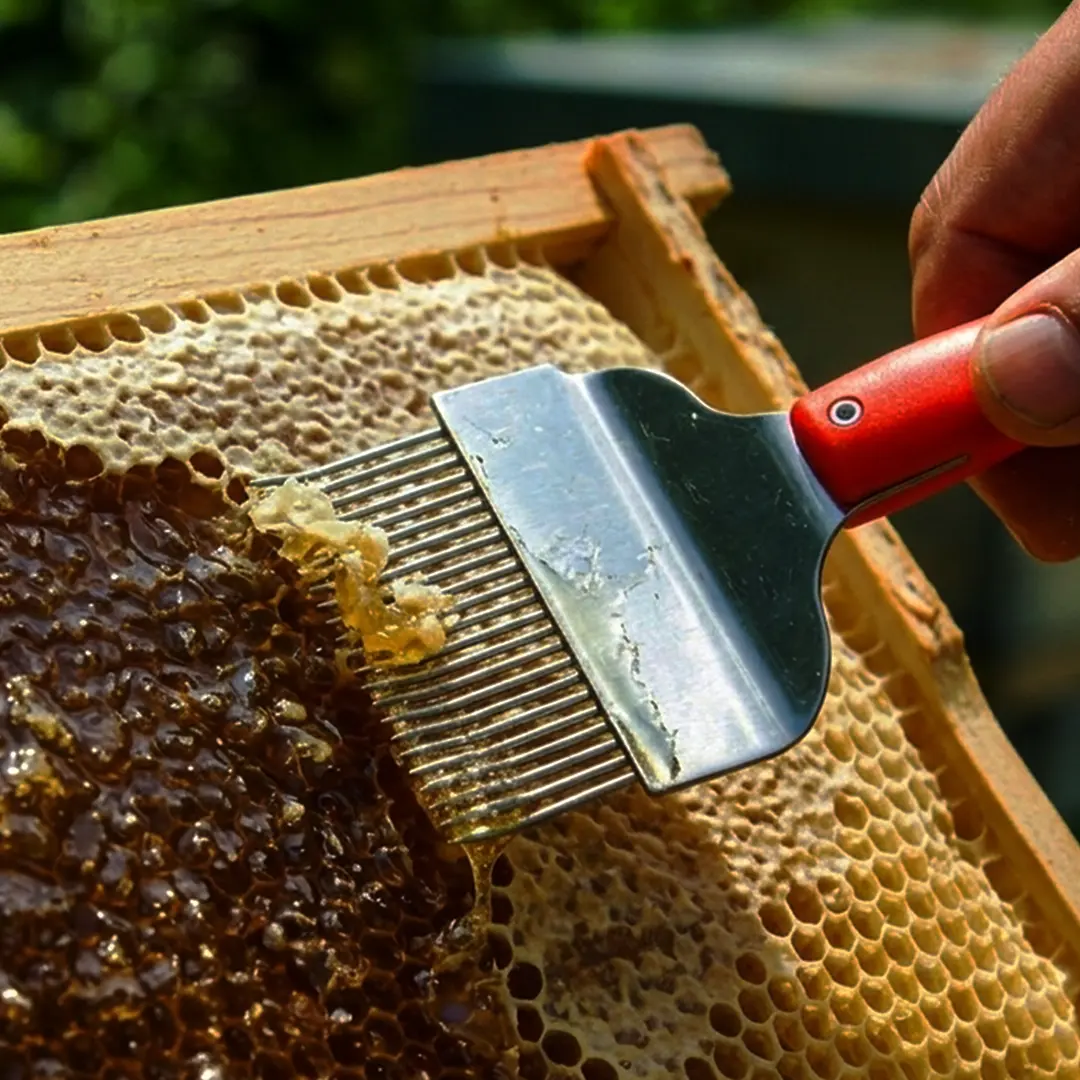
A good hive inspection always starts with the right tool in your hand. And honestly, if there’s one piece of equipment no beekeeper should ever be without, it’s a solid hive tool.
You’ll use it every single time you open your hive. You’ll crack boxes apart with it. You’ll separate frames. You’ll scrape off propolis. You’ll deal with burr comb. So, naturally, it needs to feel comfortable, almost like an extension of your hand.
But which hive tool should you use? Let’s break it down in simple terms.
What Makes a Good Hive Tool?
First of all, a hive tool needs to be strong. Bees glue everything together with propolis, and sometimes they really mean it. Therefore, your tool must be able to break apart boxes without bending or warping.
At the same time, it shouldn’t be too sharp. You want it to scrape effectively, yes! but not damage your woodenware or crush more bees than necessary.
A good hive tool should:
- Lift frames cleanly without damaging the frame lugs
- Scrape propolis without tearing timber
- Slide between boxes easily
- Handle leverage when lifting heavy supers
Moreover, the material matters more than many beginners realise. Stainless steel hive tools tend to last longer, resist rust, and handle pressure better than chrome-plated versions. In Australian conditions, where heat and humidity can vary, durability really counts.
J-Hook vs Standard Hive Tool
When you start talking to other beekeepers, you’ll quickly notice something funny. Most people are either “team J-hook” or “team standard.” And they usually feel quite strongly about it.
So, what’s the difference?
The J-Hook Hive Tool
The J-hook is probably the most common hive tool in Australia. As the name suggests, one end is shaped like a “J.” That hook allows you to lift frames by catching under the frame lug.
Because of its slimmer shape, many beekeepers find it easier to use in tighter spaces, such as a full 10-frame brood box. Furthermore, the smaller footprint means fewer bees are crushed when lifting frames.
On the other end, you still have a bevelled edge for prying and scraping. So, it works as both a hook and a pry tool.
If you’re doing regular inspections and want precision, the J-hook often feels more controlled and gentle.
The Standard (American Pattern) Hive Tool
Now, the standard hive tool looks simpler. It has a flat, bevelled scraping end and usually a wider hook on the other side.
Some beekeepers say it feels blunter. However, others prefer it precisely because of that thickness. It gives you more leverage when separating heavily propolised boxes.
Therefore, if your bees are enthusiastic with propolis and many are the standard hive tool can feel stronger and more solid during heavy-duty jobs.
It’s particularly useful when:
- Boxes are glued tightly together
- There’s heavy burr comb under the lid
- You need extra leverage
Lifting Frames and Managing Propolis
This is where personal preference really shows.
A good J-hook makes frame removal smooth and controlled. It’s easier to manoeuvre in tight brood boxes, and consequently, it reduces accidental damage.
However, when you’re dealing with seriously stuck equipment, the standard hive tool can feel more powerful. Many experienced beekeepers keep both in their kit. So instead of asking which one is “better,” it’s often smarter to ask which one suits the job you’re doing that day.
Stainless Steel or Chrome-Plated?
You might be tempted to choose the cheaper option. That’s understandable. However, hive tools go through a lot of moisture, honey, propolis, and constant scraping.
Stainless steel tools:
- Resist rust
- Handle pressure better
- Last longer
- Clean up more easily
Therefore, investing in quality usually saves money over time.
So, Which Hive Tool Should You Use?
Honestly, there isn’t one perfect answer.
If you prefer precision and smoother frame lifting, the J-hook is a great choice. If you want strength and leverage for tougher jobs, the standard hive tool may suit you better.
Moreover, hive tools have a habit of disappearing into long grass or the back of the ute. So, having a spare is never a bad idea.
At the end of the day, the right hive tool is the one that feels natural in your hand and matches how you work your hives.
FAQs
What is the most popular hive tool in Australia?
The J-hook hive tool is widely used because it lifts frames easily and works well in standard hive setups.
Is a J-hook better than a standard hive tool?
Not necessarily. The J-hook offers precision, while the standard tool provides stronger leverage.
Why choose stainless steel?
Stainless steel resists rust and handles pressure better, making it more durable long-term.
Should beginners own both types?
If possible, yes. Having both allows you to handle routine inspections and heavier jobs comfortably.