
















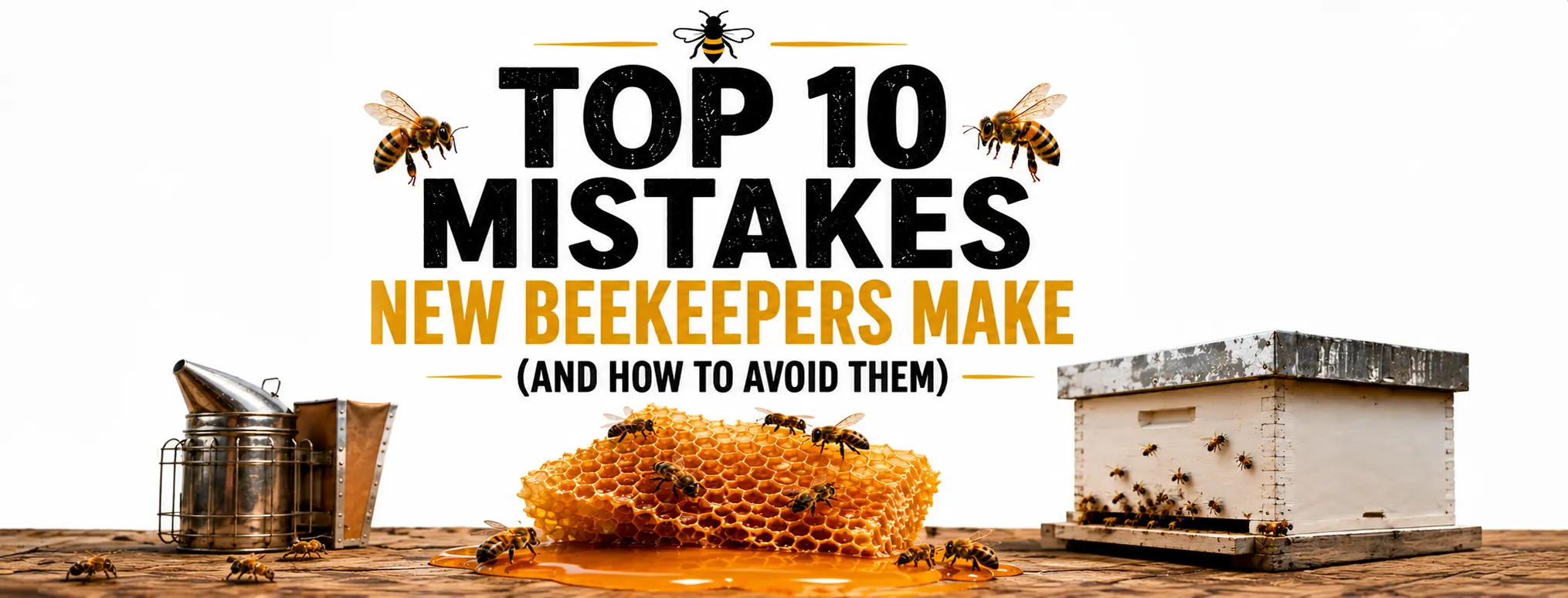
Top 10 Mistakes New Beekeepers Make And How to Avoid Them
Author: Hornsby Beekeeping Date Posted:23 June 2026
Starting beekeeping is exciting, but the first year can be challenging. New beekeepers often begin with enthusiasm, only to discover that bees require timing, observation, patience and regular management. Most beginner mistakes are not caused by laziness. They happen because the beekeeper does not yet know what to look for.
This guide explains the top 10 mistakes new beekeepers make and how to avoid them. It is written for Australian beginners who want to build strong, healthy colonies and avoid common first-year problems.
1. Starting Without Enough Beekeeping Knowledge
Many beginners buy a hive before learning how colonies work. Bees are livestock, not a set-and-forget garden feature.
Why It Matters
A beekeeper needs to understand brood development, queen behaviour, swarming, feeding, pests, disease and seasonal management.
How to Avoid It
Join a local beekeeping club, attend workshops, read Australian beekeeping resources and learn from experienced beekeepers before opening your first hive alone.
2. Not Wearing Proper Protective Clothing
Some beginners underdress because they see experienced beekeepers working calmly around bees. This can be risky.
Why It Matters
A sting near the face, eyes or throat can be serious. Poor protective gear also makes beginners nervous, and nervous movements can disturb bees.
How to Avoid It
Wear a proper bee suit or jacket, veil, gloves and closed footwear. Check zips, cuffs and veil gaps before approaching the hive.
3. Inspecting Too Often or Not Enough
New beekeepers often make one of two mistakes: opening the hive constantly or ignoring it for weeks.
Why It Matters
Too many inspections disrupt the colony. Too few inspections allow queen failure, swarming, starvation or disease to go unnoticed.
How to Avoid It
Create a seasonal inspection schedule. During spring, inspect more frequently. During winter, reduce disturbance and inspect only when conditions are suitable.
4. Missing the Signs of Swarming
Swarming is natural, but unmanaged swarming can reduce honey production and cause nuisance bee problems.
Why It Matters
A colony can look strong right before it swarms. If the beekeeper misses queen cells, crowding and rapid brood expansion, the swarm may leave.
How to Avoid It
Inspect strong colonies regularly in spring. Provide space at the right time, manage brood congestion and learn how to identify queen cells.
5. Giving the Hive Too Much Space
Beginners sometimes add extra boxes too early because they want the colony to grow quickly.
Why It Matters
Too much empty space can make it harder for bees to regulate temperature, defend against pests and build comb efficiently.
How to Avoid It
Add boxes when the bees are covering most frames and genuinely need more room. Match hive space to colony strength.
6. Harvesting Too Much Honey
Honey is exciting, but taking too much can leave bees short of food.
Why It Matters
A colony needs honey stores to survive nectar gaps, wet weather, drought and winter.
How to Avoid It
Only harvest capped honey that is surplus to colony needs. Always leave enough stores, especially before autumn and winter.
7. Ignoring Food Shortage
A hive can starve even when it has bees flying. Weather, drought or lack of nectar can quickly reduce stores.
Why It Matters
Starvation can kill a colony fast, particularly in winter or during brood expansion.
How to Avoid It
Check hive weight and food stores. Feed when necessary, but avoid contaminating honey supers intended for harvest.
8. Not Monitoring for Pests and Disease
Some beginners assume a hive is healthy because bees are flying at the entrance. Entrance activity alone does not prove hive health.
Why It Matters
Pests and disease can develop inside the hive before obvious external signs appear.
How to Avoid It
Inspect brood, adult bees, cappings, hive odour and behaviour. Monitor for Varroa mite and other pests according to current Australian guidance.
9. Poor Record Keeping
Many beginners believe they will remember what they saw in each hive. After a few inspections, details become confusing.
Why It Matters
Without records, it is hard to track queen age, brood pattern, feeding, pest checks, treatments and hive performance.
How to Avoid It
Keep a notebook or digital hive log. Record inspection date, queen status, brood condition, food stores, pest checks and actions taken.
10. Buying or Moving Bees Without Biosecurity Awareness
New beekeepers may buy used equipment, collect swarms or move hives without fully understanding biosecurity risks.
Why It Matters
Used gear and unknown bees can carry pests or disease. Poor hygiene can spread problems between hives and apiaries.
How to Avoid It
Buy bees and equipment from trusted sources. Inspect used equipment carefully. Quarantine unknown swarms where practical and follow your state or territory rules for registration, movement and pest reporting.
Bonus Mistake: Trying to Learn Everything Alone
Beekeeping is easier when you have support. Every beekeeper faces confusing situations, especially in the first few seasons.
How to Avoid It
Find a mentor, join a beekeeping association and ask questions early. Local experience is valuable because Australian conditions vary greatly by region.
Beginner Beekeeper Checklist
Before starting, make sure you have:
-
Smoker and hive tool
-
A reliable bee source
-
Pest monitoring equipment
-
A record-keeping system
-
Local beekeeping support
-
Understanding of registration and biosecurity rules
Final Thoughts
Most beginner beekeeping mistakes can be avoided with preparation, regular inspections and a willingness to learn. Start with good equipment, keep records, monitor hive health and never ignore changes in brood, food stores or bee behaviour. A careful first year creates the foundation for stronger colonies and better beekeeping confidence.
If you need swarm collection equipment, nucleus boxes, protective clothing, or expert beekeeping advice, Hornsby Beekeeping Supplies is here to help. Contact our experienced team on +612 9477 5569 or email info@hornsby-beekeeping.com for trusted products and practical beekeeping support across Australia.
FAQs
What is the biggest mistake new beekeepers make?
One of the biggest mistakes is not inspecting properly. Beginners may either inspect too often or not enough, missing signs of swarming, disease, queen failure or starvation.
How many hives should a beginner start with?
Many beginners start with one or two hives. Two hives can make comparison easier, but they also require more equipment, time and management.
Should beginners catch swarms?
Beginners should only catch simple, accessible swarms with proper gear and guidance. Difficult swarms should be handled by experienced beekeepers.
How do I know if my hive needs more space?
If bees are covering most frames, drawing comb well and storing nectar, they may need more space. Add boxes based on colony strength, not just the calendar.
Do new beekeepers need to monitor for Varroa?
Yes. Australian beekeepers should follow current Varroa monitoring and reporting guidance for their state or territory.