
















What to Expect During Your First Year of Beekeeping
Author: Hornsby Beekeeping Date Posted:22 June 2026
Starting your first beehive is exciting, rewarding, and sometimes a little overwhelming. Many new beekeepers begin their journey expecting immediate honey harvests and perfectly calm colonies, only to discover that successful beekeeping is a continuous learning experience.
Your first year of beekeeping will involve much more than simply installing bees and collecting honey. You'll learn how honey bee colonies grow, how seasonal changes affect hive activity, and how to recognise common challenges before they become serious problems.
Understanding what lies ahead can help new beekeepers set realistic expectations and build the skills needed for long-term success.
What Happens During Your First Year of Beekeeping?
During your first year of beekeeping, you'll typically install your bees, monitor colony growth, perform regular hive inspections, manage pests and diseases, prepare the hive for winter, and possibly harvest a small amount of honey. However, the primary goal during the first year is usually to establish a healthy, strong colony rather than maximise honey production.
Month-by-Month Overview of Your First Beekeeping Year
Although timing varies depending on climate and location, most first-year beekeepers follow a similar seasonal pattern.
Early Spring: Getting Started
Spring is the most popular time to begin beekeeping.
During this period, many new beekeepers:
-
Purchase equipment
-
Attend beekeeping courses
-
Install package bees or nucleus colonies
-
Set up hive stands and apiaries
-
Learn basic hive inspection techniques
This is also an ideal time to join local beekeeping associations and connect with experienced beekeepers.
Installing Your Bees
Most beginners start with either:
Package Bees
Package bees consist of worker bees and a mated queen supplied in a transport cage.
Advantages include:
-
Widely available
-
Relatively affordable
-
Easy to transport
Nucleus Colonies (Nucs)
A nuc is a small, established colony containing:
-
A laying queen
-
Worker bees
-
Brood
-
Honey stores
Nucleus colonies often establish more quickly because they already contain developing brood.
Expect Frequent Hive Inspections
New beekeepers are naturally eager to inspect their hives.
During spring and early summer, inspections are usually performed every 7 to 10 days.
Regular inspections help you:
-
Confirm the queen is laying eggs
-
Monitor brood development
-
Check food reserves
-
Identify pests or diseases
-
Detect swarm preparations
Over time, you'll become more confident identifying eggs, larvae, capped brood, pollen stores, and honey.
Learning to Read the Brood Pattern
One of the most valuable skills new beekeepers develop is assessing brood patterns.
A healthy brood pattern is typically:
-
Compact
-
Evenly distributed
-
Consistent across frames
Spotty or irregular brood may indicate:
-
Queen problems
-
Disease
-
Nutritional stress
-
Pest pressure
Understanding brood patterns provides valuable insight into overall colony health.
Colony Growth Can Be Surprisingly Fast
Honey bee colonies often expand rapidly during spring.
A strong colony may:
-
Increase dramatically in population
-
Build new comb quickly
-
Consume large amounts of food
-
Require additional hive boxes
Many beginners underestimate how quickly colonies can outgrow available space.
Providing additional supers when needed helps prevent overcrowding and reduces swarming risk.
You May Need to Feed Your Bees
New colonies frequently require supplemental feeding.
Bees may need feeding when:
-
Nectar availability is limited
-
Weather prevents foraging
-
Newly installed colonies are building comb
-
Drought conditions occur
Sugar syrup is commonly used to support colony growth during establishment.
Pollen supplements may also be beneficial when natural pollen sources are scarce.
Expect Some Setbacks
Every beekeeper encounters challenges.
Common first-year problems include:
-
Queen loss
-
Swarming
-
Poor weather
-
Pest infestations
-
Disease outbreaks
-
Robbing behaviour
Experiencing occasional setbacks is a normal part of learning beekeeping.
Even experienced beekeepers continue learning throughout their careers.
Understanding Swarming
Swarming is a natural reproductive behaviour in honey bees.
As colonies become crowded, they may prepare to divide and establish a new colony.
Signs of swarming include:
-
Queen cells
-
Congested brood nests
-
Large bee populations
-
Reduced laying by the queen
Learning how to recognise and manage swarm preparations is an important first-year skill.
Pest and Disease Management
Modern beekeeping requires ongoing attention to colony health.
Australian beekeepers should regularly monitor for:
-
Varroa mites
-
Small hive beetles
-
American foulbrood (AFB)
-
European foulbrood (EFB)
-
Wax moth
Routine inspections and early intervention help minimise colony losses.
Honey Harvest Expectations
One of the biggest misconceptions among beginners is expecting large honey harvests during the first season.
In reality, many first-year colonies produce little or no surplus honey.
New colonies often use most of their nectar resources to:
-
Build comb
-
Raise brood
-
Expand population
-
Establish food reserves
Strong nucleus colonies installed early in the season may produce some harvestable honey, but colony establishment should remain the priority.
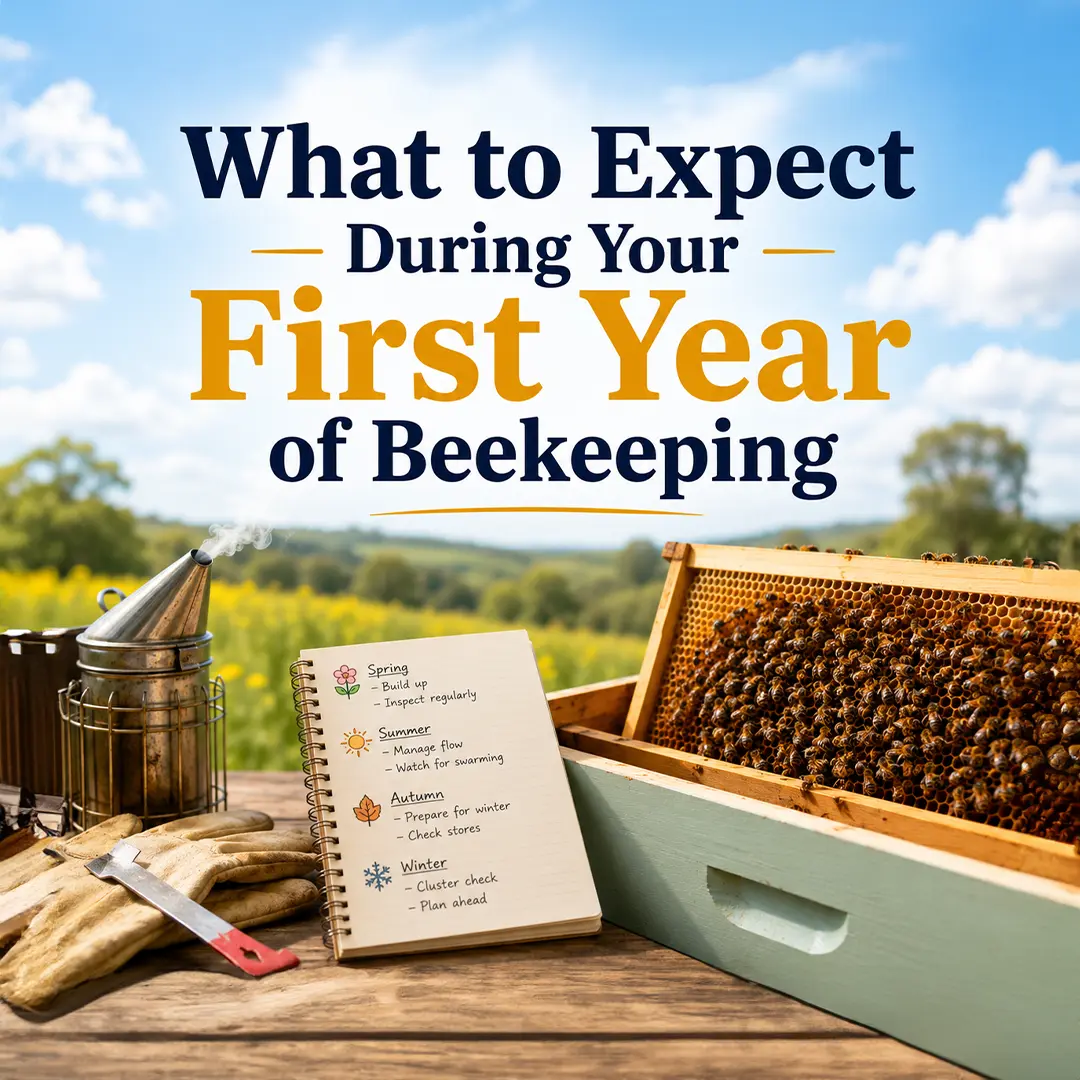
Seasonal Changes Throughout the Year
Beekeeping activities change significantly throughout the seasons.
Spring
- Rapid brood expansion
- Swarm management
- Frequent inspections
Summer
- Honey production
- Super management
- Ventilation management
- Continued pest monitoring
Autumn
- Reduced brood production
- Health assessments
- Food reserve checks
- Winter preparation
Winter
- Minimal hive disturbance
- Occasional food checks
- Equipment maintenance
- Planning for the following season
Understanding these seasonal cycles helps new beekeepers anticipate colony needs.
Record Keeping Is Essential
Successful beekeepers keep detailed records.
Useful records include:
-
Inspection dates
-
Queen observations
-
Brood patterns
-
Feeding schedules
-
Treatments applied
-
Honey harvests
-
Pest monitoring results
Accurate records help identify trends and improve future management decisions.
Essential Equipment You'll Use During Your First Year
New beekeepers commonly use:
-
Honey supers
Quality equipment makes hive management easier and safer.
Building Confidence Takes Time
Many beginners worry that they are making mistakes.
The truth is that confidence develops gradually through:
-
Regular hive inspections
-
Observation
-
Education
-
Mentorship
-
Practical experience
The more time you spend working with your bees, the more comfortable you'll become.
Tips for First-Year Beekeeping Success
To improve your chances of success:
-
Start with healthy bees.
-
Inspect hives regularly but avoid over-inspecting.
-
Learn to recognise brood stages.
-
Monitor pests and diseases consistently.
-
Keep detailed records.
-
Continue learning through courses and local clubs.
-
Ask experienced beekeepers for advice when needed.
Conclusion
Your first year of beekeeping is an exciting learning experience filled with new discoveries, challenges, and rewards. While you may not harvest large quantities of honey immediately, establishing a strong and healthy colony lays the foundation for future success. Patience, regular hive inspections, and ongoing education are the keys to becoming a confident beekeeper.
Whether you're setting up your first hive, looking for quality beekeeping equipment, or seeking expert advice, Hornsby Beekeeping Supplies is here to support you every step of the way. Contact our team on 02 9477 5569 or email info@hornsby-beekeeping.com for trusted products, practical guidance, and professional beekeeping support.
Frequently Asked Questions
Will I harvest honey during my first year of beekeeping?
Some strong colonies may produce surplus honey, but many first-year colonies use most resources to establish themselves and build comb.
How often should I inspect my hive during the first year?
Most new colonies should be inspected every 7 to 10 days during spring and early summer.
Is it normal to lose a colony during the first year?
Unfortunately, colony losses can occur, especially if pests, disease, or queen issues arise. Regular monitoring greatly improves success rates.
What is the biggest challenge for beginner beekeepers?
Many beginners find recognising queen status, managing swarming, and identifying pests or diseases to be the most challenging aspects.
Should I join a local beekeeping club?
Yes. Local clubs provide valuable education, mentoring, and practical support that can significantly improve first-year beekeeping success.