
















Alcohol Wash vs Sugar Shake: Which Varroa Testing Method Is Best?
Author: Hornsby Beekeeping Date Posted:23 June 2026
Varroa mite monitoring is now a core part of responsible beekeeping in Australia. Whether you keep one hive or manage a larger apiary, testing helps you understand mite levels before colony health declines. Two common methods are the alcohol wash and the sugar shake.
Both methods use a sample of adult bees to dislodge mites so they can be counted. The main difference is accuracy, bee survival and ease of use. This guide compares alcohol wash vs sugar shake so Australian beekeepers can choose the right method for their situation.
What Is Varroa Mite?
Varroa mite is an external parasitic mite that affects European honey bees. It feeds on brood and adult bees and can spread harmful viruses through a colony. Without monitoring and management, Varroa can weaken or kill colonies.
Because Varroa levels can rise before obvious symptoms appear, visual inspection alone is not enough. Beekeepers need a reliable testing routine.
Why Varroa Testing Matters
Testing helps you:
-
Detect mites early
-
Compare mite levels over time
-
Decide when management action is needed
-
Check whether treatment has worked
-
Reduce reinfestation risk
-
Protect nearby colonies and apiaries
A standard sample size, usually around 300 bees, helps make results more consistent and easier to compare between inspections.
What Is an Alcohol Wash?
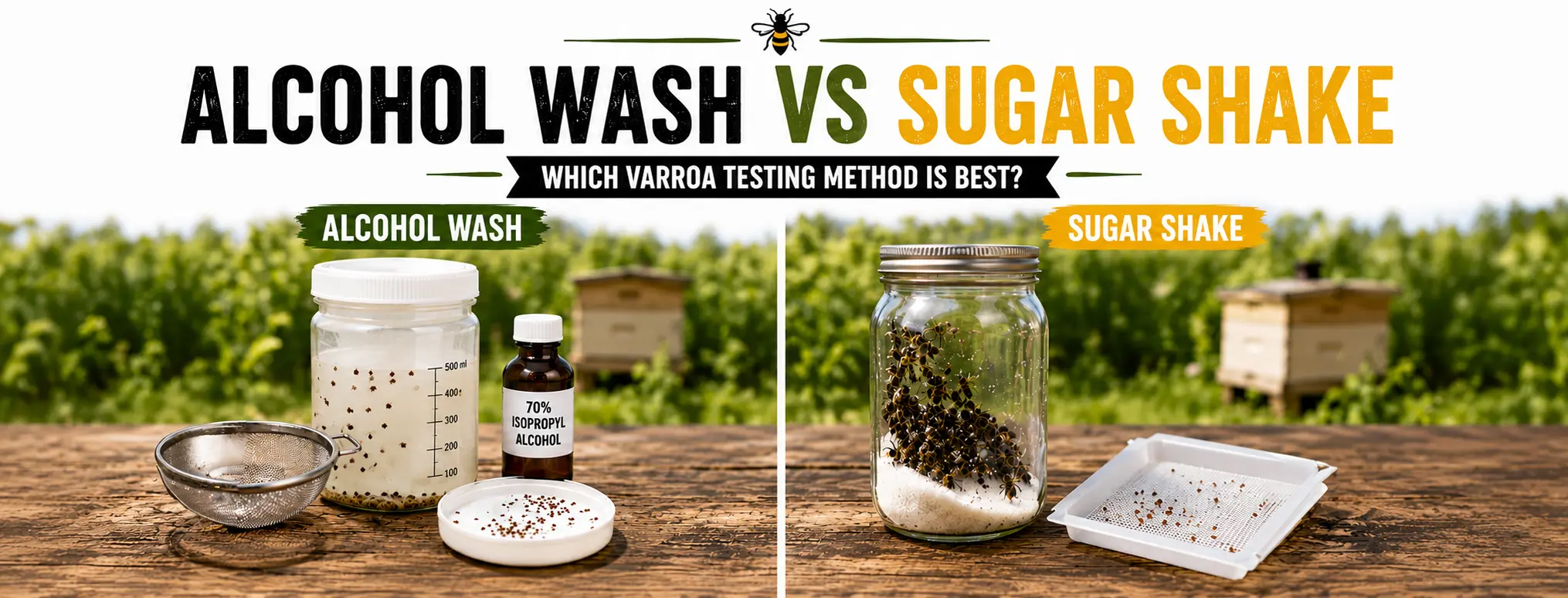
An alcohol wash is a Varroa monitoring method where a sample of adult bees is placed into alcohol or methylated spirits. The container is shaken so mites detach from the bees and can be counted.
Advantages of Alcohol Wash
-
Highly effective for detecting mites on adult bees
-
Commonly recommended as a best-practice monitoring method
-
Gives a clear mite count
-
Useful for comparing results over time
-
Good for serious management decisions
Disadvantages of Alcohol Wash
- The bee sample is killed
- Some beginners feel uncomfortable using it
- Requires careful collection from the brood area
- Needs safe handling of alcohol or methylated spirits
What Is a Sugar Shake?
A sugar shake, also called a sugar roll, uses pure icing sugar to dust a sample of bees. The sugar affects the mites’ ability to grip the bees, causing mites to fall through a mesh lid where they can be counted.
Advantages of Sugar Shake
- Bees can usually be released after testing
- Does not require alcohol
- Beginner-friendly for those uncomfortable killing bees
- Useful as a surveillance method
- Equipment is simple and low cost
Disadvantages of Sugar Shake
- Can be less accurate than alcohol wash
- Results may vary depending on technique, humidity and shaking
- Mites may not detach as reliably
- Careful method is still required for useful results
Alcohol Wash vs Sugar Shake: Quick Comparison
Accuracy
Alcohol wash is generally considered more accurate and reliable for Varroa mite monitoring. It is often preferred when beekeepers need clear data to make treatment decisions.
Sugar shake can detect mites, but it may miss more mites if technique or conditions are not ideal.
Bee Welfare
Sugar shake is less destructive because the bees can often be returned to the hive. Alcohol wash kills the sample of bees.
However, a 300-bee sample is small compared with the population of a strong colony. Accurate monitoring can protect the health of the entire hive.
Ease of Use
Both methods are simple once practised. Sugar shake may feel easier for beginners, but alcohol wash often produces clearer results.
Equipment Needed
Alcohol wash requires a testing jar, alcohol or methylated spirits and a way to count mites. Sugar shake requires a jar with mesh lid, pure icing sugar and a tray or white surface for counting mites.
Best Use
Use alcohol wash when accuracy is the priority. Use sugar shake when non-lethal testing is preferred and you understand its limitations.
How to Collect Bees for Varroa Testing
The sample should usually come from the brood nest area because mites are more likely to be on nurse bees near brood. Avoid collecting the queen.
Basic Sampling Tips
-
Wear protective clothing
-
Choose a brood frame with adult bees
-
Check carefully that the queen is not on the frame
-
Collect around 300 bees
-
Use the same method consistently
-
Record date, hive number and mite count
-
Clean equipment between apiaries where needed
Consistency matters. Changing methods every time makes it harder to compare results.
Which Method Is Best for Australian Beekeepers?
For most Australian beekeepers who need reliable Varroa monitoring, alcohol wash is the stronger method because it is more accurate and widely recommended for best-practice monitoring. It is especially useful where Varroa is established or where treatment decisions depend on accurate mite counts.
Sugar shake still has a place. It can be useful for beekeepers who prefer a non-lethal method, for basic surveillance or for learning how sampling works. However, beekeepers should understand that sugar shake results may be less reliable than alcohol wash.
The best method is the one you can perform correctly, consistently and regularly.
When Should You Test for Varroa?
Testing frequency depends on your location, local Varroa status, season, colony strength and current official guidance. In areas where Varroa is established, regular monitoring is important. In areas where Varroa is not yet established, surveillance is still important for early detection.
Beekeepers should also test before and after treatments where applicable, and when colony health changes unexpectedly.
Common Varroa Testing Mistakes
Collecting Bees from the Wrong Area
Sampling bees away from brood may give a misleading result.
Accidentally Collecting the Queen
Always check the frame carefully before collecting bees.
Using the Wrong Sugar
For sugar shake, use pure icing sugar, not icing mixture.
Not Shaking Properly
Poor shaking can leave mites attached to bees.
Failing to Record Results
A single test is useful, but records over time are much more valuable.
Ignoring Symptoms
Testing should support hive inspection, not replace it. Deformed wings, weak bees, poor brood and colony decline still need attention.
Final Verdict
Alcohol wash is generally the best Varroa testing method when accuracy matters. Sugar shake is a useful alternative for beekeepers who prefer a non-lethal method, but it may be less reliable. Australian beekeepers should follow current state and national guidance, monitor consistently and keep accurate records.
If you need swarm collection equipment, nucleus boxes, protective clothing, or expert beekeeping advice, Hornsby Beekeeping Supplies is here to help. Contact our experienced team on +612 9477 5569 or email info@hornsby-beekeeping.com for trusted products and practical beekeeping support across Australia.
FAQs
Is alcohol wash better than sugar shake?
Alcohol wash is generally more accurate and is commonly recommended when reliable Varroa mite counts are needed.
Does alcohol wash kill bees?
Yes. Alcohol wash kills the bee sample, which is usually around 300 bees.
Does sugar shake kill bees?
Sugar shake is designed as a non-lethal method, and bees can often be returned to the hive after testing.
How many bees are needed for Varroa testing?
A standard sample is usually around 300 adult bees, collected carefully from the brood area while avoiding the queen.
Should I use the same Varroa testing method every time?
Yes. Using the same method consistently helps you compare mite levels across time and make better management decisions.