
















How Beehives Work: Basic Structure Explained
Author: Hornsby Beekeeping Date Posted:18 February 2026
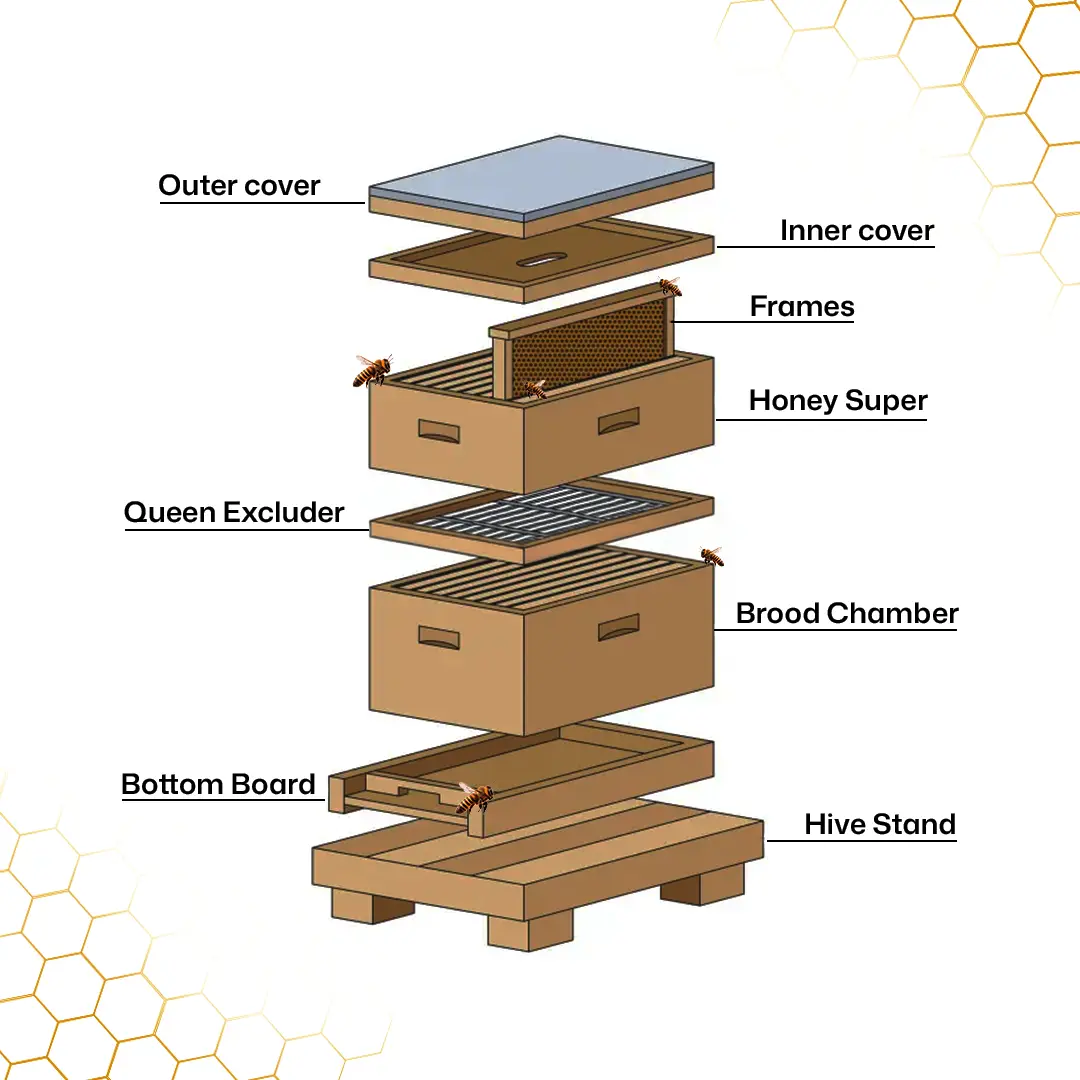
Beekeeping isn’t just about placing a box in your backyard and hoping for honey, it begins with understanding how a beehive actually works. When a colony moves into a hive, the structure becomes a living, functioning system where every part has a purpose. From the bottom where bees enter and exit, through the brood box where new bees are raised, to the honey-filled supers on top, a beehive is meticulously organised by both nature and design.
In Australia, the most common beehive used by commercial and backyard beekeepers is the Langstroth style hive, prized for its movable frames and efficient comb building. Knowing how each component works and why it matters, allows you to manipulate the hive safely, support brood rearing, manage honey production, and maintain bee health throughout the seasons. This guide walks you step-by-step through the structure of a beehive and explains how bees use each part.
The Hive Body: Brood Box and Supers
At the heart of every modern beehive is the hive body which is a series of stacked boxes that house bees, brood, and honey. The lower box, commonly called the brood box, is where the queen lays her eggs and where new bees are nurtured. Above this, additional boxes called supers are added to provide space for honey storage. Both brood boxes and supers are modular, which means you can add or remove them as needed throughout the seasons.
In standard practice, most Australian beekeepers use full-depth Langstroth boxes for brood and either full-depth or shallower supers for honey storage, depending on how heavy the boxes will be when filled with honey. The movable-frame design means the comb is built within frames suspended inside these boxes. The spacing between these frames is known as bee space that prevents bees from gluing them together, allowing frames to be removed individually for inspection or honey extraction without damaging comb or injuring bees.
Movable Frames and Comb
Frames are the heart of hive structure because they support honeycomb and give bees space to build cells for brood, honey, and pollen. Without frames, like in older “box” or hollow log hives, bees attach comb directly to surfaces, which makes inspection and disease control much more difficult. Modern hives use removable, movable frames designed with perfect bee space so that bees do not fill the gaps with unwanted comb.
Most Australian beekeepers choose frames that are pre-wired and fitted with foundation, which provides a template for bees to start building comb neatly and efficiently. These frames can be arranged in the brood box for rearing young bees, or higher up in the supers for storing honey. As the season progresses and nectar flows increase, more supers and therefore more frames are added to give the colony extra storage space without crowding the brood area. Movable frames are essential for inspections, swarm prevention, and harvesting, which makes beekeeping far safer and more productive.
The Bottom Board and Entrance
The bottom board is the foundation of the hive, acting as the floor and main entrance for the colony. It provides a place for bees to exit and enter, and in many modern hives it also allows ventilation and pest control. Some bottom boards are designed with mesh screens that help mites fall through and improve air flow, which can be particularly helpful in warmer Australian climates.
At the front of the bottom board, a small opening often fitted with an entrance reducer regulates how wide bees can come and go. This is especially useful in cooler weather or when the colony is small. Reducing the entrance can help guard the hive against robbing by other bees or pests, and makes it easier for a small colony to defend its home.
Queen Excluder: Managing Brood and Honey Zones
Above the brood box and below the supers, beekeepers may install a queen excluder: a frame or grid that restricts the queen’s movement upward. The queen is physically larger than worker bees, so the excluder’s holes are sized to let workers pass but keep the queen below.
This tool ensures that honey supers remain free of brood, which simplifies honey harvesting and keeps the storage area dedicated to honey. Some beekeepers prefer not to use a queen excluder because it can slightly slow the movement of workers, but many find it valuable for maintaining a clean separation between brood-rearing and honey storage.
Inner Cover and Outer Cover
The inner cover sits directly above the top super and provides insulation and moisture control, which is particularly useful in variable Australian climates. Its role is to create a barrier that reduces condensation and regulates airflow within the hive. Above the inner cover sits the outer cover or roof, which protects the entire hive from rain, wind, and heat.
In traditional wooden hives, this roof is often called a telescopic cover because it wraps around the top super, giving extra protection. In modern designs like Flow Hives, covers may be modified to accommodate unique frame systems, but the principle remains the same: shield the colony from the elements while allowing for ventilation and temperature regulation.
Honey Supers and Harvesting
Honey supers are the boxes added above the brood area where bees store excess nectar converted into honey. As the nectar flows increase during flowering seasons, bees will fill the supers once the brood area has sufficient space. Skilled beekeepers monitor these supers carefully and add them before overcrowding occurs, which helps prevent swarming.
Honey extraction from supers often involves removing frames when they are capped, meaning the bees have sealed the honey inside the comb. Because frames are movable, beekeepers can extract honey without damaging the hive structure or disturbing the brood below. In newer systems like the Australian-invented Flow Hive, specially designed frames allow honey to be harvested without removing frames from the hive at all, reducing disturbance during extraction.
Conclusion
A beehive is more than just a box, it’s a carefully engineered structure designed to support the complex life cycle of honey bees and the practical needs of beekeepers. From the entrance at the bottom board to the brood box where new bees are raised, and up to the supers full of honey, each component plays a vital role. A proper understanding of this structure helps you manage inspections, support colony health, and harvest honey efficiently.
Whether you’re installing your first hive or upgrading to modern systems like Flow Hives, knowing how everything works gives you confidence and improves your success especially in diverse Australian conditions where temperature, humidity, and nectar flow vary widely.
FAQs
Q1: What is the main purpose of a brood box?
The brood box is the lower box where the queen lays eggs and new bees are raised. It’s the core of the hive’s reproduction and growth system.
Q2: Why are movable frames important in a hive?
Movable frames allow beekeepers to inspect combs, manage brood and honey, and harvest honey without damaging the colony or comb.
Q3: What does a queen excluder do?
A queen excluder prevents the queen from entering the honey supers, ensuring these boxes only contain honey and not brood.
Q4: How does the bottom board help with hive ventilation?
Some bottom boards have mesh screens that allow air circulation and help control pests, improving hive temperature and health.
Q5: Can I use a Flow Hive instead of a traditional Langstroth hive?
Yes! Flow Hives are based on the Langstroth system but have special frames that let you harvest honey without removing frames, reducing disturbance during extraction