


















Small Hive Beetle: Prevention and Treatment Guide for Beekeepers
Author: Hornsby Beekeeping Date Posted:3 July 2026
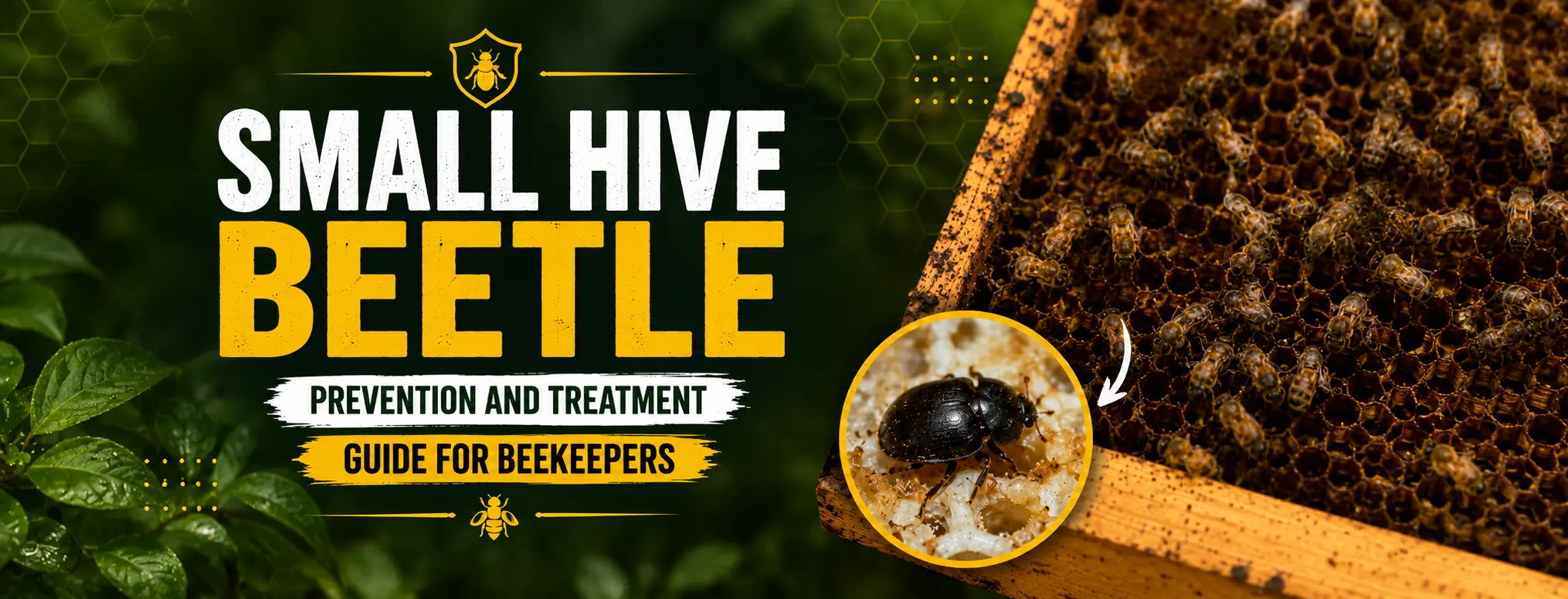
Small hive beetles are a common pest that can create serious problems when a colony is weak, overcrowded with unused equipment or poorly managed. A few adult beetles may not destroy a strong hive, but once larvae develop, the damage can become messy and fast.
For Australian beekeepers, small hive beetle management should be part of regular hive care. Warm and humid conditions, weak colonies, damp sites and stored comb can all increase the risk. Therefore, prevention is always easier than cleaning up slimed frames after the problem has spread.
The key is to keep colonies strong, reduce excess space, inspect regularly and act early when beetles appear.
What Is Small Hive Beetle?
Small hive beetle is a beekeeping pest that lives inside honey bee colonies. Adult beetles are small, dark and quick-moving. During inspections, they often run across frames, hide under the lid or move into corners where bees struggle to reach them.
The larvae cause the most damage. They feed through comb, honey, pollen and brood, and they can contaminate honey. As a result, frames may become slimy, honey may ferment and bees may become stressed. In severe cases, the colony may abscond or collapse.
Small hive beetle is not only a honey problem. It is a hive health problem, especially when the colony is not strong enough to defend its comb.
Why Small Hive Beetle Becomes a Problem
Small hive beetles usually become serious when bees cannot control the pest population. A strong, queen-right colony can chase beetles, trap them and protect most of the comb. However, a weak colony gives beetles more hiding places and more opportunity to breed.
Risk increases when:
-
The colony is weak or queenless
-
Too much empty space is left in the hive
-
Frames are not covered by bees
-
Honey spills or wet supers are left exposed
-
Stored comb is not protected
-
The hive is damp or heavily shaded
-
Dead colonies are not managed quickly
-
Warm and humid weather continues
For this reason, small hive beetle prevention starts with basic hive strength and hygiene.
How to Prevent Small Hive Beetle
The best prevention method is to make the hive easy for bees to defend. If the colony is strong, compact and well managed, beetles have fewer places to hide and reproduce.
Practical prevention steps include:
-
Keep colonies strong and queen-right
-
Reduce unused hive space in weak colonies
-
Avoid leaving empty supers on small hives
-
Clean honey spills quickly
-
Remove burr comb from the apiary
-
Store frames in a dry, protected area
-
Keep hives on stands, away from damp ground
-
Place hives in sunny, well-drained locations where suitable
-
Inspect more often during warm, humid weather
-
Use beetle traps as part of wider management
In addition, avoid moving suspect or infested frames into healthy colonies. This mistake can spread the problem quickly.
Small Hive Beetle Treatment Options
Treatment depends on how serious the infestation is. If you only see a few adult beetles, strengthen the colony, reduce extra space and consider using beetle traps. However, if you find larvae or slimed frames, act quickly.
Helpful treatment steps may include:
-
Remove heavily slimed or damaged frames
-
Reduce the hive to a size bees can defend
-
Add suitable small hive beetle traps
-
Freeze lightly affected comb if it can be saved
-
Clean contaminated equipment properly
-
Requeen or strengthen weak colonies if needed
-
Combine weak colonies only if disease is not suspected
-
Move the hive to a drier, sunnier location if practical
Always use products that are suitable for beekeeping and follow label directions. Do not use random home remedies inside the hive, as unsafe products may harm bees or contaminate honey.
When to Suspect Small Hive Beetle
Small hive beetle should be considered whenever you see adult beetles, larvae, slimy comb or fermented honey. It should also be on your mind when a colony suddenly weakens during warm weather.
Look for signs such as:
-
Adult beetles running across frames
-
Beetles hiding under the lid
-
Larvae in comb
-
Slimy or wet-looking frames
-
Sour or fermented smell
-
Honey leaking from damaged comb
-
Bees avoiding parts of the hive
-
Weak colony behaviour
-
Sudden hive decline
However, do not confuse every hive problem with small hive beetle. Poor brood patterns, disease, queen failure and Varroa pressure can also weaken colonies. Therefore, inspect carefully before deciding on treatment.
Supplies and Hive Practices That Help
The right supplies can support good small hive beetle management, but they work best with good beekeeping habits. Traps alone will not save a weak or neglected hive.
Useful supplies may include:
-
Small hive beetle traps
-
Hive stands
-
Entrance reducers
-
Nucleus boxes for reducing weak colonies
-
Spare clean frames
-
Freezer space for suspect comb
-
Protective clothing
-
Hive tools for regular inspections
-
Storage boxes for spare equipment
More importantly, keep the colony strong and match hive space to bee numbers. A compact hive with enough bees covering the frames is much easier to defend.
Mistakes to Avoid
Small hive beetle problems often become worse because beekeepers wait too long or move contaminated material around the apiary.
Avoid these mistakes:
-
Leaving weak hives in large boxes
-
Ignoring adult beetles until larvae appear
-
Storing pollen or brood comb carelessly
-
Leaving wet supers exposed
-
Placing hives in damp, shaded areas
-
Moving slimed frames into healthy hives
-
Using unsafe or unapproved treatments
-
Forgetting to check traps
-
Leaving dead colonies unmanaged
-
Assuming traps replace inspections
Prevention works best when it is consistent. A quick inspection at the right time can save a colony from serious damage later.
Final Thoughts
Small hive beetle can be frustrating, but it is manageable when beekeepers act early. Strong colonies, dry hive sites, clean equipment and regular inspections are the foundation of prevention. Meanwhile, traps and treatment steps can help when beetles are already present.
For Australian beekeepers, the goal is not just to kill beetles. The goal is to create a hive environment where beetles struggle to breed and bees can defend their comb properly.
If you need swarm collection equipment, nucleus boxes, protective clothing, or expert beekeeping advice, Hornsby Beekeeping Supplies is here to help. Contact our experienced team on +612 9477 5569 or email info@hornsby-beekeeping.com for trusted products and practical beekeeping support across Australia.
FAQs
What does small hive beetle mean for beehive health and pest management?
Small hive beetle is a hive pest that can damage comb, contaminate honey and weaken colonies when not managed early. It is especially risky for weak hives or hives with too much unused space.
How can Australian beekeepers manage small hive beetle safely and effectively?
Australian beekeepers can manage small hive beetle by keeping colonies strong, reducing excess space, using suitable traps, cleaning spills, storing frames properly and removing badly affected comb quickly.
When should I consider small hive beetle for hive pest or disease issues?
Consider small hive beetle when you see adult beetles, larvae, slimed frames, fermented honey, sudden colony stress or bees avoiding sections of comb, especially during warm and humid weather.
Which beekeeping supplies or hive practices support small hive beetle?
Small hive beetle management can be supported by traps, hive stands, entrance reducers, clean spare frames, nucleus boxes and secure equipment storage. Good practices include regular inspections, strong colonies and dry hive placement.
What mistakes should be avoided when dealing with small hive beetle?
Avoid leaving weak colonies in oversized hives, moving infested frames into healthy colonies, leaving wet supers exposed, storing comb carelessly, using unsafe treatments and relying on traps without proper hive management.